



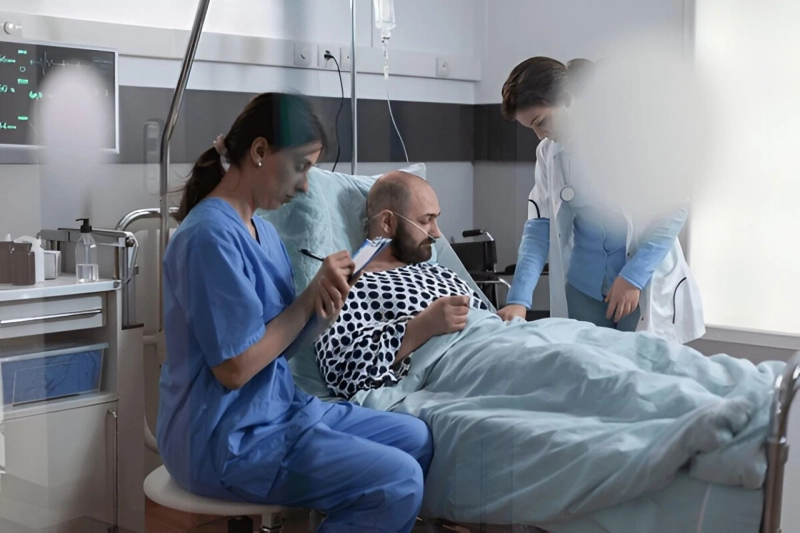
In the fast-paced world of emergency medicine, every second matters. Between treating critical patients, managing overcrowded departments, and handling endless documentation, emergency physicians face constant pressure. Over the years, one role has quietly revolutionized how emergency departments function — the emergency medical scribe. What began as a simple documentation support role has evolved into a crucial component of modern healthcare delivery.
The Early Days: Paper Charts and Overloaded Physicians
Before electronic health records (EHRs) became standard, physicians in emergency departments relied on handwritten notes and paper charts. While this system was flexible, it was also inefficient, inconsistent, and prone to errors. As emergency medicine grew more complex, so did the paperwork.
Physicians found themselves spending nearly as much time documenting as they did treating patients — often finishing charts long after their shifts ended. The growing documentation burden led to fatigue, burnout, and decreased face time with patients.
That’s when medical scribes entered the scene — initially as a way to relieve physicians from the mountain of paperwork.
The Rise of Emergency Medical Scribes
The concept of medical scribing first gained traction in the 1990s, particularly in emergency departments (EDs) in the United States. Early scribes were often pre-med students eager to gain clinical experience. Their primary task was to document physician–patient encounters in real time.
Emergency medical scribes quickly proved invaluable. They allowed providers to focus on what mattered most — patient care — while ensuring accurate and timely documentation. Hospitals began to notice measurable benefits:
- Improved chart completion rates
- Enhanced coding accuracy
- Shorter patient wait times
- Better provider satisfaction
By the early 2000s, scribing had become a structured, professional service model. Dedicated companies began offering trained, certified scribes for emergency departments, transforming what was once an informal support role into an integral part of clinical operations.
The EHR Era: New Challenges, New Opportunities
The introduction of Electronic Health Records (EHRs) in the 2010s was a turning point. While EHRs promised efficiency and interoperability, they also increased documentation time. Many physicians found themselves spending nearly twice as long on EHR-related tasks as on patient interaction.
Emergency medical scribes adapted quickly. Their role expanded from simply taking notes to navigating EHR systems, inputting data, managing orders, and assisting with clinical documentation improvement (CDI) initiatives.
Modern scribes became proficient in multiple EHR platforms like Epic, Cerner, and Meditech — effectively serving as digital extensions of the physician team.
Modern-Day Emergency Medical Scribing: Beyond Documentation
Today’s emergency room scribes are far more than recorders. They play a strategic role in enhancing clinical efficiency, provider productivity, and patient throughput.
Their contributions extend to:
- Quality reporting and compliance documentation
- Supporting accurate billing and coding
- Facilitating seamless care transitions
- Reducing provider burnout
The COVID-19 pandemic further highlighted their importance. As telemedicine expanded and emergency departments faced unprecedented workloads, live virtual scribes became essential in maintaining documentation accuracy and workflow continuity.
The Future: Human Expertise Meets AI Assistance
As artificial intelligence and speech-recognition tools advance, the question arises — will AI replace emergency medical scribes? The answer, for now, is no. While AI can transcribe words, it still lacks the ability to capture clinical nuance, context, and decision-making rationale that human scribes provide.
The most promising future is a hybrid model — where AI handles repetitive tasks, and trained human scribes ensure accuracy, context, and compliance. This synergy will continue to redefine the role of scribes in emergency medicine.
Conclusion: From Support Role to Strategic Partner
The journey of emergency medical scribing reflects the broader evolution of healthcare — from manual documentation to intelligent, team-based care. What began as a time-saving role has matured into a profession that drives efficiency, accuracy, and better patient outcomes.
In today’s modern healthcare landscape, emergency medical scribes aren’t just assistants — they’re strategic partners helping physicians deliver faster, safer, and more focused care when it matters most.