



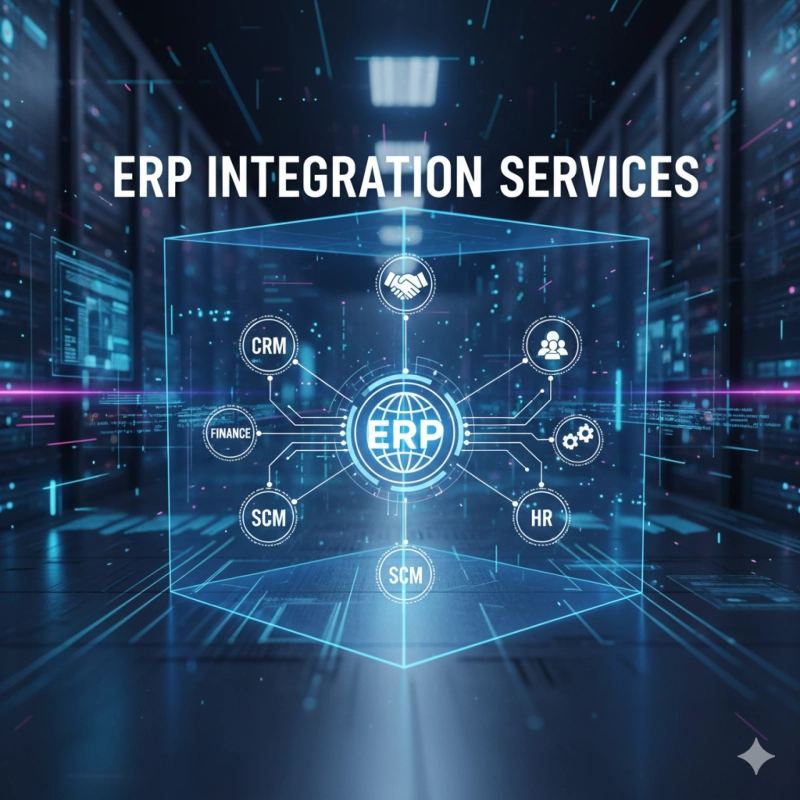
Managing multiple software systems for finance, HR, supply chain, and customer relations can be overwhelming for Indian businesses. When systems work in silos, it often leads to delays, errors, and inefficient decision-making.
This is where ERP integration services in India come in. By connecting all your software platforms, ERP integration ensures smooth data flow, automated processes, and accurate reporting. Whether you run a startup, SME, or large enterprise, integrating your ERP can streamline operations and support business growth.
What is ERP Integration?
ERP (Enterprise Resource Planning) integration is all about connecting your ERP software with other business applications such as CRM systems, HRMS, e-commerce platforms, and third-party tools. This allows data to move seamlessly across systems, reduces manual work, and gives you a single, reliable source of information.
Why it matters:
- Centralizes data from all departments
- Automates routine workflows
- Provides real-time insights for smarter decisions
- Simplifies reporting and analytics
Why ERP Integration Matters for Indian Businesses
Indian businesses face unique challenges in managing multiple software platforms. ERP integration addresses these challenges while offering significant benefits:
Centralized Data
All departments can access the same accurate information, improving transparency and collaboration.
Better Efficiency
Automation reduces manual work, saving time and minimizing errors.
Real-Time Insights
Managers get immediate access to reports and analytics, enabling faster decision-making.
Scalability
As your business grows, integrated ERP systems can expand easily without disrupting operations.
Security and Compliance
Modern ERP integration ensures secure handling of data and helps maintain regulatory compliance.
Common ERP Integration Challenges
ERP integration isn’t without hurdles:
- Legacy Systems: Older software may not work seamlessly with new ERP solutions.
- Data Migration: Transferring existing data accurately can be complex.
- Employee Adaptation: Staff may need training to adjust to new systems.
- Time and Cost: Proper planning is essential to avoid downtime and extra costs.
How ERP Integration Services in India Solve These Problems
Professional ERP integration providers offer tailored solutions:
- Consulting Services: Evaluate your current processes and recommend the best approach.
- Custom Integration: Connect ERP modules with existing business software seamlessly.
- Cloud & Hybrid Options: Flexible solutions for cloud or on-premise setups.
- Ongoing Support: Continuous monitoring and updates to keep systems running smoothly.
ERP Integration Process — Step by Step
Step 1: Analyze Your Business Processes
Understand workflows, identify bottlenecks, and plan integration.
Step 2: Check System Compatibility
Ensure ERP modules and existing software are compatible.
Step 3: Plan Data Migration
Create a strategy to transfer data safely and accurately.
Step 4: Develop Custom Integration
Use APIs, connectors, or middleware for smooth system communication.
Step 5: Test and Validate
Check for errors, ensure data accuracy, and confirm functionality.
Step 6: Train Employees
Provide training and support to ensure smooth adoption.
Step 7: Go Live and Monitor
Launch the integrated system and maintain ongoing support.
ERP Integration Across Industries
Manufacturing: Connect production, inventory, and supply chain systems to optimize efficiency.
Retail & E-Commerce: Integrate POS and online platforms for real-time stock and order management.
Healthcare: Manage patient records, billing, and operational data efficiently.
Startups: Affordable integration solutions that grow with the business.
Case Study Example:
A mid-sized Indian manufacturing company integrated ERP across production and supply chain systems. Within six months, production delays dropped by 25%, and manual data errors reduced by 40%.
Benefits of ERP Integration Services in India
- Access to expert guidance for smooth implementation
- Faster deployment with minimal business disruption
- Cost-effective solutions tailored to your needs
- Automation for higher efficiency
- Real-time insights for better decision-making
How to Choose the Right ERP Integration Partner
Look for:
- Industry experience
- Proven track record with references
- Ability to customize solutions
- Post-implementation support and training
- Cloud or hybrid integration options for scalability
Future of ERP Integration
- AI-Powered ERP: Predictive analytics and automated decision-making
- Cloud Expansion: Flexible, scalable cloud ERP systems
- IoT Integration: Real-time operational insights from connected devices
- Mobile ERP Access: Manage operations on the go
Conclusion
ERP integration is no longer optional — it’s a necessity for Indian businesses aiming to improve efficiency, accuracy, and scalability. By leveraging ERP integration services, companies can unify systems, automate processes, and gain a competitive advantage.
Call to Action:
Ready to transform your business with ERP integration services in India? Contact our experts today and start your journey toward streamlined operations and smarter business decisions.