



Introdcution
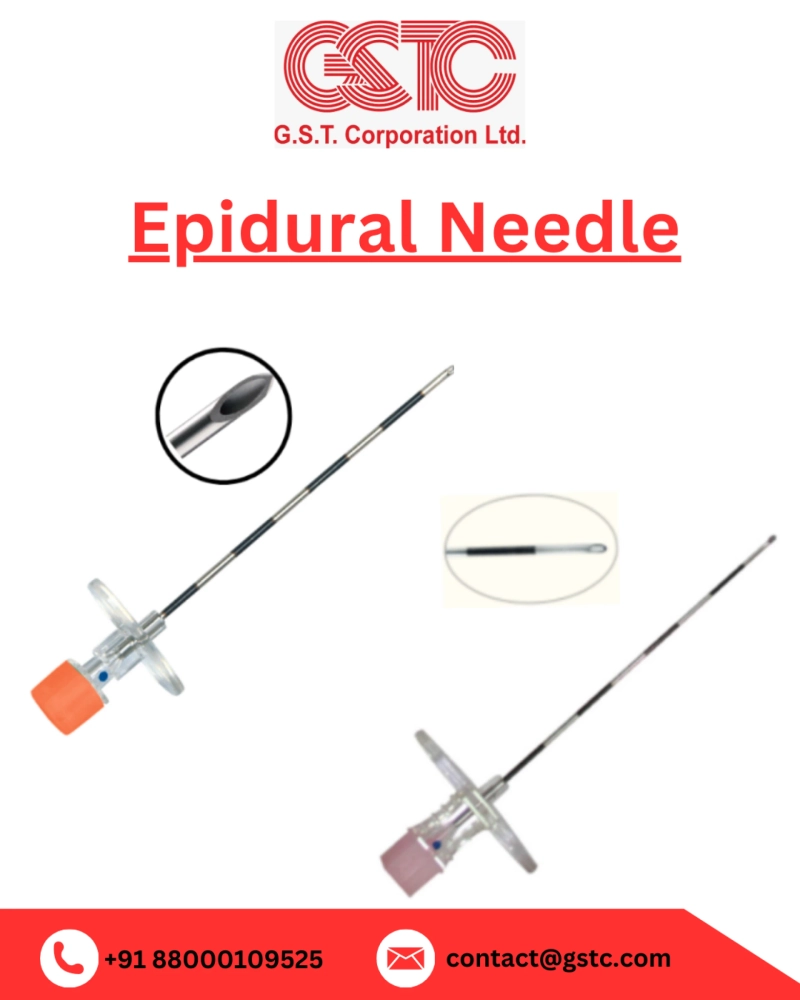
An epidural needle is a highly specialized medical instrument used to administer anesthesia in the epidural space of the spine, primarily for pain amelioration. This technique is very commonly employed for labor and delivery, surgical procedures, and chronic pain treatments. The needle is designed for precise drug delivery, assuring effective pain relief with minimal risks.
These varying types of epidural needles have features, including graduated marking for depth control, blunt or curved tips to minimize tissue trauma, and optimal flexibility for appropriate placement. They are also designed to be used in combination with an epidural syringe for delivering anesthetic solutions that block pain signals from reaching the brain.
One of the biggest advantages of using an epidural anesthesia needle is that it allows patients to be awake and alert while being pain-free, avoiding the need for general anesthesia, hence very useful in childbirth, orthopedic surgeries, and long-term pain management therapies.
Applications of Epidural Needle
1. Epidural Anesthesia
- Applied in surgical procedures such as even hysterectomy or orthopedic surgeries, numbness of the lower part of the body occurs.
- It used an epidural anesthesia needle to keep them awake and alert while feeling no pain.
2. Pain Relief During Labor and Delivery
- The most popular method among all available techniques for labor pain control.
- This gives an effective pain relief effect while allowing mothers to remain awake and fully participate during delivery.
3. Chronic Pain Management
- Takes care of ailments like sciatica, ruptured discs, spinal stenosis, and lower back pain.
- Long days offer relief by blocking pain signals in the brain through needle epidural delivery.
4. Post-Surgical Recovery
- Reduces postoperative pain after major surgery with much less demand for opioids.
- Faster and easier recovery is due to the facilitation of pain control with epidural needles.
5. Orthopedic and Neurological Treatments
- Spinal injections are intended to directly manage pain to target nuclei or tissues.
- The use of an epidural syringe allows for the precise delivery of medication in rehabilitation therapies and the management of pain programs.
How Is the Epidural Needle Used?
Administering an epidural anesthetic or pain relief via the epidural syringe is a process that comprises the following steps:
1. Patient Positioning
The patient is asked to either sit up or lie on the side while arching his back in such a way as to expose the spinal area.
2. Skin Preparation
Thorough cleaning and sterilization of the area is done to avoid the possibility of infection.
3. Local Anesthetic Injection
A small amount is injected as a local anesthetic to numb the area where the epidural needle will be inserted.
4. Insertion of the Epidural Needle
The needle is slowly directed into the epidural space either through image-guided methods or manually, which assures somatic precision for the medication delivery.
5. Catheter Placement
In cases where ongoing administration of the medication is indicated, a thin catheter is inserted through the epidural anesthesia needle. This will keep the pain relief for some time.
6. Medication Administration
The anesthetic or pain-relieving medication is injected through an epidural syringe.
7. Monitoring and Adjustment
The patient is closely watched to see if it works and if any complications arise.
Benefits of Epidural Needles
1. Targeted Pain Relief
- An epidural syringe can deliver medication into the epidural space for effective blocking of pain signals.
2 . Minimum Usage of General Anesthesia
- Patients remain conscious during the procedure, therefore avoiding the risks associated with full sedation.
3. Reduced Opioid Use
- Epidural analgesia provides adequate pain relief, thus reducing the need for opioid analgesics and the risk of addiction.
5. Accelerates Recovery
- Reduced postoperative pain allows quicker healing and a return to normal activities.
6. Individual Dosage
- The dosage through the epidural syringe may be adjusted to meet the patient-specific pain management needs.
7. Safe for Mother and Baby
- In labour, epidural anaesthesia provides a safe and effective means of pain relief for both mothers and babies.
Criteria for Selection of Epidural Needle
Selecting the epidural needles requires several considerations.
1. Anatomy of Patients
The choice of epidural needle size and design would match the spinal anatomy and medical condition of the patient.
2. Type of Procedure
The selection of needle is thus different from the use of single-dose administration to that of continuous pain management.
3. Needle Gauge
A different range of needles is available, such as 16G, 18G, and 20G, which tend to reduce discomfort as the needle gets finer.
4. Preference of Medical Professional
Different hospitals and different practitioners may have such preferences because of experience and expertise.
Conclusion
Epidural needles are a primary medical instrument that guarantees patient comfort, patient-centered pain management, as well as better patient outcomes. Such needs are inherent to GST Corporation, and this compels concern over their significant role in modern medical practice. These needles make a large part of the obstetric anesthesia procedures, which are also widely used in managing chronic pain. As such, they have very well become part and parcel of modern health care. Knowledge of the utilization, advantages, and safety protocols of these needles enables a health care provider to offer the utmost effective, safe pain management, which GST Corporation continues to be devoted to facilitating excellence.