


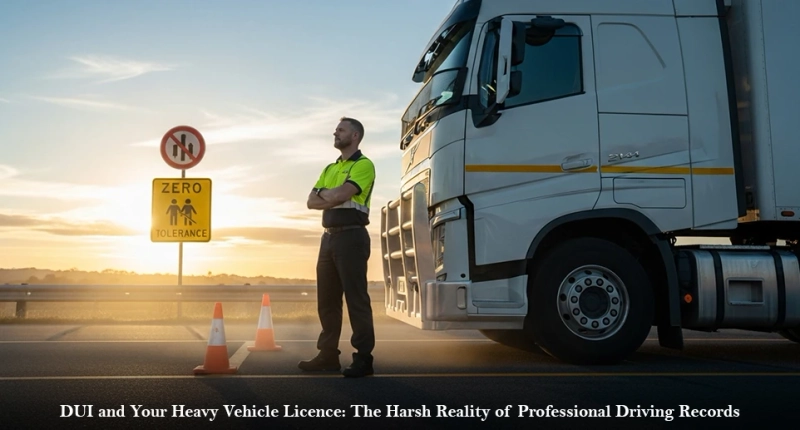
Heavy Vehicle Licence holders carry a responsibility that goes far beyond that of the average motorist. When you drive for a living, your driving record is essentially your résumé. A conviction for Driving Under the Influence (DUI) doesn't just result in legal penalties and fines; it can effectively dismantle your entire livelihood. In the transport industry, safety is paramount, and the laws reflect this with zero-tolerance policies and severe consequences for those who mix alcohol or drugs with operating heavy machinery.
Zero Tolerance and Immediate Suspension
In Australia, the standards for professional drivers are significantly stricter than for standard licence holders. While a car driver may be permitted a Blood Alcohol Concentration (BAC) of 0.05, the limit for a driver operating a vehicle that requires a Heavy Vehicle Licence is generally 0.00 (zero). Even a slight misjudgment, such as driving early in the morning after a night of drinking, can result in a positive reading. The consequences are immediate: police can suspend your licence on the spot. Unlike an office worker who can take public transport during a suspension, a truck driver cannot work without their licence, leading to immediate loss of income and likely termination of employment.
Impact on Smaller Heavy Vehicles
It is a common misconception that these strict rules only apply to drivers of massive interstate semi-trailers. The reality is that DUI charges are devastating for drivers of all heavy classes, including those with an LR licence. The Light Rigid class covers vehicles like small community buses, airport shuttles, and ambulances. Because these roles often involving transporting passengers—including vulnerable groups like school children or the elderly—employers conduct rigorous background checks. A DUI conviction is a major red flag that suggests a lack of judgment, making it nearly impossible to secure a job in passenger transport, regardless of your driving skill.
Stalled Career Progression
A drink-driving conviction does not just affect your current job; it can ruin your future career growth. For example, a driver currently operating local deliveries with an MR licence might plan to eventually upgrade to a Heavy Rigid (HR) or Multi-Combination (MC) licence to earn a higher salary. However, insurance companies are the silent gatekeepers of the trucking industry. Many major logistics fleets cannot hire drivers with recent DUI convictions because their insurance premiums would skyrocket, or coverage would be denied entirely. This leaves drivers stuck, unable to upgrade their skills or apply for better-paying roles with reputable companies.
The Long-Term Consequences
To understand the full gravity of the situation, consider these long-term impacts:
- Unemployability: A criminal record for DUI can bar you from obtaining necessary security clearances (like an MSIC card) for port entry.
- Visa Issues: Professional drivers often need to travel; a DUI can prevent entry into countries with strict border laws.
- Insurance Costs: Personal car insurance rates will likely increase significantly.
- Reputation Damage: The transport industry is a tight-knit community; a reputation for unsafe behavior travels fast.
Your licence is your most valuable asset as a professional driver, and protecting it requires constant vigilance and responsible decision-making. One mistake can undo years of hard work. If you are looking to enter the industry with a focus on safety, compliance, and professional standards, JD’s Truck Training Centre is here to guide you. We prioritize producing safe, knowledgeable drivers who understand the rules of the road and the importance of maintaining a clean driving record.