



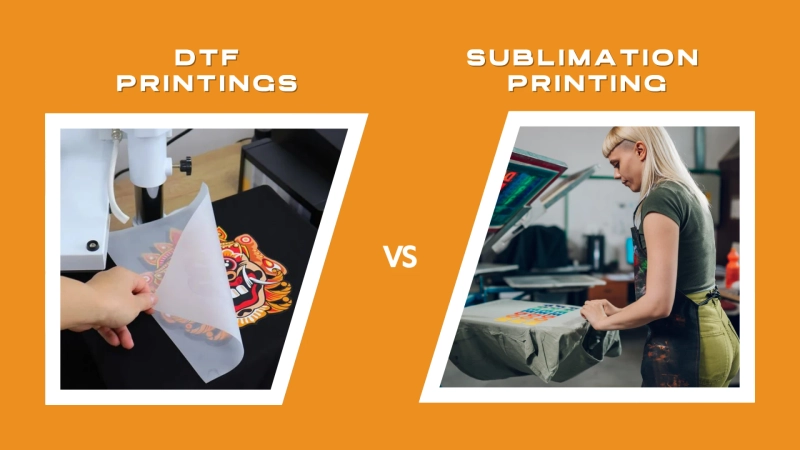
Choosing the right printing method is critical for a print-on-demand (POD) business. Two popular options are DTF Printing (Direct-to-Film) and Sublimation Printing. Each has unique advantages, limitations, and ideal use cases.
Understanding their differences helps entrepreneurs make informed decisions, reduce costs, and deliver high-quality products.
This guide compares DTF Printing and Sublimation Printing in terms of quality, durability, cost, fabric compatibility, and industry trends in 2025.
1. What is DTF Printing?
DTF Printing involves printing designs on a special transfer film, applying adhesive powder, and heat-pressing the design onto fabric.
Key Features:
- Works on cotton, polyester, and blends.
- Supports full-color, detailed designs.
- Ideal for small to medium batch orders.
Industry Insight: Many POD brands use DTF Printing for personalized apparel, small limited-edition runs, and complex designs.
2. What is Sublimation Printing?
Sublimation Printing transfers dye onto polyester fabrics or coated surfaces using heat. The dye becomes part of the fabric, creating vibrant, permanent prints.
Key Features:
- Works best on light-colored polyester or coated products.
- Supports complex, full-color designs.
- Ideal for items like t-shirts, mugs, phone cases, and tote bags.
Industry Insight: Sublimation is popular for lifestyle merchandise, gifts, and promotional items due to its vibrant, long-lasting results.
3. Pros of DTF Printing
- Fabric Versatility: Works on cotton, polyester, blends, and specialty fabrics.
- Detail & Quality: Supports gradients, shadows, and intricate designs.
- Small Batch Friendly: Cost-effective for limited runs or personalized orders.
- Soft Hand Feel: Prints remain flexible and comfortable on apparel.
Example: A POD streetwear brand used DTF Printing to produce detailed fan-art hoodies, which sold out quickly online.
4. Cons of DTF Printing
- Slightly higher unit cost for very large orders.
- Requires careful handling during transfer.
- Initial printer and heat press investment can be significant.
5. Pros of Sublimation Printing
- Vibrant, Long-Lasting Prints: Dye becomes part of the fabric, ensuring durability.
- Full-Color Designs: Perfect for detailed images, patterns, and photographs.
- Eco-Friendly: Less ink waste compared to some other printing methods.
- Ideal for Hard Surfaces: Works on mugs, phone cases, and coated products.
Example: A POD gift brand used sublimation printing on mugs and coasters, generating high repeat orders from personalized gift buyers.
6. Cons of Sublimation Printing
- Limited to polyester or specially coated surfaces.
- Doesn’t work well on dark fabrics without additional techniques.
- Cannot be used on cotton fabrics directly.
Industry Trend 2025: Brands combining DTF and sublimation expand product offerings, offering both apparel and lifestyle merchandise.