



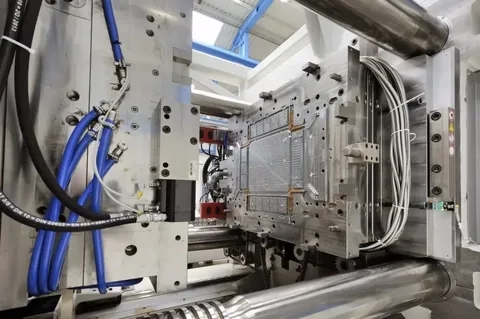
In modern manufacturing, efficiency, precision, and sustainability are the pillars of success. Among the processes revolutionizing industries, Plastic Injection Molding has emerged as a cornerstone for producing high-quality, cost-effective, and scalable solutions. This technology allows manufacturers to create complex parts with remarkable accuracy, while also addressing the growing demand for sustainable plastics and eco-conscious production.
Gree-Ge has been part of this transformation by delivering advanced manufacturing solutions, but rather than focusing only on one brand, this article highlights the broader role of this technology and how it continues to shape global industries.
What is Plastic Injection Molding?
At its core, Plastic Injection Molding is a process in which molten thermoplastics are injected into a carefully designed mold. Once cooled, the material solidifies into a precise shape, making it ideal for creating complex geometries, custom plastic parts, and products with fine details.
The technology combines advanced tooling and mold design with automated manufacturing, ensuring production efficiency while maintaining high standards of quality assurance. Unlike traditional manufacturing processes, injection technology excels at producing high-volume production runs without compromising on consistency.
Key Benefits of the Process
The advantages of Plastic Injection Molding extend across industries, making it the go-to solution for manufacturers worldwide.
Some of its most notable benefits include:
- Precision Molding: Complex geometries and detailed components can be achieved without error.
- High-Volume Production: Millions of identical parts can be manufactured efficiently.
- Material Versatility: Thermoplastics and polymer solutions provide flexibility and strength.
- Production Efficiency: Once tooling is complete, per-unit costs are dramatically reduced.
- Quality Assurance: Each batch is consistent, minimizing defects and ensuring reliability.
Applications Across Diverse Industries
This technology has proven indispensable in multiple sectors:
Automotive
Custom plastic parts such as dashboards, bumpers, and under-the-hood components rely on injection technology. Mold design enables durability, while sustainable plastics improve eco-performance.
Healthcare
Precision molding supports the production of syringes, medical implants, and sterile equipment. Automated manufacturing guarantees consistent results crucial for patient safety.
Consumer Goods
Everyday products such as packaging, toys, and household tools benefit from production efficiency and quality assurance.
Electronics
With miniaturization trends, product development in electronics depends heavily on prototyping and thermoplastics to create durable yet lightweight designs.
The Role of Tooling and Mold Design
Behind every high-quality part lies advanced tooling. Mold design is critical, as it determines the accuracy, durability, and cost-efficiency of the final product. Manufacturers invest in innovative solutions that not only optimize polymer solutions but also reduce cycle times.
Prototyping is another essential stage, enabling businesses to test designs before committing to full-scale production. With rapid prototyping, companies can minimize risks, enhance product development, and achieve faster time-to-market.
Sustainability in Manufacturing Solutions
One of the biggest shifts in recent years has been the demand for sustainable plastics. As environmental concerns rise, industries are moving away from single-use models toward recyclable thermoplastics and energy-efficient injection technology.
By incorporating polymer solutions that minimize waste, manufacturers can strike a balance between performance and sustainability. The integration of automated manufacturing also contributes to reduced energy consumption, driving production efficiency without sacrificing quality assurance.
Why Businesses Prefer Injection Technology
When compared to other manufacturing processes, injection technology offers a unique blend of scalability, cost-effectiveness, and adaptability. Businesses choose it because it provides:
- Faster prototyping cycles for product development
- Custom plastic parts designed with precision molding
- Flexibility with thermoplastics and sustainable plastics
- Dependable quality assurance across high-volume production
This combination allows manufacturers to remain competitive while innovating in their respective industries.
Future of Plastic Injection Molding
Looking ahead, the future of this process is defined by automation, sustainability, and innovation. Automated manufacturing will further improve production efficiency by reducing manual intervention. Robotics and AI-driven mold design are set to optimize tooling and enhance quality assurance.
Sustainable plastics and advanced polymer solutions will continue to dominate research and product development. Prototyping will become faster and more accurate, supporting industries that need agility in their design cycles.
For businesses seeking long-term value, Plastic Injection Molding remains an unmatched choice.
Conclusion
Plastic Injection Molding is more than just a process—it is the foundation of modern industrial growth. With its ability to deliver custom plastic parts, ensure precision molding, and support sustainable plastics, it has become essential in sectors ranging from automotive to healthcare.
Through advanced tooling, mold design, and automated manufacturing, companies worldwide are achieving new levels of production efficiency and quality assurance. As industries evolve, this proven process will continue to shape the future of product development and high-volume production.