



Introduction: What Is Rice Husk, and Why Does It Matter?
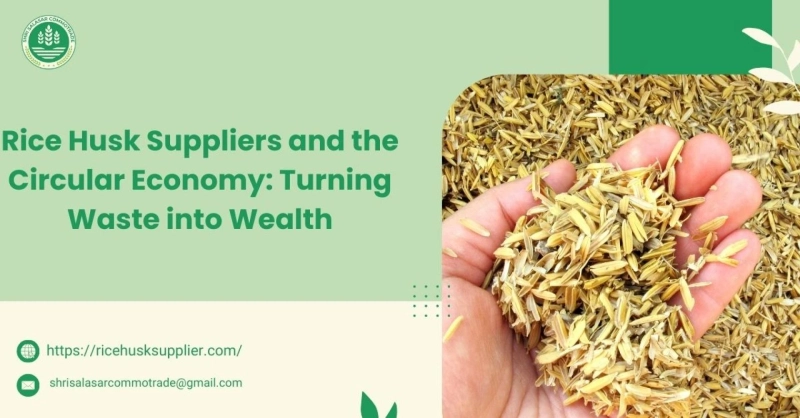
Rice husk, also known as rice hull, is the protective outer layer of rice grains. When rice is milled, this husk is removed and usually discarded as agricultural waste. But in recent years, rice husks has gained attention as a valuable raw material for industries looking for eco-friendly, cost-effective, and sustainable resources.
From energy production to construction and agriculture, rice husk is now used in many innovative ways. At the center of this growing demand are rice husk suppliers, who play a crucial role in collecting, processing, and delivering this material to businesses.
The Circular Economy Explained in Simple Words
A circular economy is a model that focuses on reducing waste, reusing materials, and recycling by-products to create a closed-loop system. Instead of throwing things away, resources are kept in use for as long as possible.
Rice husk fits perfectly into this model. Instead of being burned or dumped, it is now processed and reused in multiple ways.
Rice husk suppliers are at the heart of this system — they collect the waste, process it, and supply it for productive use, making the economy more sustainable.
How Rice Husk Suppliers Support the Circular Economy
Reducing Agricultural Waste
Every year, millions of tons of rice husk are generated in countries like India, China, and other rice-growing nations. Earlier, most of it was treated as waste and burned, causing air pollution. Now, thanks to suppliers, this by-product is being reused and recycled into valuable products.
Creating Clean Energy
Rice husk is a great source of biomass fuel. It burns efficiently and produces energy for industries. Suppliers provide husks in different forms such as:
- Loose husk
- Briquettes
- Pellets
Power plants, brick kilns, and boiler systems use rice husk to reduce fossil fuel consumption. This is a cleaner and cheaper alternative that reduces carbon emissions.
Providing Material for Eco-Conscious Industries
Rice husk ash is rich in silica, making it perfect for:
- Cement production
- Brick manufacturing
- Insulating boards
- Tiles and panels
By supplying rice husk and its by-products, suppliers contribute to green construction.
Supporting Organic Farming
In agriculture, rice husk is used as:
- Mulch
- Organic fertilizer
- Soil conditioner
Its ability to improve soil health makes it a favorite in organic farming. Suppliers cater to farmers and agri-businesses who seek natural alternatives to chemical fertilizers.
Types of Products Supplied from Rice Husk
Rice husk suppliers offer various forms depending on the need of industries:
- Raw Husk: Directly from rice mills, used in compost or for burning.
- Husk Briquettes: Compressed form used as fuel.
- Husk Pellets: Uniform small-size fuel for industrial boilers.
- Rice Husk Ash (RHA): Collected after burning husk, used in cement and concrete.
- Silica Extract: Some companies extract silica from RHA for glass and electronics.
Each product has its own market, and suppliers often cater to more than one industry.
The Economic Benefits of the Rice Husk Supply Business
Low Investment, High Potential
Starting a rice husk supply business requires basic equipment, storage, and transport. Since husk is a by-product, the cost of raw material is very low. The demand, however, is growing, especially from green industries.
Local Employment Opportunities
The rice husk supply chain creates jobs for:
- Collectors
- Sorters
- Drivers
- Packers
- Salespeople
This helps uplift rural communities and supports local economies.
Export Opportunities
Many countries import rice husk for biomass energy. Indian suppliers are finding markets in:
- Europe (for biomass boilers)
- Africa (for agriculture)
- Southeast Asia (for industrial use)
With proper certifications and quality control, rice husk can become a valuable export product.
Technology and Innovation in Rice Husk Supply
Smart suppliers are now using technology to improve business:
- Moisture sensors for better quality control
- Online marketplaces to find customers and partners
- Mobile apps for tracking deliveries and orders
- Machinery to convert husk into briquettes or pellets
Innovation is making the rice husk supply business more professional and scalable.
Government Support and Business Registration
Many governments now support eco-friendly businesses. In India, rice husk suppliers can benefit from:
- Udyam Registration (for MSMEs)
- Startup India support
- Biomass energy incentives
- Subsidies on equipment and storage
With proper documentation and registration, suppliers can access funding, training, and partnerships.
Future of Rice Husk Suppliers in a Green Economy
As the world moves towards clean energy and sustainable materials, the demand for rice husk will only grow. Here’s what the future holds:
- Green construction will boost RHA demand
- Biomass energy plants will use more husk pellets
- Fertilizer and organic farming sectors will expand
- More countries will import rice husk from India and Asia
Suppliers who adapt early, invest in technology, and build good networks will thrive in the future.
Conclusion
Rice husk suppliers are not just running a business — they are solving environmental problems, supporting farmers, and building sustainable industries. By converting waste into wealth, they are a key part of the circular economy. If you are a business looking for eco-friendly raw materials or someone interested in starting a green business, rice husk supply is a smart and impactful path.