



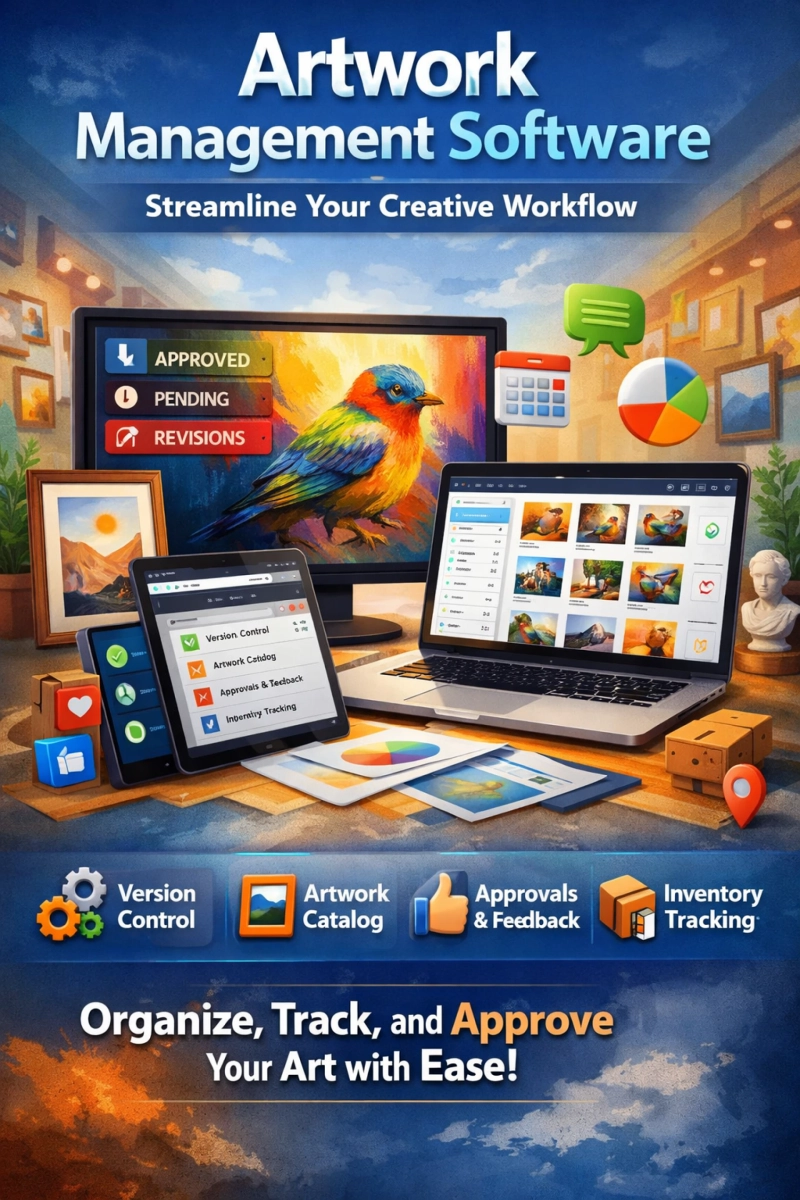
Artwork management software is a specialized digital platform that helps organizations control, organize, and govern visual assets used in packaging, labeling, marketing, and product communication. It acts as a single source of truth where teams can store files, track revisions, manage approvals, and document regulatory sign-offs — all within a structured, searchable environment.
Instead of juggling endless email threads, shared drives, and outdated file versions, businesses use artwork management systems to create a controlled workflow that connects designers, regulatory teams, brand managers, printers, and external partners. The result is fewer errors, faster approvals, and full visibility into who changed what — and when.
Market Size and Industry Momentum
The artwork management software market is steadily gaining momentum as companies face increasing pressure to ensure packaging accuracy, regulatory compliance, and brand consistency across global markets. The market, valued at over US$ 550 million in 2022, is forecast to surpass US$ 1.1 billion by 2030, progressing at a compound annual growth rate of approximately 9%.
This expansion is closely tied to the growing complexity of packaging regulations, multilingual labeling requirements, and the need for faster product rollouts. As product portfolios expand and regional rules evolve, manual artwork handling becomes too risky and inefficient. Digital workflow platforms are now viewed as essential infrastructure rather than optional tools.
Artwork management systems reduce costly packaging errors, prevent compliance delays, and support faster speed-to-market — all of which directly impact revenue and brand reputation.
Request to sample Report- https://www.theinsightpartners.com/sample/TIPRE00022060
Key Drivers Accelerating Market Growth
Regulatory Pressure Across Industries
Regulated industries such as pharmaceuticals, medical devices, food & beverages, and chemicals face constant updates to labeling laws and safety disclosures. Any small artwork mistake can lead to recalls, fines, or shipment delays. Artwork management platforms provide structured approval workflows, version locking, and audit trails that help companies demonstrate compliance during inspections and audits.
Rising Packaging Variants and Product Personalization
Brands now offer more SKUs than ever before — different sizes, flavors, formulations, regional versions, and promotional editions. Each variation requires packaging adjustments, often across multiple languages. Artwork management software helps teams reuse approved components while maintaining control over changes, reducing duplication and risk.
Global Collaboration Needs
Artwork creation is rarely confined to one location. Design agencies, regulatory reviewers, printers, and marketing teams often operate in different countries. Cloud-based artwork management systems allow real-time collaboration while maintaining strict permission controls and documentation standards.
Demand for Faster Product Launch Cycles
In competitive sectors like FMCG and consumer health, speed matters. Delays caused by artwork errors or approval bottlenecks can push back launches and increase costs. Automated routing, deadline tracking, and instant notifications help compress review timelines without sacrificing compliance.
Cloud Adoption Transforming Deployment Models
Cloud deployment is now the fastest-growing segment of the market. Organizations prefer cloud platforms because they:
· Reduce IT infrastructure and maintenance costs
· Enable remote and cross-border collaboration
· Integrate more easily with PLM, ERP, and regulatory systems
· Provide scalable storage for large design files and archives
As global supply chains become more digital and distributed, cloud-native artwork management tools are becoming the default choice for both large enterprises and mid-sized brands.
Market Segmentation Insights
By Industry Application
Life Sciences remains the largest adopter due to strict documentation and labeling control requirements
FMCG and Food & Beverage sectors are expanding rapidly due to frequent packaging updates and regional compliance rules
Retail and Private Label Brands are increasing adoption to maintain brand consistency across suppliers
Manufacturing and Chemicals are investing to improve hazard labeling accuracy and multilingual compliance
By Geography
Asia-Pacific is the fastest-growing region, supported by expanding pharmaceutical production and export-driven manufacturing
North America and Europe remain mature markets with strong regulatory frameworks and early digital adoption
Latin America and the Middle East are emerging markets as export standards and labeling enforcement tighten
Competitive Landscape
Leading vendors in the artwork management software market focus on enhancing automation, compliance intelligence, and integration capabilities. Many are investing in AI-powered proofreading, automated text comparison, and smart workflow recommendations.
Notable companies include:
· Loftware Inc
· Esko
· Karomi
· Perigord
· Freyr
· ManageArtworks
· Kallik
· Aptean
· enLabel
· GreatFour Systems
These providers compete by offering industry-specific compliance modules, scalable cloud environments, and user-friendly interfaces that reduce training time and improve adoption across departments.
Future Market Outlook
The next phase of growth will be driven by intelligent automation and deeper regulatory integration. Emerging innovations include:
· AI-based label content verification
· Automated detection of artwork inconsistencies
· Integration with global regulatory databases
· Predictive workflow routing to reduce approval delays
As sustainability labeling, serialization requirements, and cross-border trade regulations become more complex, companies will increasingly rely on artwork management platforms as mission-critical systems.
The market’s trajectory indicates a clear shift: artwork management is evolving from a niche design-support tool into a core compliance and operational technology that safeguards brand integrity and accelerates global product delivery.
Related Report