



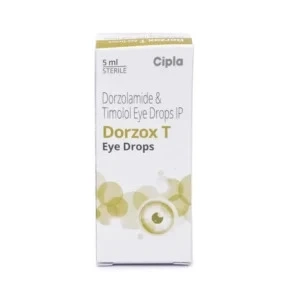
Glaucoma and ocular hypertension slowly damages the vision by raising the pressure inside the eye. Left untreated, high eye pressure can harm the optic nerve and slowly steal sight. Dorzox T 5 ml eye drops are a trusted, prescription-strength option used to lower that pressure. This clear guide explains how Dorzox T works, who it helps, how it’s used, common side effects, and why clinicians prescribe this combination treatment. Clear, simple language. Easy to read. Evidence-linked to major sources (FDA, NHS, NIH).
What are Dorzox T 5 ml eye drops?
Dorzox T 5 ml eye drops is an ophthalmic solution that contains two active medicines: dorzolamide and timolol. It is a fixed-combination solution. They work together to lower the amount of fluid made in the eye. The main goal of treating open-angle glaucoma and ocular hypertension is to lower intraocular pressure (IOP).
Why a combination drop?
Using two drugs in one drop offers practical advantages:
- Dorzolamide is a topical carbonic anhydrase inhibitor. It slows the chemical steps that make fluid in the eye.
- Timolol is a topical beta-blocker. It reduces fluid production by blocking certain nerve signals.
These medicines often lower blood pressure more when taken together than when taken alone. Fixed combinations can also make things easier and help people stick to their plans: there are fewer bottles, fewer steps, and less chance of missing doses. This approach is supported by clinical reviews and product labels for combinations of dorzolamide and timolol.
What conditions is Dorzox T used for?
Dorzox T is used to reduce elevated intraocular pressure in:
- Open-angle glaucoma.
- Ocular hypertension (high eye pressure without optic nerve damage yet).
It’s often chosen when a single-drug therapy does not achieve the target IOP or when the doctor prefers a combination for stronger control. Official product information for dorzolamide/timolol combinations states these indications clearly.
How Dorzox T 5 ml eye drops works — plain and short
- Timolol reduces the eye’s fluid production by blocking beta receptors.
- Dorzolamide blocks an enzyme (carbonic anhydrase) involved in fluid formation.
- Less fluid = lower pressure inside the eye.
- Lower pressure protects the optic nerve and slows vision loss.
Common dosing (what patients usually do)
Typical dosing for a dorzolamide 2% / timolol 0.5% fixed combination is one drop in the affected eye(s) twice daily (morning and evening). Exact strength and schedule may vary by product and country, so follow your doctor’s instructions and the prescription label. The NHS and official product labels describe similar dosing patterns for timolol and fixed combinations.
How to use Dorzox T eye drops correctly
- Wash your hands.
- Tilt head back and pull down the lower lid.
- Squeeze one drop into the pocket formed by the lower lid.
- Close your eyes gently for 1–2 minutes. Press the inner corner (nasolacrimal duct) for 60 seconds if advised — this reduces systemic absorption.
- Wait at least 5–10 minutes before using other eye drops.
- Replace the cap and store as directed.
Side effects — what to watch for
Most people tolerate dorzolamide/timolol drops well, but like all medicines they can cause side effects. Common local reactions include:
- Eye stinging or burning right after instillation.
- Bitter taste in the mouth.
- Eye redness or irritation.
Because timolol is a beta-blocker, systemic absorption can affect the heart or lungs in susceptible people. Tell your doctor if you have asthma, severe chronic obstructive pulmonary disease (COPD), certain heart conditions, or if you use oral beta-blockers. The FDA label and NHS guidance list these precautions and side effects. Seek urgent care for signs of severe allergic reaction.
Who should NOT use Dorzox T?
Do not use dorzolamide/timolol combination drops if you:
- Have severe asthma or severe COPD.
- Have certain heart conditions (e.g., heart block, unstable heart failure) unless advised by a cardiologist.
- Are allergic to sulfonamides (dorzolamide is a sulfonamide derivative).
- Have known hypersensitivity to any component of the product.
Discuss pregnancy, breastfeeding, and all other medications with your clinician so they can judge safety for your situation. Official prescribing information and healthcare guidance offer detailed contraindications.
Evidence snapshot — does the combo work?
Yes, many clinical studies and reviews show that topical dorzolamide/timolol lowers the pressure inside the eye in people with open-angle glaucoma or ocular hypertension. In practice, doctors use this fixed combination when single agents don't work to lower pressure or when a stronger, more reliable effect is needed. The efficacy data is summed up in peer-reviewed reviews and regulatory labels.
Practical tips for patients
- Take drops at the same two times each day for steady control.
- If you wear contact lenses, remove them before use. Wait 15 minutes to reinsert contacts unless the product label says otherwise.
- Keep the bottle tightly closed and store per label instructions.
- If you miss a dose, use it when you remember unless it’s almost time for the next dose — do not double up.
- Keep follow-up eye checks. Pressure is measured over time to see whether treatment is working. Moorfields and other guidelines recommend regular monitoring.
Why some doctors prefer fixed combinations like Dorzox T 5 ml eye drops
- Convenience improves adherence. Fewer bottles and fewer instillations per day help many patients stick to treatment.
- Lower preservative exposure when one combined bottle replaces two separate drops.
- Proven incremental benefit: combining drugs with different mechanisms usually lowers pressure more than a single drug. Regulatory labels and clinical reviews support these advantages.
Safety precautions — quick checklist
- Tell your doctor if you have lung or heart disease.
- Mention allergies, especially to sulfonamides.
- Report signs of slow heartbeat, dizziness, shortness of breath, or fainting.
- You should avoid driving if your vision is blurred after use of the eye drop.
- Use in pregnancy or breastfeeding only if your doctor thinks it is necessary. Official guidance and product labeling discuss these safety points.
Conclusion
Dorzox T 5 ml eye drops combine dorzolamide and timolol in one bottle. It lowers eye pressure by two different, complementary actions. Doctors use it for open-angle glaucoma and ocular hypertension when stronger control is needed or when a combination is preferred. Follow your doctor’s dosing and attend regular eye checks. This combination is a well-studied, guideline-aligned choice in glaucoma care.
Dorzox T 5 ml eye drops are a two-in-one product that lowers pressure and is backed by clinical and regulatory data for patients who have been prescribed it. If your eye doctor gives you Dorzox T eye drops, they can be a useful part of your glaucoma treatment plan that is backed by research.