



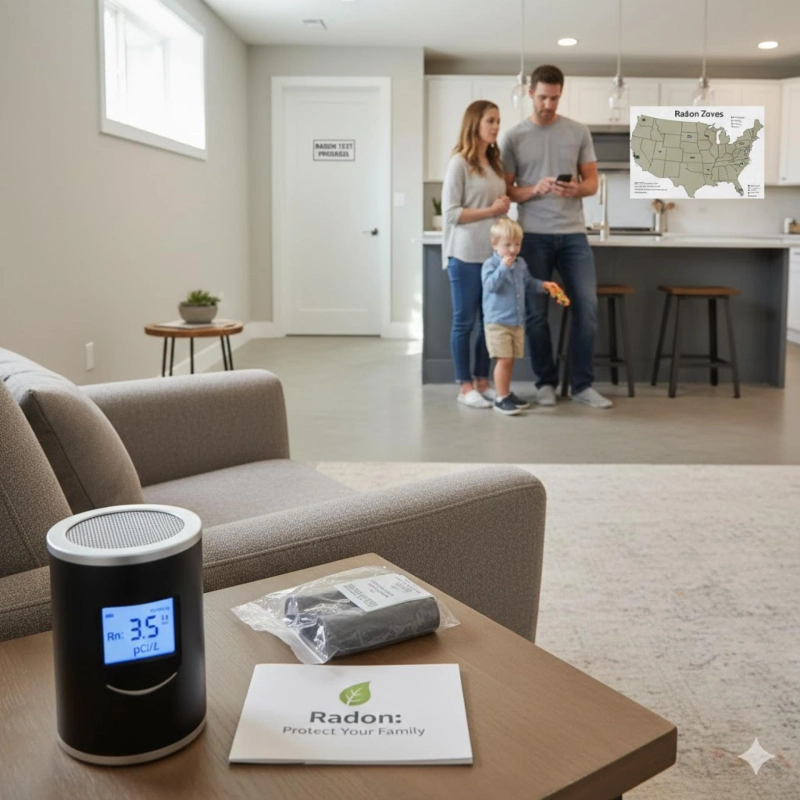
Radon might be invisible and odorless, but the danger it poses is real and potentially deadly. When your home tests high for radon, it’s not something to ignore or put off. The good news? You’re not powerless against it. With the right steps, you can reduce radon levels, protect your family’s health, and restore peace of mind.
This article will walk you through exactly what to do after receiving a high radon test result—from understanding the science behind it to taking smart, cost-effective action.
What Is Radon and Why Is It Dangerous?
Before we dive into the next steps, let’s get clear on what we’re dealing with. Radon is a naturally occurring radioactive gas that forms when uranium breaks down in soil, rock, or water. It can seep into your home through cracks in the foundation, gaps around pipes, or even your sump pump.
Because it’s colorless and odorless, you can’t detect it without a proper test. Long-term exposure to elevated radon levels has been linked to lung cancer, making it the second leading cause of lung cancer in the United States, right after smoking.
If your test results came back high, it’s not just a number—it’s a health warning.
Understanding Your Radon Test Results
When you receive your radon test results, you’ll see a measurement expressed in picocuries per liter (pCi/L). This unit measures the concentration of radon gas in the air.
Here’s how to interpret it:
- Below 2 pCi/L: Generally considered low. No immediate action is needed, but retest every few years.
- Between 2 and 4 pCi/L: This is the “watch zone.” While the EPA’s action level is 4 pCi/L, many experts recommend reducing levels even if they’re slightly above 2.
- 4 pCi/L or higher: Take action immediately. The EPA strongly advises mitigation at this level to protect your health.
Keep in mind that radon levels can fluctuate seasonally—often higher in winter when homes are closed up—so retesting at different times of year is wise.
Step 1: Don’t Panic—But Don’t Wait
Finding out that your radon levels are high can be alarming, but it’s important not to panic. Radon issues are fixable—many homeowners successfully lower radon concentrations with relatively simple mitigation systems.
However, delaying action could expose your family to unnecessary health risks. Radon exposure accumulates over time, so the sooner you act, the better.
Step 2: Confirm the Results with a Follow-Up Test
Before you spend money on mitigation, it’s smart to confirm your initial results.
Why a Second Test Matters
- Short-term radon tests (lasting 2–7 days) can be affected by humidity, ventilation, and weather conditions.
- A follow-up long-term test (lasting 90 days to a year) gives a more accurate picture of your home’s average radon level.
If both tests confirm elevated radon levels, there’s no doubt—it’s time to mitigate.
Step 3: Identify the Source of Radon Infiltration
Every home is different, and radon can enter in multiple ways. Common entry points include:
- Cracks in concrete floors and walls
- Construction joints
- Gaps around service pipes
- Cavities inside walls
- Sump pumps or floor drains
A professional radon mitigation contractor can inspect your home to identify the source of the gas and recommend the most effective mitigation strategy.
Step 4: Hire a Certified Radon Mitigation Professional
This is not a DIY project for most homeowners. Radon mitigation requires specialized knowledge, equipment, and strict adherence to local building codes.
Look for a certified professional through organizations such as:
- National Radon Proficiency Program (NRPP)
- National Radon Safety Board (NRSB)
These certifications ensure your contractor follows EPA-approved techniques for reducing radon.
When hiring, ask for:
- Proof of certification and insurance
- A detailed cost estimate
- A description of the mitigation plan
- Post-mitigation testing to verify success
Step 5: Learn How Radon Mitigation Works
Understanding the process will help you make informed decisions.
Common Mitigation Methods:
- Sub-Slab Depressurization (SSD):
- The most effective and widely used system. It involves installing a pipe through the foundation slab connected to a radon fan that vents the gas safely outside.
- Sump Pump System Integration:
- If you already have a sump pit, it can be sealed and incorporated into the mitigation system.
- Crawl Space Encapsulation:
- Homes with crawl spaces may need sealing with a vapor barrier and venting beneath it to prevent gas buildup.
- Increased Ventilation:
- In some cases, especially in basements, improving air circulation and sealing entry points can help reduce radon levels.
Step 6: Test Again After Mitigation
Even the best mitigation system needs verification. Once the installation is complete, a post-mitigation test should be performed within 24 hours to 30 days to confirm that radon levels have dropped below 4 pCi/L (ideally below 2).
This test serves as proof that your mitigation system is doing its job.
Step 7: Maintain Your Radon System
Radon systems are low-maintenance, but not maintenance-free. To keep your home safe long-term:
- Check the fan regularly: Radon fans typically run continuously for years, but if they fail, radon levels can rise quickly.
- Inspect the U-tube manometer: This simple device shows if your system is functioning properly.
- Schedule annual testing: Radon levels can change due to foundation settling or home renovations.
If you ever remodel your basement or add an addition, retesting is essential.
Step 8: If You’re Buying or Selling a Home
A high radon reading doesn’t have to ruin a real estate transaction—it just requires transparency and proper mitigation.
For Sellers:
- Test before listing. Addressing radon in advance can be a selling point.
- Provide documentation of mitigation and post-test results.
For Buyers:
- Request a radon test as part of your home inspection.
- Negotiate mitigation with the seller if high levels are detected.
Having a system in place protects everyone involved.
Step 9: Protect Your Family’s Health
Reducing radon levels is more than a home improvement—it’s a health safeguard. Studies show that radon exposure is responsible for about 21,000 lung cancer deaths in the U.S. each year.
Even nonsmokers are at risk. In fact, the risk of lung cancer doubles for those exposed to both radon and cigarette smoke.
By taking action after a high reading, you’re significantly reducing your family’s long-term cancer risk.
Step 10: Stay Informed and Proactive
Radon awareness is growing, but many homeowners still overlook it. Stay proactive by:
- Retesting every two years
- Educating family and neighbors
- Checking state radon maps to see if you’re in a high-risk area
- Keeping up with the latest EPA recommendations
Being informed helps prevent complacency and ensures your home remains a safe environment.
How Much Does Radon Mitigation Cost?
Cost depends on your home’s layout and the mitigation method used. On average, you can expect:
- $800–$1,500 for a standard sub-slab depressurization system
- $1,500–$3,000 for complex homes or crawl spaces
While that may sound like an investment, consider the payoff: you’re buying cleaner air, better health, and long-term peace of mind.
Common Myths About Radon—Debunked
Myth #1: “My home is new, so I don’t have to worry.”
False. New homes can trap radon even more tightly due to better insulation.
Myth #2: “If my neighbor’s levels are low, mine must be too.”
Not true. Radon levels vary dramatically—even between identical homes next door.
Myth #3: “I can fix it myself with a few seals.”
Caulking cracks helps, but only a professional mitigation system can reliably keep radon levels low.
Myth #4: “Radon isn’t a problem in my area.”
Every state has radon-prone zones. Testing is the only way to know for sure.
Conclusion: Act Now, Breathe Easier
If your home tested high for radon, you’re not alone—and you’re not helpless. High radon levels can be fixed quickly, affordably, and permanently with the right approach.
Start by confirming your test results, hiring a certified professional, and ensuring your system is properly maintained. The sooner you act, the sooner you can protect your family’s health and enjoy a safer home.
For more information or to schedule a professional radon mitigation service, visit Rochester Radon Mitigation.