



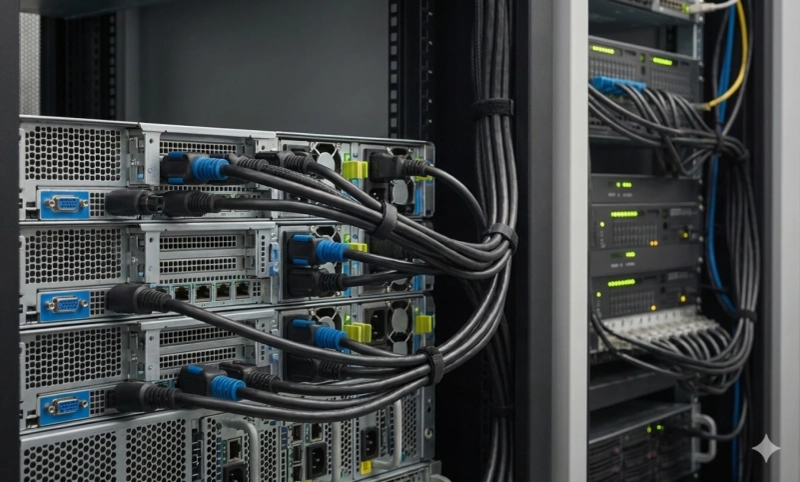
When setting up computer equipment, data centers, or home electronics, you face a common question: does the length of your power cable actually affect performance? This question becomes particularly important when dealing with standardized connectors like the c13 power cable, which powers everything from desktop computers to network switches. Understanding the relationship between cord length and performance helps you make informed decisions about your electrical infrastructure.
Understanding Power Cable Basics
Before diving into how length affects performance, you need to understand what happens inside a power cable. Electrical current flows through conductive materials, typically copper or aluminum, encountering resistance along the way. This resistance exists in every cable, regardless of quality or price. The c13 power cable, which features the standard IEC 60320 C13 connector, operates under the same physical principles as any other electrical conductor.
When electricity travels through a conductor, the cable's resistance converts some electrical energy into heat. This conversion results in what engineers call "voltage drop"—the difference between the voltage entering the cable and the voltage arriving at your device. This phenomenon becomes more pronounced as cables grow longer.
How Cable Length Impacts Voltage
The relationship between cable length and voltage drop follows a straightforward principle: longer cables create more resistance, which causes greater voltage drop. Think of it like water flowing through a pipe. A longer pipe creates more friction, reducing the pressure at the endpoint. Similarly, a longer c13 power cable presents more resistance to electrical current.
For most consumer electronics and office equipment, however, this voltage drop remains negligible with standard cable lengths. A typical 6-foot c13 power cable experiences minimal voltage drop—usually well within acceptable tolerances. Your computer or monitor receives nearly the full voltage supplied by your wall outlet.
The situation changes with extremely long cables. If you run a 50-foot or 100-foot power cable, you start seeing measurable voltage drop. This drop can affect sensitive equipment, though most modern devices include voltage regulation circuitry that compensates for minor variations.
Real-World Performance Considerations
Does this voltage drop translate into noticeable performance differences? For most applications, the answer is no. Modern electronic devices tolerate voltage variations quite well. Your desktop computer will perform identically whether you use a 3-foot or 10-foot c13 power cable. The power supply unit inside your computer regulates incoming voltage, ensuring stable power delivery to internal components.
However, certain scenarios demand more attention to cable length. High-power equipment, such as servers, large displays, or industrial machinery, draws more current. Higher current flowing through resistance generates more heat and creates larger voltage drops. In these situations, you want to minimize cable length where practical.
Data centers and server rooms implement strict cable management practices partly because of these electrical considerations. System administrators prefer shorter c13 power cables not just for organization, but also to maintain optimal power delivery to critical equipment.
The Role of Cable Quality
Cable length interacts with cable quality in important ways. A high-quality c13 power cable uses thicker conductors with lower resistance per foot. This construction minimizes voltage drop even in longer cables. Cheaper cables often use thinner wire gauges, which increases resistance and makes length more critical.
The American Wire Gauge (AWG) system rates conductor thickness. A lower AWG number indicates a thicker wire with less resistance. Most standard c13 power cables use 14 AWG or 16 AWG wire. For longer runs or high-power applications, you should choose 14 AWG or even 12 AWG cables to minimize voltage drop.
Quality also affects cable heating. Poor-quality cables can become warm or hot during operation, especially under heavy loads or with longer lengths. This heating not only wastes energy but can also present safety concerns. Reputable c13 power cables include proper insulation and conductor sizing to handle their rated current safely.
Practical Guidelines for Cable Selection
When choosing power cable lengths for your setup, follow these practical guidelines. First, measure the actual distance between your power outlet and device, then add a small margin for routing flexibility. Avoid coiling excess cable tightly, as this can create electromagnetic interference and heat buildup.
For standard office equipment like computers, monitors, and printers, you can safely use c13 power cables up to 15 feet without performance concerns. Beyond this length, consider the power requirements of your device. Low-power devices tolerate longer cables better than high-power equipment.
If you must run power over longer distances, consider several alternatives. You might install additional electrical outlets closer to your equipment. Alternatively, you can use power distribution units (PDUs) to bring power closer to multiple devices. These solutions prove more reliable than extremely long power cables.
Special Considerations for Sensitive Equipment
Some equipment exhibits greater sensitivity to power quality. Audio equipment, medical devices, and precision instruments may show performance degradation with longer cables due to increased electrical noise or voltage variations. For these applications, you should minimize cable length and invest in high-quality c13 power cables with proper shielding.
Testing equipment in your specific environment provides the most accurate assessment. If you notice unusual behavior, flickering, or performance issues, cable length might contribute to the problem. Trying a shorter cable offers an easy troubleshooting step.
Conclusion
Cord length does affect electrical performance, but the impact remains minimal for typical applications using standard-length cables. The c13 power cable you connect to your computer works efficiently at any reasonable length, thanks to modern voltage regulation and proper cable design. However, understanding the physics behind voltage drop helps you make better decisions for specialized applications, high-power equipment, or long cable runs.
Choose cable lengths that balance practicality with electrical efficiency. Avoid unnecessarily long cables, but don't worry about minor length differences in normal office or home environments. When in doubt, select quality cables with appropriate wire gauges, and keep lengths under 15 feet for optimal performance and peace of mind.