



In the expansive world of aesthetic treatments, the quest for permanently smooth skin is one of the most common journeys clients undertake. However, the terminology surrounding hair reduction can be dense and often misleading. When searching for the most effective solution to unwanted body hair, clients are frequently bombarded with marketing claims that blur the lines between very different technologies. The distinction between true laser technology and other light-based alternatives is critical, yet frequently misunderstood. Among the top-tier options available today, diode laser hair removal stands out as a preferred medical standard for its ability to deliver consistent, permanent results across a wide variety of skin tones. Understanding why this technology differs from its competitors is the first step toward making an informed investment in your personal care.
The Fundamental Difference in Light Source
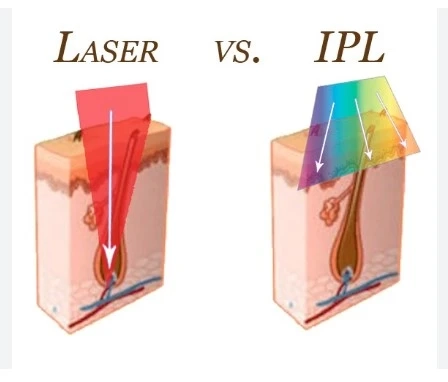
To understand the practical differences between Diode lasers and Intense Pulsed Light (IPL), one must first look at the physics of the light itself. The term "laser" is an acronym for Light Amplification by Stimulated Emission of Radiation. A true laser, like the Diode, emits a single, focused beam of light at a specific wavelength. It is monochromatic (one color) and coherent (the light waves travel in a straight line). This coherence allows the energy to be focused intensely on a specific target without dissipating into the surrounding tissue.
In contrast, IPL is not a laser at all. It utilizes a high-powered, broad-spectrum light bulb that emits multiple wavelengths of light simultaneously, much like a camera flash. This light is incoherent and scattered. While filters are used to block out harmful UV rays and narrow the spectrum, the energy output is still less focused than a laser. Think of the difference between a sniper rifle and a shotgun; the laser targets the hair follicle with precision, while IPL sprays energy over a wider area, affecting the skin and other structures along with the hair.
Precision and Penetration Depth
The efficacy of hair removal depends entirely on the principle of selective photothermolysis. This is a scientific way of saying that the light energy must be absorbed by a specific target (chromophore) and converted into heat to destroy that target without burning the surrounding area. In hair removal, the target is the melanin (pigment) found in the hair shaft and the follicle bulb.
Diode lasers typically operate at a wavelength of around 800 to 810 nanometers. This specific wavelength is considered the "sweet spot" for hair removal. It offers deep penetration into the dermis where the hair follicle resides, ensuring that the energy reaches the root. Because the beam is uniform, the heat is delivered efficiently to the follicle.
IPL, due to its broad spectrum, emits wavelengths that are absorbed by various targets in the skin, including water and hemoglobin (blood), in addition to melanin. This means that a significant portion of the energy is wasted on non-target structures. Consequently, IPL devices often struggle to generate enough heat at the root of coarse, deep hairs to permanently disable the follicle, leading to results that are often described as hair reduction rather than removal.
Safety Across Skin Spectrums
One of the most significant advantages of Diode technology is its safety profile across a diverse range of skin types. The Fitzpatrick Scale is used by professionals to classify skin tone from Type I (very fair) to Type VI (deeply pigmented). Because older laser technologies targeted melanin so aggressively, they were dangerous for darker skin tones; the laser could not distinguish between the melanin in the hair and the melanin in the skin, leading to burns.
Diode lasers have revolutionized this aspect of care. Their longer wavelength penetrates deeper, bypassing the surface melanin in the epidermis to target the follicle beneath. This makes them significantly safer for individuals with olive, tan, or dark skin tones.
Conversely, IPL carries a higher risk of adverse effects for darker skin. Because the broad-spectrum light covers wavelengths that are highly absorbed by superficial pigment, the risk of epidermal burns, blistering, and hyperpigmentation increases as the skin tone gets darker. Generally, IPL is safest only for those with very fair skin and dark hair, limiting its utility in a diverse population like that of Arizona.
Efficiency and Speed of Treatment
Time is a luxury, and efficiency is a major selling point for modern aesthetic treatments. Diode lasers are engineered for speed. Many modern devices utilize a rapid repetition rate, allowing the handpiece to glide over the skin in a continuous motion. This "in-motion" technique accumulates heat in the follicle gradually but quickly, allowing for the treatment of large areas like the back or legs in a remarkably short amount of time.
IPL treatments can often be slower. Because the device uses a flashlamp, it typically requires a "stamp and shoot" method where the technician places the handpiece, fires a pulse, moves it to the next spot, and repeats. Furthermore, because IPL is less efficient at destroying the follicle root, patients often require more sessions to achieve the same level of clearance that a Diode laser could achieve in fewer visits. While a Diode laser might require 6 to 8 sessions for optimal results, IPL users often report needing 10 or more, with more frequent maintenance required thereafter.
The Comfort Factor
Pain tolerance is subjective, but the technology plays a massive role in the patient experience. The sensation of laser hair removal is often compared to the snap of a rubber band against the skin. However, Diode laser systems frequently incorporate integrated cooling technologies directly into the handpiece. Contact cooling tips chill the skin immediately before and during the laser pulse. This not only protects the epidermis from heat injury but also acts as a numbing agent, significantly masking the sensation of the heat.
IPL devices can be more uncomfortable for some patients. Because the light is less focused, the heat is dispersed across a larger surface area of the skin. Without the sophisticated contact cooling found in high-end laser systems, the "snap" of IPL can feel hotter and more stinging, particularly on sensitive areas of the body.
Why Professionals Choose Diode
When you walk into a dedicated medical spa versus a general beauty salon, you will likely find different equipment. IPL devices are generally cheaper to manufacture and purchase. They are often marketed as "multipurpose" machines that can treat redness, sunspots, and hair. While this versatility is excellent for skin rejuvenation, it follows the adage "jack of all trades, master of none."
Specialized clinics that prioritize permanent hair reduction invest in Diode lasers because they are purpose-built tools. They are medical-grade devices designed for one specific task: destroying hair follicles. For clients, seeing a Diode laser in a clinic is a strong indicator that the provider is serious about delivering clinical-grade results rather than just cosmetic improvements.
Making the Right Choice for Your Skin
Ultimately, the choice between Diode laser and IPL should be based on your goals. If you are looking for a general freshening of the skin with some temporary hair thinning, IPL might suffice. However, if your objective is permanent reduction, smoother texture, and a solution that works safely with your natural skin tone, the Diode laser is scientifically superior.
Living in a climate where skin is exposed year-round means that we cannot hide the results of our skincare choices. Opting for the precision of laser technology ensures that you are treating your body with the highest standard of care. It minimizes the risk of burns, reduces the total time spent in the clinic, and maximizes the long-term investment in your appearance. When it comes to your skin, accepting substitutions can lead to disappointment; understanding the science ensures you get the smooth, flawless results you deserve.