



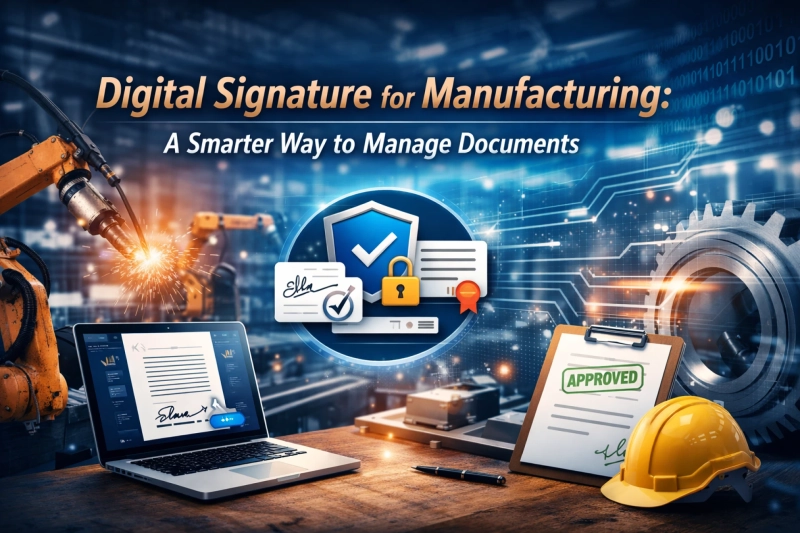
The manufacturing industry is rapidly undergoing digital transformation to remain competitive and efficient. One of the most significant changes is the adoption of digital signatures, which replace manual, paper-based signing processes with secure and legally valid electronic approvals. This shift helps manufacturers speed up operations while maintaining accuracy and compliance.
Why Manufacturing Needs Digital Signatures
Manufacturing businesses handle a high volume of documents, including purchase orders, vendor agreements, design approvals, quality reports, and compliance records. Traditional signing methods slow down these processes and often cause production delays. A digital signature for manufacturing allows documents to be signed instantly from anywhere, ensuring faster approvals and uninterrupted workflows.
Faster Approvals and Improved Productivity
One of the key benefits of using a digital signature is reduced turnaround time. Instead of waiting days or weeks for physical signatures, manufacturers can complete approvals in minutes. This leads to quicker procurement cycles, faster project execution, and improved coordination between departments, suppliers, and partners.
Paperless Operations and Cost Savings
Adopting digital signatures helps manufacturers transition to paperless operations. This reduces printing, courier, and storage costs while minimizing document loss or damage. Digital documents are easy to store, retrieve, and organize, allowing teams to focus more on production and less on administrative tasks.
Enhanced Security and Compliance
Security is critical in manufacturing, especially when handling sensitive contracts and intellectual property. Digital signatures use encryption and authentication methods to protect documents from tampering or unauthorized access. Every signed document includes an audit trail, making it easier to meet regulatory and compliance requirements.
Real-Time Tracking and Accountability
With a digital signature for manufacturing, companies gain complete visibility into document status. Manufacturers can track who has signed, who hasn’t, and when approvals are completed. This transparency improves accountability and keeps projects on schedule.
Supporting Growth and Digital Transformation
Digital signatures help manufacturers operate with greater agility. Faster documentation processes support better supply chain coordination, improved vendor relationships, and scalable growth. As manufacturing becomes more digital, electronic signing solutions are becoming a standard operational tool.
Conclusion
Implementing a digital signature is a strategic step toward efficiency, security, and sustainability in manufacturing. From faster approvals to stronger compliance and reduced costs, a digital signature for manufacturing empowers businesses to streamline operations and stay competitive in an increasingly digital world.