



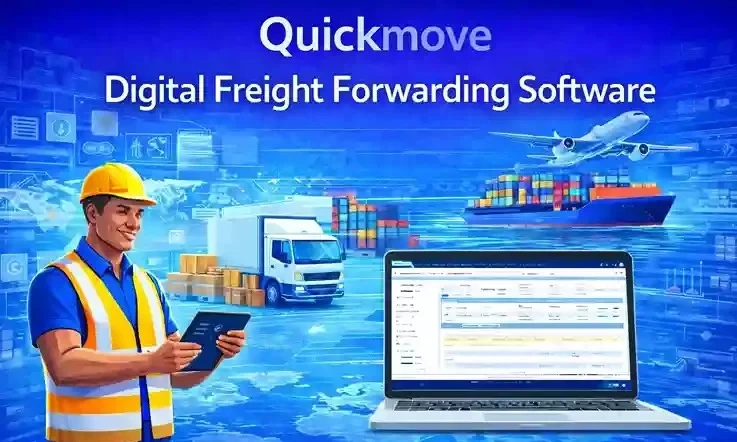
If you work in freight forwarding, you already know the truth: moving cargo isn’t the hard part. Coordinating it is.
The daily grind isn’t “ship a container.” It’s:
- replying to customer emails at odd hours
- checking rates on multiple channels
- preparing quotes with too many variables
- creating and re-creating documents
- chasing approvals
- updating milestone statuses
- tracking exceptions
- collecting invoices and matching costs
- and keeping everyone in the loop—without losing your mind
This is exactly where digital freight forwarding software changes the game.
Digital freight forwarding software isn’t just “software for forwarders.” The good ones actually redesign the workflow—so your team spends less time on manual follow-ups and more time on profitable decisions: faster quoting, stronger customer experience, better cost control, cleaner reporting, and fewer operational errors.
In this blog post, we’ll break down what digital freight forwarding software really means, what it should do and how QuickMove Technologies approaches the problem with a practical, forwarder-first platform.
What is digital freight forwarding software?
Let’s keep it simple.
Digital freight forwarding software is a system that helps freight forwarders manage their shipments, rates, customers, documents, operations, and financials on one connected platform—so work doesn’t live in scattered emails, Excel files, and WhatsApp messages.
Instead of every team working in their own silo, digital freight forwarding software connects key functions like:
- Sales & quoting
- Rate management
- Shipment creation and execution
- Document handling
- Tracking and milestones
- Customer communication
- Billing, cost, and profitability control
- Reporting and analytics
The “digital” part matters because it’s not only about recording data. It’s about making the process smoother:
- repeatable workflows
- automation of routine tasks
- visibility for customers and internal teams
- fewer manual handoffs
- faster response time
And in forwarding, speed is money.
Why freight forwarders are adopting digital freight forwarding software now
Freight forwarding has always been relationship-driven. That doesn’t change. But expectations have.
Shippers now expect:
- quick and accurate quotations
- real-time updates
- fewer email chains
- transparent cost breakdowns
- proactive exception handling
- a smoother customer experience
At the same time, forwarders face pressure from:
- volatile rates
- tight margins
- stiff competition
- staffing challenges
- complex compliance requirements
- multi-carrier coordination across air, ocean, and road
When operations are running on spreadsheets and inboxes, growth becomes expensive. You add more people, not more efficiency.
That’s why many forwarders look for digital freight forwarding software: to grow without “adding chaos.”
The real problem: freight forwarding is a workflow business
Forwarding isn’t just transportation. It’s a sequence of decisions, confirmations, and documents.
A typical shipment involves:
- inquiry / lead
- rate request and carrier follow-up
- quotation
- booking
- shipment planning
- pickup coordination
- documentation and compliance
- transit updates
- arrival and clearance coordination
- delivery
- invoicing and settlement
- profitability review
Most delays happen at the “handoff” points—where someone is waiting for someone else to respond.
Digital freight forwarding software reduces those handoff delays by giving everyone the same source of truth and automating repetitive coordination.
What digital freight forwarding software should do
Not every tool marketed as a forwarding platform actually helps your day-to-day team. Here’s what a strong system should do.
1) Make quoting faster—and safer
Quoting is where revenue starts and where mistakes begin.
You want a system that helps you:
- store and organize rates
- handle validity dates and surcharges
- use templates for common lanes
- calculate totals consistently
- produce customer-ready quotes quickly
- track quote status and follow-ups
- convert accepted quotes into shipments
If your sales team still needs to ask ops for “what’s the latest rate,” you’re losing time—and sometimes losing deals.
2) Centralize shipment execution
Once a quote is accepted, the operations team needs a clean handover.
Software should help with:
- quick shipment creation
- standardized milestones
- task lists by shipment type (air/ocean/road)
- document storage and version control
- status updates without chaos
- exception handling and audit trails
3) Handle documentation without turning into a mess
Forwarding is document-heavy. Small errors can create big problems.
The right tool should help you:
- generate documents from templates
- reuse shipment data across documents (no retyping)
- track approvals and revisions
- store everything in one place
- keep a clear history
4) Improve customer communication
Customers don’t want 20 emails. They want clarity.
Good digital freight forwarding software supports:
- automated shipment updates
- customer portals (optional but useful)
- milestone notifications
- shared tracking links
- fewer “what’s the status?” emails
5) Control costs and see profitability
Forwarders survive on margins, not volume.
A platform should let you:
- record costs and revenues per shipment
- compare estimated vs actual costs
- track payables and receivables
- reduce billing errors
- understand profit by customer, lane, service type
6) Provide reporting you can actually use
Reports should answer real questions like:
- Which customers are most profitable?
- Where do we lose time in operations?
- Which lanes bring repeat business?
- Which sales reps close fastest?
- Which carriers perform best for a route?
If reporting takes two days of Excel work, it’s not reporting—it’s a monthly struggle.
QuickMove Technologies and digital freight forwarding software
QuickMove Technologies builds digital freight software with one goal: make forwarding workflows easier for real teams—sales, ops, finance, and customer service.
The QuickMove approach is practical:
- reduce manual work
- create repeatable processes
- improve visibility
- support growth without adding operational chaos
Instead of treating forwarding like a generic “logistics app,” QuickMove focuses on what forwarders actually do daily: quote, book, execute, communicate, and reconcile.
Below is how QuickMove’s digital freight forwarding software fits into the real freight forwarding workflow.
Key capabilities in Quickmove’s digital freight forwarding software
1) Lead-to-quote flow that doesn’t waste time
In forwarding, speed wins. But speed without accuracy kills margin.
QuickMove helps teams create structured quotations that are:
- consistent across your sales team
- easier to revise
- easier to convert into shipments
- easier to track for follow-up
Instead of quotes living in email drafts, they’re stored, searchable, and measurable.
What this changes:
- less time hunting for old quotes
- fewer errors in totals
- faster response to customers
- better conversion tracking
2) Rate organization that stays usable
Rates are a living thing—base rates, surcharges, validity, carrier changes.
QuickMove helps you keep rates organized so they don’t become “a folder nobody trusts.” A good rate setup supports:
- lane-based structures
- service-based variations
- validity periods
- easy updates
- clear reference for sales and ops
The result: fewer delays, fewer “please confirm latest rate” messages.
3) Shipment execution with clear milestones
A lot of forwarding stress comes from unclear ownership: who is responsible for what?
QuickMove supports milestone-based workflows where each shipment has:
- defined statuses
- next actions
- internal notes
- document checklists
- exception flags when things go off-plan
This makes operations more predictable, especially when handling multiple shipments at once.
4) Document handling without duplication
The worst part of forwarding documentation is duplication: typing the same consignee details everywhere, repeating container information across templates, redoing a form because one small change occurred.
QuickMove reduces that repetition by letting shipment data flow into your documents and internal processes consistently.
This matters because:
- it lowers error rates
- improves compliance readiness
- saves hours across a month
- makes audits less painful
5) Customer updates that feel professional
Customer trust is built through communication—especially when delays happen.
QuickMove makes updates easier through structured status tracking and optional automation so customers don’t need to chase your team.
Even a simple improvement—like reliable milestone updates—can reduce daily call volume and “urgent status request” emails.
6) Finance visibility that supports profit, not just billing
Forwarders don’t lose money because they lack customers. They lose money because:
- costs are missed
- charges are not billed
- margins shrink silently
- disputes take forever
- profitability is unclear until too late
QuickMove supports shipment-level financial visibility so finance teams can track:
- expected vs actual costs
- revenues by service
- billing readiness status
- margin trends across customers or lanes
This helps management make decisions sooner, not after month-end.
Who benefits from digital freight forwarding software inside a forwarding company?
A common mistake is to treat this as “ops software.” It’s not. A good platform helps every function.
Sales teams
- faster quote creation
- visibility on rate validity
- quote tracking and follow-up
- reduced dependence on ops for basic info
- improved customer response speed
Operations teams
- standardized execution steps
- centralized documents and notes
- fewer manual updates
- clearer ownership
- better exception management
Customer service
- easy access to shipment status
- fewer “where is it?” escalations
- clearer communication
- better customer experience without extra effort
Finance teams
- better cost capture
- cleaner invoicing
- fewer disputes
- more accurate profitability reporting
- faster month-end closing
Leadership
- real metrics for growth
- insight into bottlenecks
- performance tracking by customer/lane/service
- fewer operational surprises
Common myths about digital freight forwarding software
Myth 1: We need to be fully digital to use this.
No. Most forwarders start with a few improvements:
- structured quoting
- centralized shipment tracking
- document control
- shipment-level financial visibility
You don’t need perfection. You need progress.
Myth 2: Only large forwarders need it.
Smaller forwarders benefit earlier because manual processes hurt more when teams are lean. A 10-person forwarding team can feel overloaded very quickly without structured workflows.
Myth 3: Software replaces relationships.
It doesn’t. It supports them.
Relationships win business. Software keeps the business profitable and manageable.
Why QuickMove’s approach works for real forwarding teams
Many platforms look good in screenshots but fail in daily operations because they don’t understand forwarding realities: last-minute changes, incomplete documents, exceptions, messy rate inputs, and constant coordination.
QuickMove’s focus is:
- workflow clarity
- speed with control
- centralized visibility
- repeatable processes
- data that becomes usable for decisions
That combination is what makes digital freight forwarding software more than a system—it becomes the operating backbone.
Digital freight forwarding software is no longer optional
Freight forwarding is getting faster, more transparent, and more competitive. Customers want speed and clarity. Teams want fewer manual tasks and fewer late-night escalations. Leaders want real profitability insight, not guesswork.
That’s why digital freight forwarding software is now a core part of modern forwarding operations—and why QuickMove Technologies focuses on making it practical, usable, and aligned with real-world forwarding workflows.
If you’re evaluating a platform, the best question isn’t “does it have features?”
It’s “does it make my team’s day easier while improving customer experience and margin control?”
That’s the standard QuickMove Technologies builds toward—so freight forwarders can scale with confidence.