



Introduction
When it comes to serious crimes, few are as heavily scrutinized as murder. But here’s something many people don’t realize: not all murders are treated equally in the legal system. The law recognizes different levels of severity—known as different degrees of murder—to ensure that punishment matches both the intent and circumstances of the crime.
These classifications are essential because there’s a big difference between a planned assassination and an accidental killing caused by recklessness. Each type of murder charge carries different penalties, and understanding them can help you make sense of high-profile cases or even defend your rights if you’re facing such charges.
In this complete legal guide, we’ll break down the degrees of murder, share examples, discuss sentencing, and explain why the differences matter.
What Are “Degrees of Murder”?
The term “degrees of murder” refers to legal categories that differentiate homicide based on factors like intent, planning, and the nature of the act. This classification system helps courts decide how severe the punishment should be.
In simple terms:
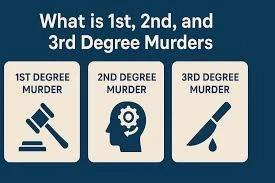
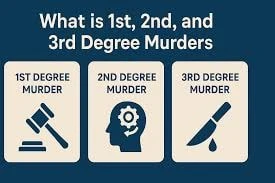
- First-degree murder is the most serious—planned and intentional.
- Second-degree murder involves intent but no premeditation.
- Third-degree murder (in certain states) covers reckless actions leading to death.
- Manslaughter is a separate but related charge with lower penalties.
These distinctions aren’t just technicalities—they have real consequences for sentencing, parole eligibility, and even the possibility of the death penalty.
First-Degree Murder – The Most Severe Charge
Definition:
First-degree murder is a premeditated, deliberate killing carried out with intent. This means the perpetrator planned the crime ahead of time and acted with full awareness of what they were doing.
Key Elements:
- Premeditation – Planning the act beforehand.
- Deliberation – Making a conscious, reasoned decision to kill.
- Malice Aforethought – Intent to kill or cause serious harm.
Example:
A person hires someone to kill a business partner for insurance money. The planning, motive, and intentional act make it a classic case of first-degree murder.
Possible Penalties:
- Life imprisonment without parole.
- Death penalty (in states that allow it).
Second-Degree Murder – Intent Without Planning
Definition:
Second-degree murder involves killing someone intentionally but without premeditation. It often happens in the heat of the moment.
Key Elements:
- No prior plan to kill.
- Intent formed during the act.
- Extreme recklessness toward human life.
Example:
During a heated argument, one person grabs a weapon and fatally injures the other. They didn’t plan it beforehand but acted intentionally in the moment.
Possible Penalties:
- 15 years to life imprisonment.
- Sentence length can vary depending on the circumstances and state law.
Third-Degree Murder – Recognized in Some States
Not all states have a “third-degree” classification. Where it exists (like Pennsylvania and Florida), it usually refers to deaths caused by reckless acts showing a disregard for life but without intent to kill.
Example:
Someone fires a gun into the air during a crowded street festival, and the bullet accidentally hits and kills a person.
Possible Penalties:
- Up to 40 years in prison (varies by state).
Manslaughter vs. Murder
While manslaughter is not legally considered “murder,” it’s closely related and often comes up in discussions about homicide.
Two Main Types:
- Voluntary Manslaughter – Killing in the heat of passion after being provoked.
- Involuntary Manslaughter – Accidental killing due to reckless or negligent actions.
Example:
A drunk driver runs a red light and kills a pedestrian. This is typically charged as involuntary manslaughter.
Felony Murder Rule – A Surprising Legal Twist
One shocking legal principle in U.S. law is the Felony Murder Rule. Under this rule, if someone dies while you are committing a felony (like robbery or kidnapping), you can be charged with first-degree murder—even if you didn’t directly cause the death.
Example:
If two people rob a store and the store owner dies from a heart attack during the robbery, both robbers can be charged with murder.
Factors That Affect Murder Charges
Courts look at several factors before deciding the degree of murder:
- Premeditation: Was the act planned in advance?
- Motive: Was there a reason behind the killing?
- Method: Was a deadly weapon used?
- Victim’s Status: Killing a police officer or child may lead to harsher penalties.
- State Laws: Definitions and penalties vary from state to state.
Different Degrees of Murder in California
Since your reference link is California-specific, it’s worth noting how the Golden State handles murder charges:
- First-Degree Murder in California includes deliberate killings and deaths caused during certain felonies (like burglary or kidnapping).
- Second-Degree Murder covers intentional but unplanned killings.
- California does not have “third-degree” murder; similar cases are charged as manslaughter.
Shocking Statistics About Murder Cases
- The FBI reports over 16,000 murders annually in the U.S.
- States with the death penalty have some of the strictest first-degree murder laws.
- Around 60% of murder cases result in a conviction for the original charge.
Why These Distinctions Matter
Without degrees of murder, the justice system would treat all killings the same way. That would mean someone who planned an assassination and someone who acted in sudden panic would receive the same punishment—which would be unfair.
These classifications ensure:
- Fair sentencing
- Accurate reflection of intent
- Better chances of justice for victims and defendants alike
Conclusion
The different degrees of murder exist to balance justice with fairness. First-degree murder addresses the most premeditated and deliberate killings. Second-degree murder covers intentional but unplanned acts. Third-degree murder (in certain states) punishes reckless killings without intent. Manslaughter charges handle cases where negligence or provocation plays a role.
Understanding these distinctions helps clarify why two homicide cases can result in vastly different sentences. It’s not just about whether someone died—it’s about how, why, and under what circumstances the death occurred.