
Introduction
The Bureau of Indian Standards (BIS) offers multiple certification schemes to ensure product safety and compliance in India. Two widely discussed schemes are Scheme I and BIS Scheme X Certification. While both promote safety and quality, they differ significantly in scope, process, and application.
With the introduction of the BIS OTR Scheme, manufacturers also need to understand OTR Registration requirements and how these frameworks interact. This article explores the differences between Scheme I and Scheme X, helping manufacturers navigate the regulatory landscape effectively.
Overview of Scheme I
Scheme I is a long-established certification program primarily for consumer and industrial products. Key points include:
· Covers a wide range of consumer goods like electronics, home appliances, and general industrial products.
· Requires manufacturers to meet Indian Standards before selling in the domestic market.
· Certification involves factory audits, sample testing, and verification of quality control systems.
· Products are marked with the ISI Standard Mark, signaling compliance to consumers.
Scheme I is generally simpler and less costly than Scheme X, suitable for low-risk products where safety and industrial risk is moderate.
Overview of BIS Scheme X Certification
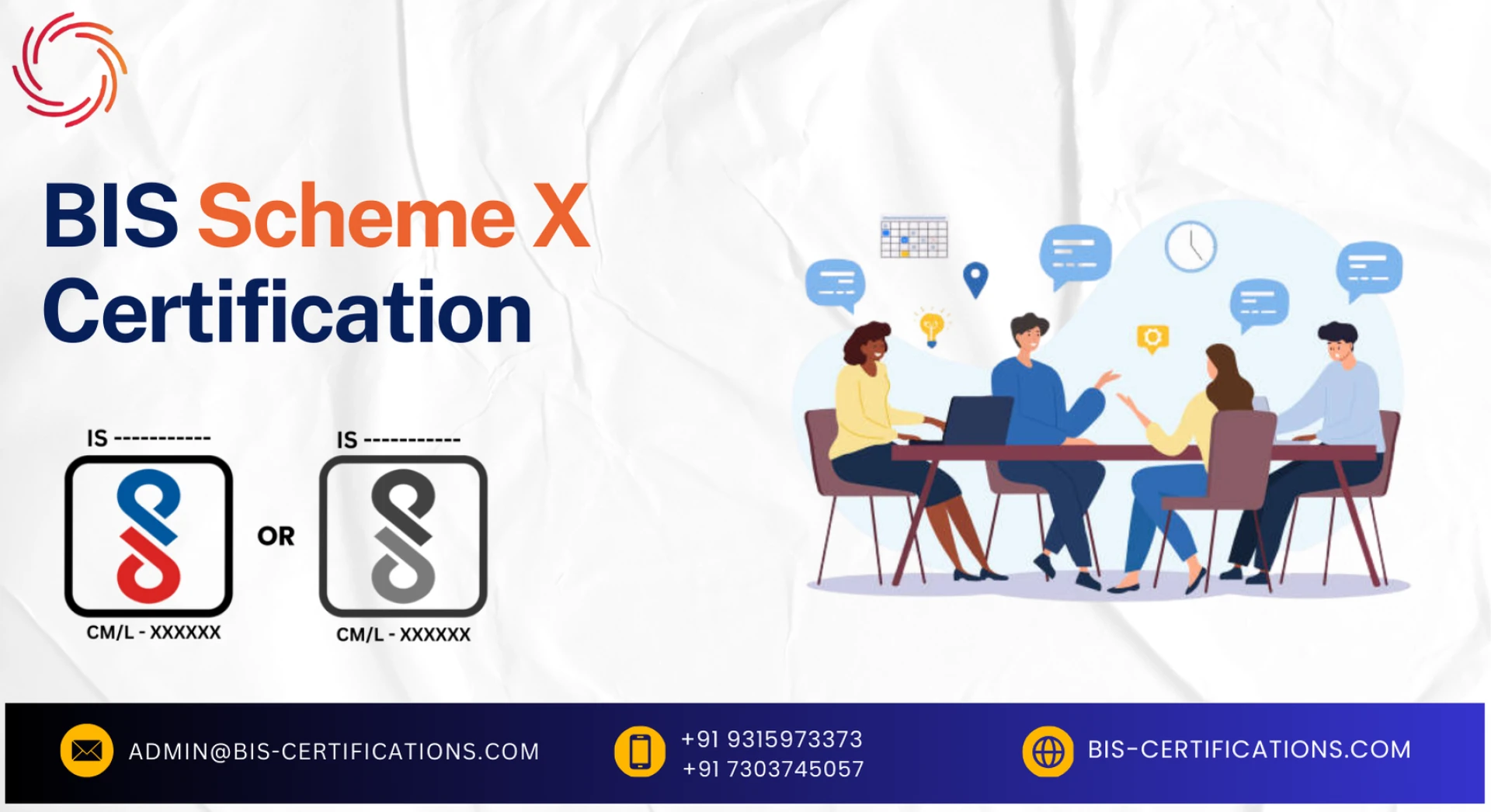
Introduced under the BIS Conformity Assessment Regulations, Scheme X Certification focuses on high-risk industrial machinery and electrical equipment.
Key highlights:
· Covers pumps, compressors, cranes, transformers, switchgear, and machine tools.
· Requires stricter compliance with technical, performance, and safety standards.
· Certification involves detailed factory audits, witness testing, and thorough technical evaluation.
· Products can display the BIS Standard Mark after successful certification.
With the BIS OTR Scheme, manufacturers must also complete OTR Registration, ensuring all machinery and electrical equipment meet Omnibus Technical Regulation standards.
Key Differences Between Scheme I and Scheme X Certification
Feature
Scheme I
BIS Scheme X Certification
Product Scope
Consumer goods, home appliances, electronics, industrial products
High-risk industrial machinery, electrical equipment, components, and assemblies
Risk Level
Low to medium
High (safety-critical products)
Compliance Requirements
Factory audits and sample testing
Advanced technical documentation, detailed audits, witness testing, and quality system verification
Cost
Lower
Higher due to extended compliance and audits
Duration
Faster approval
Domestic: ~90 days; Foreign: 6–7 months
OTR Requirement
Not applicable
Mandatory OTR Registration for machinery and electrical equipment
Consumer Impact
Basic quality assurance
High safety, reliability, and industrial compliance
Target Manufacturers
Domestic and foreign manufacturers
Domestic and foreign manufacturers of high-risk products
Documentation
Standard business registration, quality control
Extensive technical files, QA/QC systems, design documents, test reports, sub-assembly traceability
Post-Certification Obligations
Regular audits
Continuous QA/QC monitoring, periodic reports, renewal of licence, proper use of BIS Mark
Why Scheme X Certification is More Rigorous
Compared to Scheme I, BIS Scheme X Certification involves:
· Multiple layers of compliance verification
· Witness testing for each sample batch
· Review of sub-assemblies, components, and technical processes
· Higher focus on industrial and electrical safety
These measures are crucial because machinery and electrical equipment can pose significant safety hazards if non-compliant.
Implications for Domestic Manufacturers
Domestic manufacturers benefit from a comparatively faster Scheme X Certification process, provided they:
· Prepare complete technical files and QA documentation
· Ensure readiness for factory audits and witness testing
· Complete OTR Registration if applicable
Even with these advantages, careful planning is required to avoid delays, especially for multi-product manufacturing units.
Implications for Foreign Manufacturers
Foreign manufacturers face more complex challenges under Scheme X Certification:
· OTR Registration is mandatory before BIS certification.
· Factory audits require coordination with BIS officials, including logistics, accommodation, and travel.
· Documentation must be precise, covering all technical, quality, and compliance aspects.
· Authorized Indian Representative (AIR) is required to liaise with BIS.
Planning ahead and leveraging experienced bis certification consultants or a bis agent can significantly reduce delays.
Cost Considerations
Scheme I: Lower costs due to fewer compliance steps and simpler audits.
Scheme X: Higher costs, including:
· Application fees
· Factory audit fees
· Sample testing fees
· Marking fees
· Additional logistics for foreign manufacturers
The investment in Scheme X Certification pays off by ensuring safety, compliance, and access to regulated markets.
Benefits of Understanding the Differences
Knowing the differences between Scheme I and Scheme X Certification helps manufacturers:
· Identify which scheme applies to their products
· Prepare appropriate documentation and technical files
· Plan for audits and testing
· Estimate costs and timelines accurately
· Comply with OTR Scheme and regulatory updates
Effective planning reduces rejections, avoids non-compliance penalties, and facilitates smoother market access.
Conclusion
While Scheme I and BIS Scheme X Certification both ensure product safety and quality, Scheme X is specifically designed for high-risk machinery and electrical equipment. Combined with OTR Registration under the BIS OTR Scheme, it guarantees that industrial products meet stringent Indian Standards.
Understanding the differences allows manufacturers—domestic and foreign—to plan their compliance strategy effectively, saving time, reducing costs, and maintaining uninterrupted access to the Indian market.