



Introduction
In today’s technology-driven world, businesses demand faster software delivery, improved efficiency, and seamless collaboration between development and operations teams. This is where DevOps plays a crucial role. As one of the most sought-after career paths in the IT industry, DevOps offers exciting opportunities for both beginners and professionals.
For Telugu-speaking learners, a DevOps course in Telugu makes mastering this powerful discipline easier and more accessible. By learning DevOps in your native language, you can gain a deeper understanding of concepts, tools, and real-world practices without struggling with complex English terminology.
This article provides a complete guide on the essential skills you need to become a successful DevOps engineer, along with the importance of learning DevOps in Telugu and a structured roadmap for your career growth.
What is DevOps?
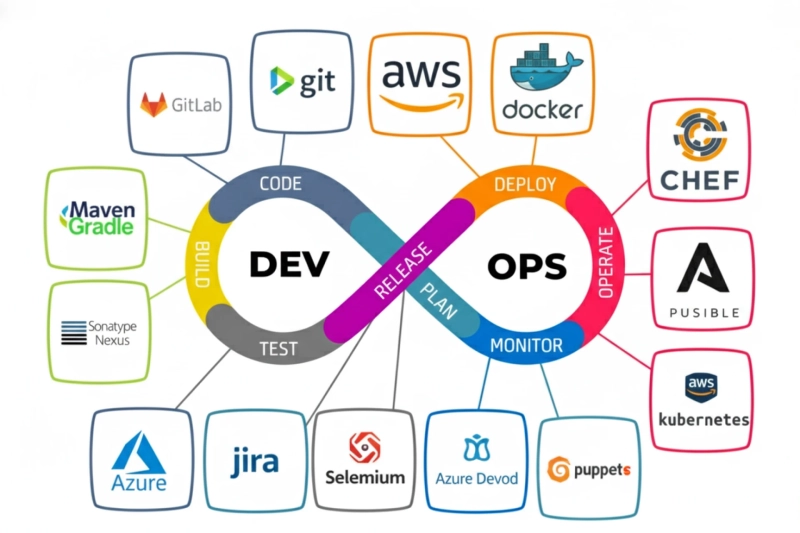
DevOps is a combination of Development (Dev) and Operations (Ops) — a set of practices that bring together software developers and IT operations professionals to automate and streamline the software development lifecycle.
The primary goal of DevOps is to build, test, and deploy software faster and more reliably. It bridges the gap between development teams (who write code) and operations teams (who deploy and maintain systems), ensuring continuous integration, continuous deployment, and improved collaboration.
By implementing DevOps, organizations can deliver software updates quickly, reduce failures, and improve customer satisfaction.
Why Learn DevOps in Telugu?
Learning DevOps in Telugu provides several unique advantages for learners who prefer regional language instruction:
- Simplified Learning: Complex technical concepts are explained in an easy-to-understand Telugu format.
- Better Retention: Learning in your native language helps retain information longer and grasp deeper concepts faster.
- Confidence in Practice: Telugu-based explanations make it easier to experiment with tools and real-world scenarios.
- Accessibility for Everyone: Even non-English speakers can build a strong IT career through a well-structured DevOps course in Telugu.
With the growing demand for DevOps professionals, Telugu learners now have the opportunity to gain competitive skills in their language and explore new career opportunities in the global IT market.
Who is a DevOps Engineer?
A DevOps Engineer is responsible for bridging the gap between software development and IT operations. They automate processes, manage infrastructure, monitor performance, and ensure continuous delivery of software applications.
The role requires a blend of technical, analytical, and communication skills to manage both code development and deployment pipelines effectively.
DevOps engineers play a key role in:
- Automating repetitive tasks to increase efficiency
- Managing CI/CD pipelines for faster releases
- Ensuring application reliability through monitoring and testing
- Collaborating across teams to achieve continuous improvement
Essential Skills to Become a Successful DevOps Engineer
A DevOps engineer must master a combination of technical and soft skills to thrive in the ever-evolving IT landscape. Below is a detailed list of the most important skills you’ll learn through a DevOps course in Telugu.
1. Linux and Scripting Fundamentals
DevOps environments rely heavily on Linux-based systems. Understanding Linux commands and scripting languages is crucial.
Key areas to learn:
- File systems and process management
- User permissions and shell scripting
- Automating tasks with Bash or Python
Learning these fundamentals in Telugu helps beginners quickly adapt to real-world infrastructure management without confusion.
2. Version Control Systems (Git)
Version control is the foundation of DevOps. Tools like Git help track changes, collaborate with teams, and manage code efficiently.
You’ll learn how to:
- Create and manage repositories
- Commit and merge code changes
- Resolve conflicts and manage branches
A solid understanding of version control helps ensure smooth collaboration between developers and operations teams.
3. Continuous Integration and Continuous Deployment (CI/CD)
CI/CD is the heart of DevOps. It ensures that code is automatically tested, integrated, and deployed with minimal manual effort.
Key learning areas include:
- Setting up CI/CD pipelines
- Automating build and deployment processes
- Understanding test automation
A DevOps course in Telugu helps you visualize these workflows clearly, showing how CI/CD eliminates delays and improves software quality.
4. Configuration Management
Configuration management ensures consistency across multiple environments — from development to production.
Popular tools used for this include Ansible, Puppet, or Chef. You’ll learn how to:
- Automate software installation
- Maintain system configurations
- Manage infrastructure efficiently
Learning configuration management in Telugu simplifies the understanding of how large-scale environments are maintained without manual errors.
5. Containerization and Orchestration
Containers have transformed the way applications are developed and deployed. Tools like Docker and Kubernetes allow applications to run consistently across environments.
You’ll learn to:
- Create and manage Docker containers
- Build Docker images for applications
- Deploy and scale containers using Kubernetes
These skills are essential for managing modern cloud-based applications effectively.
6. Infrastructure as Code (IaC)
Infrastructure as Code is a method of managing and provisioning infrastructure through code instead of manual processes.
You’ll explore how to:
- Write configuration scripts
- Manage infrastructure changes automatically
- Version-control your infrastructure
IaC tools help in maintaining consistency and scalability — two pillars of DevOps success.
7. Cloud Platforms and Virtualization
Every modern DevOps environment relies on cloud computing. As a DevOps engineer, you’ll need to understand how to deploy and manage cloud-based applications.
In a DevOps course in Telugu, you’ll learn about:
- Cloud architecture fundamentals
- Virtual machines, storage, and networking
- Deploying workloads using DevOps pipelines
Cloud knowledge allows you to handle hybrid and multi-cloud environments effectively.
8. Monitoring and Logging
Monitoring and logging are essential to maintain system health and detect issues early. DevOps engineers must set up tools and dashboards that track performance metrics.
Learning outcomes include:
- Setting up alerts for system health
- Analyzing logs for troubleshooting
- Ensuring continuous feedback and optimization
Monitoring enables you to prevent downtime and ensure smooth operations.
9. Networking and Security Basics
Networking and security are core parts of DevOps practices. You must understand how systems communicate securely over networks.
Key areas to focus on:
- TCP/IP, DNS, and firewalls
- Security best practices
- Access control and authentication
Learning these concepts in Telugu ensures clarity and practical understanding when working with complex network configurations.
10. Soft Skills and Collaboration
DevOps is not just about tools and automation — it’s also about collaboration and communication.
As a DevOps engineer, you should develop:
- Problem-solving skills to handle real-time challenges
- Team collaboration with developers, testers, and system admins
- Adaptability to new technologies and workflows
Strong communication skills ensure that teams stay aligned and projects move smoothly.
Learning Roadmap for DevOps in Telugu
Here’s a step-by-step roadmap to guide your DevOps learning journey in Telugu:
- Start with IT Basics: Learn Linux, networking, and scripting.
- Understand DevOps Concepts: Study CI/CD, automation, and collaboration.
- Learn Tools Gradually: Begin with Git, Jenkins, Docker, and Kubernetes.
- Explore Infrastructure Management: Learn IaC and configuration tools.
- Practice Cloud Deployment: Work on cloud-based projects.
- Build Real Projects: Create CI/CD pipelines, containerized apps, and monitoring setups.
- Prepare for Interviews: Revise real-world scenarios and technical questions.
This structured approach ensures steady progress from beginner to professional level.
Career Opportunities After Learning DevOps
The demand for DevOps professionals is growing rapidly across industries. After completing a DevOps course in Telugu, you can explore multiple career roles, such as:
- DevOps Engineer
- Site Reliability Engineer (SRE)
- Automation Engineer
- Cloud Operations Engineer
- Build and Release Engineer
These roles offer high career growth potential, competitive salaries, and the chance to work with cutting-edge technologies.
Benefits of Pursuing a DevOps Course in Telugu
- Learn complex concepts in a simple and relatable way.
- Gain practical, project-based experience.
- Build a strong foundation for global IT careers.
- Learn at your own pace without language barriers.
A DevOps course in Telugu is ideal for students, professionals, and career changers who want to strengthen their technical expertise and enter the fast-growing DevOps domain.
Conclusion
DevOps is more than a technical trend — it’s a transformation in how software is developed, tested, and delivered. By mastering DevOps, you position yourself for a high-growth, future-ready career in the IT industry.
A DevOps course in Telugu offers the perfect platform to learn these essential skills in a language you understand best. From Linux and scripting to CI/CD, Docker, and Kubernetes, you can build a complete skill set that will help you become a successful DevOps engineer and thrive in the global technology ecosystem.