



Introduction
The modern IT industry is evolving at lightning speed. Companies are adopting faster software delivery cycles, cloud solutions, and automated deployment pipelines. In this rapidly changing environment, DevOps has become one of the most valuable skills for professionals.
DevOps bridges the gap between Development (Dev) and Operations (Ops), allowing teams to collaborate effectively, automate workflows, and deliver software efficiently.
For Telugu-speaking learners, understanding DevOps concepts in English can be challenging. A DevOps Course in Telugu simplifies learning by teaching these concepts in your native language. This makes it easier to grasp complex topics, practice hands-on skills, and build a strong foundation for a career in IT.
In this article, we will explore what DevOps is, why learning it in Telugu is beneficial, what topics a course covers, and how it can shape your career.
What is DevOps?
DevOps is a modern approach that integrates software development and IT operations to improve collaboration, efficiency, and delivery speed.
Traditionally, development and operations teams worked separately. Developers focused on coding, while operations teams handled deployment and maintenance. This separation caused delays, communication gaps, and higher error rates. DevOps solves this problem by promoting automation, continuous integration, and continuous deployment (CI/CD).
Key Principles of DevOps
- Collaboration: Developers and operations work together seamlessly.
- Automation: Repetitive tasks are automated to save time.
- Continuous Integration (CI): Code changes are automatically tested and integrated.
- Continuous Deployment (CD): Software updates are delivered frequently and reliably.
- Monitoring and Feedback: Continuous observation ensures system reliability and improvement.
DevOps is now a standard practice in IT, powering faster releases, better quality, and smoother project workflows.
Why Learn DevOps in Telugu?
English-based technical courses can be difficult for Telugu-speaking learners, especially beginners. Learning DevOps in Telugu provides clarity and comfort, making it easier to understand complex tools and processes.
Benefits of Learning DevOps in Telugu
- Clear Understanding: Concepts like CI/CD, containerization, and orchestration are explained in your native language.
- Better Retention: Telugu explanations help you remember concepts longer and understand their practical applications.
- Confidence Boost: Learning in your own language allows you to practice and explain concepts confidently.
- Beginner-Friendly: Even if you have no prior IT knowledge, Telugu-based courses help you build a solid foundation.
- Faster Learning: Focus entirely on mastering skills without struggling with English technical terms.
Learning in Telugu ensures you gain practical knowledge quickly, preparing you for real-world DevOps challenges.
Topics Covered in a DevOps Course in Telugu
A well-structured DevOps Course in Telugu combines theory and hands-on training. Here’s a typical syllabus:
1. Introduction to DevOps
- Definition and principles of DevOps
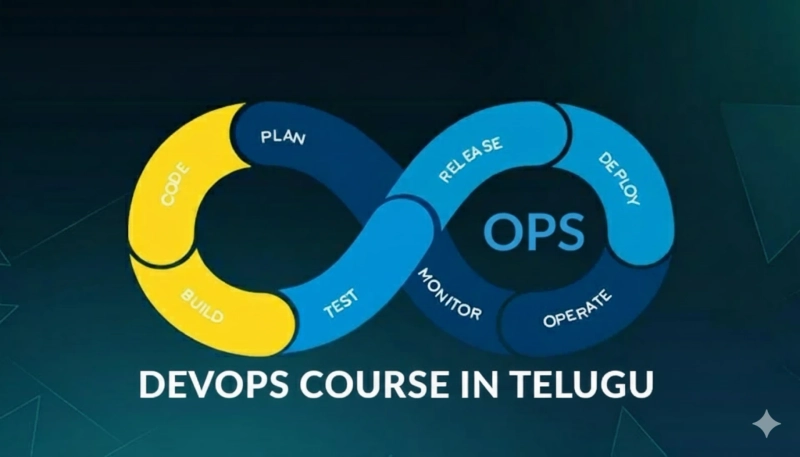
- DevOps lifecycle and workflow
- Difference between traditional IT processes and DevOps
2. Version Control with Git & GitHub
- Git commands and repository management
- Branching, merging, and pull requests
- Collaboration with teams on GitHub
3. Continuous Integration (CI)
- CI pipeline concepts
- Automating builds and tests with Jenkins or GitLab CI
- Version control integration and automation workflow
4. Continuous Deployment (CD)
- Automated deployment techniques
- Pipeline configuration and monitoring
- Real-world CI/CD project implementation
5. Containerization with Docker
- Introduction to containers and Docker images
- Building, running, and managing containers
- Isolated environments for development and testing
6. Orchestration with Kubernetes
- Container management at scale
- Cluster deployment and scaling
- Load balancing and fault tolerance
7. Configuration Management
- Tools like Ansible, Chef, and Puppet
- Automating server setup and deployment
- Writing reusable automation scripts
8. Infrastructure as Code (IaC)
- Introduction to Terraform
- Automating cloud infrastructure
- Efficient resource management
9. Cloud Platforms
- Basics of AWS, Azure, and Google Cloud
- Deploying DevOps pipelines on the cloud
- Integration with CI/CD and monitoring tools
10. Monitoring and Logging
- Tools: Prometheus, Grafana, ELK Stack
- System performance monitoring and troubleshooting
- Log analysis and optimization
By completing these modules, learners gain practical experience with tools widely used in the IT industry.
Career Opportunities After a DevOps Course
DevOps skills are in high demand across multiple industries. Completing a DevOps Course in Telugu can open up several career paths.
Popular Job Roles
- DevOps Engineer
- Cloud Engineer
- Site Reliability Engineer (SRE)
- Automation Engineer
- Build and Release Manager
- Infrastructure Specialist
Industries Hiring DevOps Professionals
- IT and software development
- E-commerce platforms
- Banking and financial services
- Healthcare technology
- Telecommunications
- Cloud service providers
Salary Potential
DevOps professionals earn competitive salaries due to their ability to manage development, operations, and automation workflows efficiently. With experience, professionals can move into senior positions like Cloud Architect or DevOps Manager.
Advantages of Learning DevOps in Telugu
- Language-Friendly Learning: No English language barriers.
- Hands-On Skills: Real-world projects prepare you for jobs.
- Career-Ready: Learn skills that employers demand.
- Confidence in Application: Telugu explanations make tools and concepts easy to understand.
- Foundation for Advanced Roles: Prepares you for cloud, automation, and SRE roles.
A DevOps course in Telugu doesn’t just teach tools — it prepares you for professional success.
Who Can Learn DevOps in Telugu?
- Students and fresh graduates looking to start a tech career
- IT professionals seeking automation or cloud roles
- Software developers wanting to expand into DevOps
- System administrators exploring modern deployment techniques
- Non-IT graduates interested in practical, job-oriented technology
Even beginners with basic computer knowledge can learn DevOps effectively through Telugu-based courses.
Tips for Success in DevOps Learning
- Start by learning Linux basics and command-line operations.
- Practice Git, Jenkins, and Docker regularly.
- Build mini-projects to understand CI/CD pipelines.
- Join Telugu DevOps communities for discussions and updates.
- Stay updated — DevOps tools and practices evolve continuously.
Consistent practice and project-based learning are key to mastering DevOps.
Conclusion
DevOps has become a critical skill in the modern IT industry, driving automation, cloud adoption, and faster software delivery. Learning DevOps in Telugu simplifies the journey, helping you understand complex concepts clearly and gain hands-on experience.
A Telugu-based DevOps course equips you with knowledge of CI/CD, automation tools, cloud platforms, and container orchestration. It prepares you for roles like DevOps Engineer, Cloud Engineer, or SRE, opening doors to a rewarding and future-proof IT career.