



If you’ve been told you “might need an implant”, it can feel like you’re suddenly learning a new language.
And when you start searching, it somehow gets louder, not clearer.
Dental implants can be an excellent way to replace missing teeth, but they’re also a treatment where the planning matters as much as the procedure. This article is written for Sydney adults who want a grounded, practical way to decide what to do next—without hype, without panic-booking, and without pretending there’s one right answer for everyone.
What implants can do, and where they don’t magically help
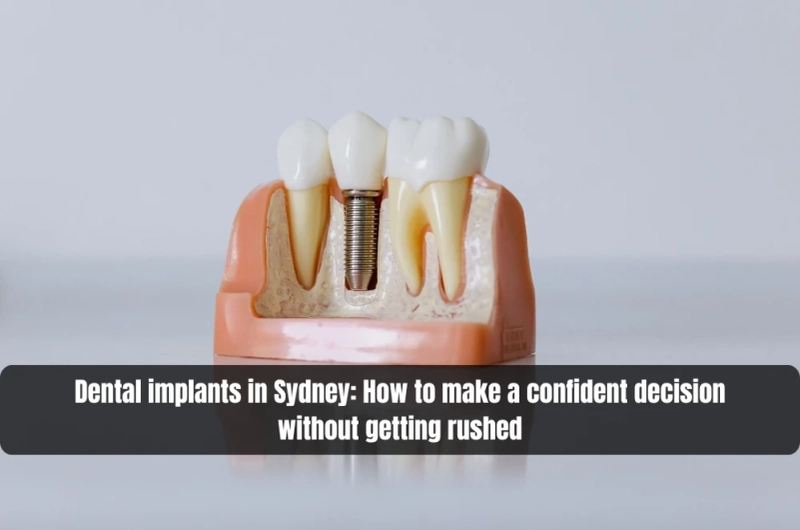
An implant is a small post placed in the jaw to support a tooth (or help support a bigger restoration). The goal isn’t just to “fill the gap”; it’s to restore function—how you chew, how your bite feels, how stable everything stays over time.
Implants can be a strong option when a missing tooth is making eating awkward, shifting neighbouring teeth, or turning every meal into a “chew on the other side” habit.
They can also be useful when the alternative is a bridge that requires cutting down otherwise healthy teeth, which some people want to avoid.
But implants aren’t a shortcut around underlying issues. If gum health is unstable, there’s ongoing infection, or you’re grinding hard at night, the best plan might involve staging things or choosing a different approach.
A helpful mindset is to think of implants as a system—health, planning, placement, restoration, and long-term maintenance—not a single item you purchase once and forget.
The decision factors that actually matter
Most people don’t regret choosing implants; they regret choosing them for the wrong reasons or on the wrong timeline. These are the factors that tend to shape outcomes and day-to-day satisfaction.
Suitability: gums, bone, and “what’s under the hood”
Implants rely on a stable foundation. That usually means healthy gums and enough bone to support the post. If bone is limited, options might include grafting or other preparatory steps, or it might mean a different plan makes more sense.
It’s also worth remembering that suitability isn’t a moral scorecard—nobody “fails” suitability. It’s just information that guides a safer, more predictable pathway.
If you want a plain-English example of how suitability and stages are commonly explained, the Blue Mountains Dental & Implant Centre treatment suitability guide can help you arrive at a consultation with better questions (and less guesswork).
Bite forces, habits, and what you’re really asking your mouth to do
A front tooth and a back molar aren’t the same job. Add clenching or grinding, and the load on any restoration changes again.
If you grind at night, tell the clinician early. It can affect design decisions, materials, and whether a protective splint is suggested—not as a sales add-on, but as a realistic way to manage force.
Also, be honest about your “normal” eating. If you love crusty bread, nuts, or chewy steak, say so. Plans that fit real life tend to last longer than plans built on wishful thinking.
Timeline: the part nobody wants to hear about
Healing time isn’t just “what the clinic prefers”; it’s biology. People vary, and so does the complexity of the case.
A typical pathway can include assessment and imaging, any pre-treatment (like extractions or gum stabilisation), placement, healing, then the final restoration and reviews. Some stages can be quicker in certain situations, but the bigger point is this: if a plan sounds suspiciously fast, it’s okay to ask what’s being compressed and what trade-off that creates.
Cost and value: compare inclusions, not headlines
Cost matters, and pretending it doesn’t only makes people feel silly for asking. The better move is to compare what’s included and what might be added.
Ask what’s covered in the quote (assessment, imaging, the final crown, follow-ups) and what could be additional (grafting, gum therapy, sedation options, replacement of other restorations). A higher price isn’t automatically better, and a lower price isn’t automatically risky—details are where the truth is.
Value also includes maintenance. Implants still need daily cleaning, professional checks, and sometimes small adjustments. “Set and forget” is the most expensive mindset in dentistry.
Comfort, anxiety, and decision fatigue
A lot of people make implant decisions with one eye on their fear. It’s more common than it sounds.
The consult should create space for that: clear explanations, time for questions, and a realistic conversation about comfort measures (numbing, pacing, breaks, and—where suitable—sedation pathways). If anxiety is pushing you to rush, that’s often a sign to slow down and add support, not to power through.
Common mistakes that trip people up
Going with the cheapest or fastest option can backfire when suitability or staging is glossed over.
Assuming it’s a “one-and-done” appointment sets you up for frustration when healing and reviews become part of the story.
Holding back medical history, medication details, smoking/vaping habits, or grinding can change the plan later—usually at the worst time.
Not asking about alternatives (bridge, denture, or even waiting short-term) makes it harder to tell whether an implant is truly the best fit.
Treating aftercare like a footnote is a classic way to turn a good plan into a stressful experience.
Operator Experience Moment
I’ve noticed many people walk into their first conversation with a single fixed picture of what’s going to happen—often shaped by a friend’s story or a two-minute search. The moment things start to feel easier is when the question shifts from “Do I want implants?” to “What plan fits my mouth, my schedule, and my tolerance for steps?” Once expectations get more realistic, anxiety tends to drop, and the decision becomes less emotional.
A simple 7–14 day plan so you’re not making decisions in a fog
You don’t need to solve everything today. Use the next couple of weeks to gather the inputs that make a consultation productive and a decision calmer.
Days 1–3: define what you actually want to change
Write down the real problem: chewing discomfort, appearance, speech, denture movement, food avoidance, shifting teeth, recurring infection, or pain.
List constraints you can’t ignore: upcoming travel, major work deadlines, school holiday logistics, caring responsibilities, or a budget ceiling.
Note anything that might affect healing or planning: smoking/vaping, diabetes, reflux, dry mouth, grinding, sleep issues, medications, and past dental trauma.
Days 4–7: build a short question list you’ll actually use
Aim for 6–8 questions that force clarity, such as:
- What are my realistic options, including non-implant options?
- What steps are staged, and what’s the likely overall timeline?
- What could change once imaging is reviewed?
- What does the first month of aftercare usually look like?
- What ongoing maintenance do you expect over the years (not weeks)?
- What are the main risks for my situation, and how are they managed?
Put these in your phone notes. You’ll forget half of them once you sit in the chair, and that’s normal.
Days 8–14: do the “life fit” check
Block likely appointments in your calendar to see whether the plan is actually doable.
Consider transport, parking, and recovery time, plus follow-ups—Sydney schedules don’t always leave much breathing room.
If you’re anxious, decide what support you want: a support person, earlier-in-the-day appointments, extra time, or agreeing on a pause signal. Small changes can make a big difference in how the whole process feels.
Local SMB mini-walkthrough: what a Sydney business owner might do next
Pick two appointment windows that don’t collide with payroll week, roster chaos, or school pickups.
Check travel time and parking/public transport, because follow-ups are easier when logistics are boring.
Budget for one “buffer day” after any surgical step, even if you expect to bounce back quickly.
Ask upfront how many review visits are typical, since Sydney diaries can fill around holidays and long weekends.
Plan soft meals and a quieter schedule for the first couple of days, so you’re not problem-solving while sore.
Keep one running note with your questions, medications, and dental history so you don’t rely on memory during the consult.
Practical Opinions
If you have to choose between speed and predictability, choose predictability.
If aftercare and maintenance aren’t clearly explained, treat that as a missing piece.
If anxiety is driving the pace, slow it down and add support before deciding.
Key Takeaways
- Implants can restore function and stability, but they work best when the plan matches your gums, bone, bite, and habits.
- Comparing options is easier when you focus on suitability, staging, inclusions, and maintenance—not just a headline price.
- Healing time is biology, not marketing; “fast” isn’t automatically better.
- A short 7–14 day prep plan can turn an overwhelming decision into a calm, informed one.
Common questions we hear from businesses in Sydney, NSW, Australia
Do implants always beat a bridge or a denture?
Usually, implants are a strong option when suitability is good and long-term stability is the priority, but bridges or dentures can be more appropriate depending on bone and gum health, budget, and timeline; the next step is to ask for a side-by-side comparison of options in your consult. In Sydney, where people often want minimal downtime for work, it’s worth discussing how each option affects scheduling and recovery.
How long does the whole process take, realistically?
It depends on whether extractions, gum stabilisation, or grafting are needed and how your healing progresses; the next step is to request a stage-by-stage timeline rather than a single “finish date.” In NSW, many people plan around school holidays and peak business periods, so mapping the stages to a calendar can prevent last-minute stress.
What should I bring to my first consult so it’s not a blur?
In most cases, a short written list of questions plus your medication and medical history is enough to make the appointment far more useful; the next step is to put your questions in your phone notes and ask the clinician to explain the “why” behind each stage. In Sydney clinics, having this ready helps when appointment time is limited, and you want clear answers without feeling rushed.
How do I compare quotes without getting tricked by the details?
Usually, the cleanest approach is to compare inclusions (assessment, imaging, surgical steps, restoration, reviews) and ask what could be added later if complications or extra steps are needed; the next step is to request an itemised breakdown and a list of common add-ons. In Australia, it’s also practical to compare how many visits each plan expects, because time away from work can be a real cost too.