


Choosing flooring for public spaces, an office, or a residential project is one of the biggest errors people can make because they focus completely on upfront costs instead of long-term value. While installation costs do matter, the floors’ true value is their total cost of ownership (TCO) or installation plus regular maintenance plus repair needs plus longevity. A surface that is slightly more expensive, touch-and-go might save thousands over its lifespan if it is a little bit more lasting versus maintenance.
This guide will discuss the different flooring types, and we will compare their performance on three major issues: installation, maintenance, and longevity.
Why Cost of Ownership Is Important
With changing weather conditions almost always coming into play in highly trafficked areas such as schools, shops, hospitals, and the like, floors undergo plenty of stressors. Dirt, spills, trolleys, wheelchairs, and just the foot traffic itself certainly contribute to a great deal of wear. The wrong flooring choice, in that respect, would only mean further cleaning bills, replacements, and disruptions arising out of repairs. Going with a long-term perspective, facility managers and homeowners can thus be assured their choice will align with the appearance, performance, and cost-efficiency.
Vinyl-Based Flooring Solutions
Combining style with a base of resilience, vinyl flooring stands as one of the biggest contenders in both the commercial and residential sectors. Modern vinyl products are manufactured to replicate natural materials while being resistant to moisture, scratches, and stains. Now, let’s look at the most common types:
- LVP Flooring
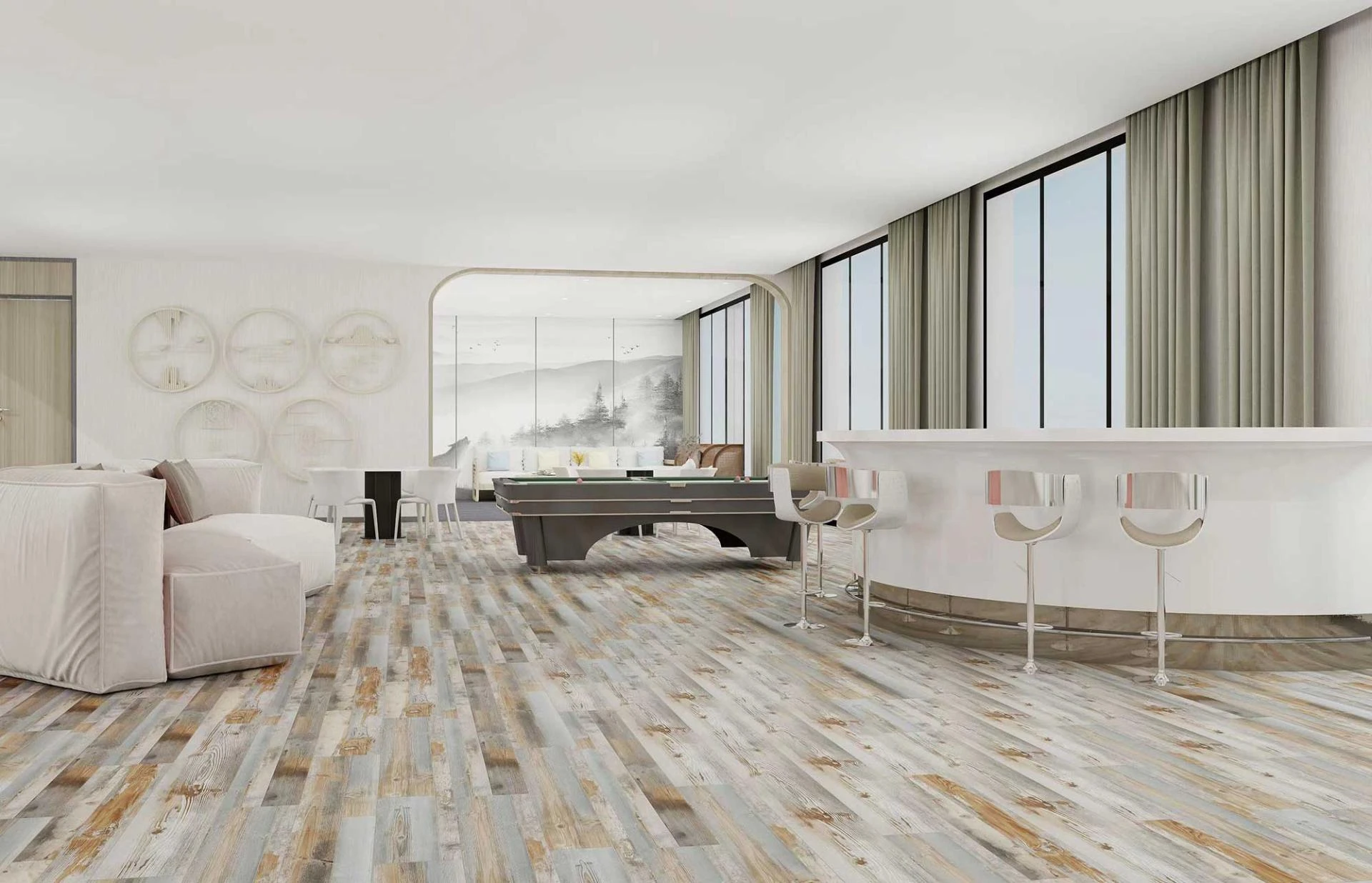
Luxury vinyl planks provide a warm wood-like look but at a much greater functional potential than wooden planks. They are mostly fitted using a click-lock system, which helps in saving on labor expenses and shortening project time. The ability to replace individual planks also helps keep maintenance costs down over time. These floors have a lifespan of around 15-20 years, provided they are swept and mopped regularly, making it the preferred option both for residential applications and high-traffic retail environments.
- LVT Tile
LVT tile is produced in modular formats, whose designers capitalize on this to experiment with various pattern and layout options. Corporations favor it because individual tiles can be changed without paying for a totalistic floor redo. It resists scratches, stains, and moisture and stands repeated cleans well, hence, an office, school, and hospitality setting of sorts. A good wear layer of above 15 years will ensure reliable performance at a cost that its price can be justified.
- SPC Flooring
SPC flooring (stone plastic composite) is among the most heavy-duty vinyl flooring available. Its tough core prevents any warping under heavy loads. Therefore, it would be best for places where rolling equipment or furniture is used in the openings, or high numbers of visitors are expected. Installation is expedient, with adhesive typically not required, and the flooring requires only regular cleaning for maintenance. With lifespans often stretching over 20 years, SPC proves to give value to places like hospitals and shopping complexes.
- Luxury Laminate Flooring
Luxury laminate flooring has gained its reputation as a cost-effective substitute for hardwood with the beautiful wood-like finish it presents. It requires a less costly upfront installation than premium vinyl, but it is more susceptible to water damage. Its maintenance requires careful avoidance of moisture with an average lifespan of 10-15 years within busy locations. While sophisticated, it does ask: Is it really the best fit for areas exposed to frequent spills or humidity?
- Waterproof Vinyl Tile
As the name implies, these on vinyl floorings, being waterproof, are designed for places subject to continuous spills and cleaning: toilets, cafeterias, or healthcare areas. It stains, absorbs moisture, and resists harsh cleaning agents, so maintenance is minimal. Life expectancy is typically 15 to 20 years, so in environments where cleanliness is considered paramount, the concern of keeping it alive goes away.
Traditional Flooring Types
Although vinyl solutions are very versatile in their applications, many spaces consider the alternative: traditional types of flooring. How do they stack up?
Hardwood, for instance, can hardly offer anything more in the domain of aesthetics, as it is dear to install and maintain. Frequent refinishing, polishing, and prone to scratching operation chain after another consequently further draining. It may last more than 40 years, but what about the initial investment?
Ceramic & Porcelain Tile: Extremely durable and long-lasting, but grout lines require frequent cleaning and sealing. Installation costs are high, and repairs can be difficult if tiles crack. Ideal for wet zones but adds to maintenance budgets.
Carpet: Well-cushioned and absorbs sounds, yet susceptible to staining and wear. Carpet needs to be vacuumed frequently and given a good, deep clean by professionals. Its lifespan of 5–10 years makes for very expensive ongoing maintenance.
Comparing
Installation: Vinyl products (LVP, LVT, SPC) are generally faster and cheaper to install than hardwood or ceramic. Laminate is even cheaper but comes with trade-offs.
Maintenance: Vinyl and SPC need virtually no maintenance; carpet and hardwood, on the other hand, need regular care.
Longevity: SPC and hardwood lead the way in longevity, but hardwood is a serious expense to maintain. Ceramic too is long-lasting but needs grout care.
Best Practices for Cost Reduction
Some useful tips from which you stand to gain maximum value regardless of the flooring type you select:
- At entry points, use protective mats to keep dirt and grit out.
- Place felt or rubber pads beneath heavy furniture to prevent it from denting the flooring.
- Always use cleaning agents recommended by the manufacturer.
- Keep an eye on seams and joints to address any arising issues before they escalate.
Conclusion
Vinyl solutions offer the fairest compromise when looking at the total cost of ownership rather than the upfront cost. Lvp flooring along with lvt tiles, SPC flooring offer long-term durability with minimal maintenance needs, and thereby, are more cost-effective in both commercial and residential scopes. If a project leans toward design but stays within reasonable budget, luxury laminate becomes a suitable choice, whereas waterproof vinyl tile shall be the best option where hygienic and moisture-resistant traits are paramount.