



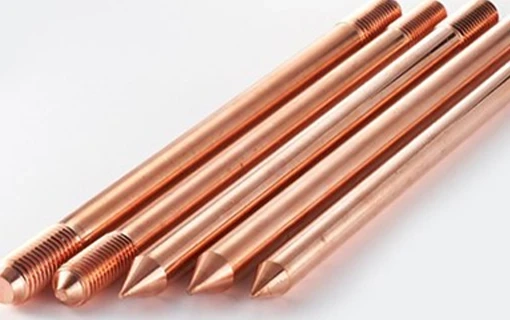
Earthing is one of those things people don’t talk about much, but it is very important for any electrical system. If earthing is not proper, it can create danger for people and also damage machines and equipment. One of the most used materials for earthing today is the copper rod. Many electricians and engineers prefer copper rods because they work well and last long.
In this blog, we will talk in simple words about what a copper rod for earthing is, its main features, and why it is so useful.
What is a Copper Rod for Earthing?
A copper rod for earthing is a metal rod made mainly from copper or copper-bonded steel. It is driven deep into the ground to connect electrical systems safely to the earth. When there is excess current, fault current, or lightning surge, the earthing system helps to pass that current into the ground instead of letting it go through people or machines.
Copper is chosen because it is a very good conductor of electricity. That means electricity can pass through it easily. Also, copper does not rust fast like iron or steel, so it stays useful for many years.
Why Copper is Used for Earthing
Copper has some natural properties that make it perfect for earthing.
First, it has high electrical conductivity. So it allows current to flow quickly into the ground.
Second, it is resistant to corrosion. Soil contains moisture and chemicals that can damage metals. Copper handles this better than many other metals.
Third, copper is strong but still flexible enough for installation work.
Because of these reasons, copper rods are widely used in homes, factories, power stations, telecom towers, and even solar plants.
Main Features of Copper Rod for Earthing
Let’s look at some key features of copper rods that make them so popular.
1. High Conductivity
Copper rods have very high electrical conductivity. This means they can carry fault current or lightning current safely into the earth without heating too much or breaking.
This feature is very important in areas where electrical load is high or where lightning strikes are common.
2. Corrosion Resistance
One big problem with earthing materials is corrosion. When a rod is inside the soil for many years, moisture, salts, and chemicals can damage it.
Copper does not rust like iron. It forms a thin layer on the surface that protects the inside metal. Because of this, copper rods last much longer in the ground.
3. Long Service Life
Due to corrosion resistance and strong material, copper rods have a long working life. In many cases, they can work for 30 to 40 years without major issues.
This long life reduces the need for frequent replacement, which saves time and money.
4. Strong and Durable
Copper rods are strong enough to be hammered into the ground without bending or breaking. Many copper rods are copper-bonded steel rods. These have a steel core for strength and a thick copper coating for conductivity and corrosion resistance.
This combination gives both strength and performance.
5. Easy Installation
Copper rods are easy to install. They can be driven into the ground using manual or mechanical tools. No special heavy equipment is needed for small projects.
Also, they can be cut to required length if needed.
6. Good Compatibility
Copper rods work well with other earthing components like copper strips, wires, clamps, and connectors. There is less risk of galvanic corrosion when copper is connected with other copper parts.
This makes the whole earthing system more reliable.
Benefits of Using Copper Rod for Earthing
Now let’s talk about the benefits. Why should you choose copper rods instead of other materials?
1. Better Safety
The main purpose of earthing is safety. Copper rods provide a low resistance path for fault current to go into the earth.
This helps protect people from electric shock and reduces fire risk caused by short circuits or leakage current.
2. Stable Performance Over Time
Some earthing materials lose performance as they corrode or break down. Copper rods keep their conductivity almost same for many years.
So even after long time, the earthing system continues to work properly.
3. Suitable for Different Soil Types
Copper rods work well in many soil conditions. Whether the soil is wet, dry, sandy, or clay, copper rods still perform well.
In high-resistivity soil, copper rods combined with earthing compounds give good results.
4. Low Maintenance
Once installed, copper rods need very little maintenance. You don’t have to check or replace them often.
This is very helpful for big installations like factories or power plants where maintenance cost is high.
5. Cost Effective in Long Run
At first, copper rods may look expensive compared to GI rods or steel rods. But because they last longer and need less maintenance, they are cheaper in long term.
You don’t have to replace them again and again.
6. Environment Friendly
Copper is a natural metal and can be recycled. It does not release harmful chemicals into the soil.
So using copper rods is also better for environment.
Types of Copper Rods for Earthing
There are mainly two types of copper rods used for earthing.
1. Solid Copper Rods
These rods are made fully from copper. They have very high conductivity and corrosion resistance.
But they are more expensive and softer, so sometimes they can bend during installation.
2. Copper Bonded Steel Rods
These rods have a steel core and a thick copper coating. The copper is bonded to the steel, not just plated.
They are strong, less costly than solid copper rods, and still offer good conductivity and corrosion resistance.
This type is most commonly used today.
Where Copper Rods Are Used
Copper rods for earthing are used in many places.
In residential buildings for home earthing.
In commercial buildings like malls, offices, and hotels.
In industries and factories for heavy machines.
In power stations and substations.
In telecom towers and data centers.
In solar and wind power plants.
Basically, anywhere electrical safety is needed, copper rods are used.
Things to Consider While Choosing a Copper Rod
Before buying a copper rod, some points should be checked.
Length and diameter of the rod as per soil condition.
Thickness of copper coating for bonded rods.
Quality of bonding between copper and steel.
Brand reputation and certification.
Local electrical standards and rules.
Choosing a good quality rod is important for long life and safety.
Final Thoughts
Copper rod for earthing is one of the best solutions for electrical grounding. It offers high conductivity, long life, corrosion resistance, and reliable performance.
Even though it may cost a little more at start, it saves money in long term and gives peace of mind.
If you are planning a new earthing system or upgrading an old one, copper rods are a smart and safe choice.
In the end, good earthing is not just about rules. It is about safety of people, machines, and buildings. And copper rods play a big role in making that safety possible.