



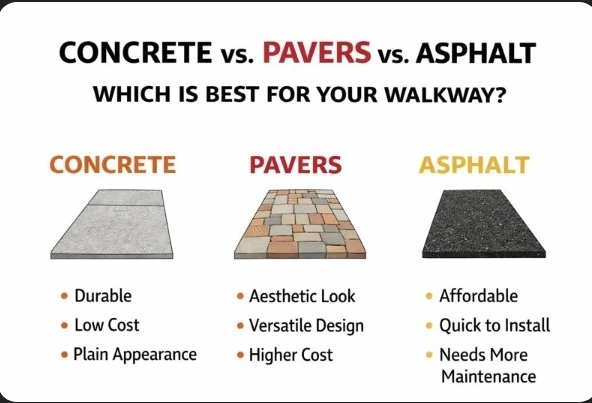
Choosing the right material for your walkway might seem like a simple decision, but it can have a long-lasting impact on your property’s appearance, safety, durability, and value. Whether you’re designing a brand-new walkway or replacing an old one, the choice between concrete, pavers, and asphalt deserves careful consideration.
Each material has its own strengths, weaknesses, costs, and maintenance requirements. What works perfectly for one homeowner may be a poor fit for another. Climate, budget, design preferences, and long-term goals all play a role.
In this comprehensive guide, we’ll break down concrete vs. pavers vs. asphalt in plain, practical terms. By the end, you’ll know exactly which option makes the most sense for your walkway—and why.
Why Walkway Material Choice Matters
A walkway isn’t just a path from point A to point B. It serves multiple purposes:
- Enhances curb appeal
- Improves accessibility and safety
- Adds structure to landscaping
- Influences property value
- Affects maintenance costs over time
Choosing the wrong material can lead to cracking, uneven surfaces, constant repairs, or a look that doesn’t match your home. Choosing the right one, however, can give you decades of performance with minimal headaches.
Overview of the Three Most Popular Walkway Materials
Before we compare them head-to-head, let’s quickly define each option.
Concrete Walkways
Concrete is one of the most widely used walkway materials due to its strength, affordability, and versatility. It can be poured in place and finished in a variety of textures and styles.
Paver Walkways
Pavers are individual stones or bricks made from concrete, clay, or natural stone. They are installed piece by piece over a compacted base, offering a highly customizable and upscale look.
Asphalt Walkways
Asphalt is a mixture of aggregates and bitumen, commonly used for driveways and roads but sometimes chosen for walkways due to its low initial cost and fast installation.
Concrete Walkways: Pros, Cons, and Best Uses
Why Homeowners Choose Concrete Walkways
Concrete walkways are popular for a reason. They offer a strong balance of cost, durability, and design flexibility.
Key Advantages of Concrete
- Long lifespan (25–40 years when properly installed)
- Low maintenance compared to other materials
- Can be stamped, colored, or textured
- Smooth and ADA-friendly surface
- Resistant to heavy foot traffic
Concrete works especially well for homeowners who want a clean, modern look without excessive maintenance.
Potential Drawbacks of Concrete
While concrete is durable, it isn’t perfect.
- Cracks can develop over time
- Repairs are often noticeable
- Freeze-thaw cycles can cause damage
- Less forgiving than pavers if the ground shifts
Once concrete cracks significantly, replacement may be the only long-term solution.
Best Situations for Concrete Walkways
Concrete is ideal when:
- You want a budget-friendly long-term solution
- You prefer a clean, uniform appearance
- Accessibility and smoothness are priorities
- You want minimal upkeep
Paver Walkways: Pros, Cons, and Best Uses
Why Pavers Are Considered the Premium Option
Paver walkways are often seen as the most attractive and customizable choice. They allow for endless design possibilities.
Key Advantages of Pavers
- Highly aesthetic and customizable
- Individual pavers are easy to replace
- Excellent drainage between joints
- Resistant to cracking
- Adds strong curb appeal and value
Because pavers move slightly with the ground, they’re less prone to major cracking than poured concrete.
Potential Drawbacks of Paver Walkways
The beauty of pavers comes with a few trade-offs.
- Higher upfront cost
- Installation is labor-intensive
- Weeds can grow between joints if not maintained
- May shift if base preparation is poor
Pavers require skilled installation to ensure long-term performance.
Best Situations for Paver Walkways
Pavers are ideal when:
- Design and aesthetics are a top priority
- You want a luxury or custom look
- You’re okay with higher upfront investment
- You want easy spot repairs in the future
Asphalt Walkways: Pros, Cons, and Best Uses
Why Some Homeowners Consider Asphalt
Asphalt is often chosen for its low initial cost and quick installation. While it’s more common for driveways, it can work for walkways in certain situations.
Key Advantages of Asphalt
- Lower upfront cost
- Fast installation
- Flexible material that handles movement well
- Dark color helps melt snow faster in winter
Asphalt can be a practical solution for large or utilitarian walkways.
Potential Drawbacks of Asphalt
Despite its affordability, asphalt has notable downsides.
- Shorter lifespan (15–20 years)
- Requires regular sealing
- Limited design options
- Can soften in extreme heat
- Susceptible to oil and chemical stains
Aesthetically, asphalt offers far less appeal than concrete or pavers.
Best Situations for Asphalt Walkways
Asphalt works best when:
- Budget is the primary concern
- The walkway is purely functional
- A fast installation is needed
- A uniform, dark appearance is acceptable
Durability Comparison: Which Walkway Lasts the Longest?
Durability is often the deciding factor for homeowners.
- Pavers: 30–50+ years with proper base and maintenance
- Concrete: 25–40 years when well installed
- Asphalt: 15–20 years with regular sealing
While pavers often last the longest, concrete offers an excellent balance of durability and cost.
Maintenance Requirements Compared
Maintenance can significantly affect long-term ownership costs.
Concrete Maintenance
- Occasional sealing
- Crack monitoring
- Cleaning as needed
Paver Maintenance
- Joint sand replenishment
- Weed control
- Occasional re-leveling
Asphalt Maintenance
- Regular sealing every 2–3 years
- Crack filling
- Surface repairs
If low maintenance is a priority, concrete typically wins, followed closely by pavers.
Cost Comparison: Upfront vs. Long-Term Value
Average Cost Overview
(Prices vary by location and design.)
- Asphalt: Lowest upfront cost
- Concrete: Mid-range cost
- Pavers: Highest upfront investment
Long-Term Value
While asphalt is cheaper initially, its shorter lifespan and maintenance needs can make it more expensive over time. Pavers cost more upfront but often deliver the highest long-term value due to longevity and repair flexibility.
Aesthetic Appeal and Design Flexibility
Design matters—especially for front walkways.
- Pavers offer unmatched customization
- Concrete can be stamped or colored for visual interest
- Asphalt provides a simple, utilitarian look
If curb appeal is important, pavers or decorative concrete are usually better choices.
Climate Considerations
Climate plays a huge role in material performance.
- Cold climates: Pavers handle freeze-thaw cycles best
- Hot climates: Concrete and pavers outperform asphalt
- Wet climates: Pavers offer superior drainage
Choosing a climate-appropriate material reduces repair needs and extends lifespan.
Safety and Accessibility Factors
Walkways should be safe for everyone.
- Concrete offers the smoothest, most accessible surface
- Pavers can be safe but may become uneven over time
- Asphalt can soften in heat and become slick when wet
For accessibility and mobility concerns, concrete often stands out.
Environmental Impact and Sustainability
Eco-conscious homeowners may want to consider sustainability.
- Pavers allow water infiltration and reduce runoff
- Concrete can reflect heat but has a higher carbon footprint
- Asphalt is petroleum-based but recyclable
Permeable pavers are often the most environmentally friendly option.
Concrete vs. Pavers vs. Asphalt: Quick Comparison Table (Summary)
- Best overall balance: Concrete
- Best aesthetics and longevity: Pavers
- Best short-term budget option: Asphalt
Which Walkway Material Is Best for You?
The best walkway material depends on your priorities:
Choose concrete if you want:
- Durability and affordability
- Low maintenance
- A clean, versatile look
Choose pavers if you want:
- High-end appearance
- Design flexibility
- Long-term value
Choose asphalt if you want:
- Lowest upfront cost
- Fast installation
- A purely functional walkway
There’s no one-size-fits-all answer—only the best option for your needs.
Conclusion: Making the Smart Choice for Your Walkway
When comparing concrete, pavers, and asphalt, the right choice ultimately depends on budget, design goals, maintenance tolerance, and climate. Concrete offers reliability and affordability, pavers deliver beauty and longevity, and asphalt provides a quick, budget-friendly solution for functional spaces. Consulting an experienced contractor, such as https://www.bellevueconcretepros.com/, can help you evaluate these options and select the best material for your specific needs.
A well-chosen walkway doesn’t just connect spaces—it enhances your property’s safety, usability, and overall appeal. By understanding the strengths and limitations of each material, you can invest confidently in a walkway that serves you well for years to come.