



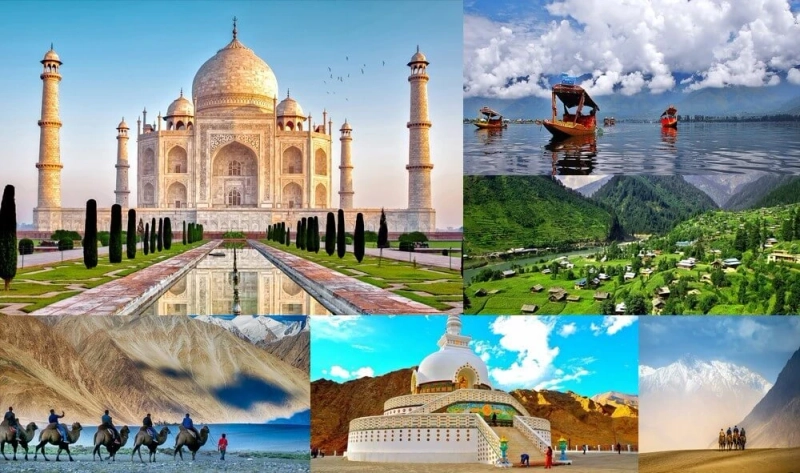
India is not just a destination; it is an experience shaped by thousands of years of history, dramatic landscapes, and unmatched cultural diversity. From ancient civilizations and royal legacies to sacred rivers and vibrant festivals, the country offers travelers a deeply layered journey. A complete tour of India brings together contrasting regions, languages, cuisines, and traditions, allowing visitors to witness how the past and present coexist in everyday life. Whether exploring historic monuments or remote natural sanctuaries, India leaves a lasting impression on all who travel through it.
A Living Chronicle of History
India’s history stretches back over five millennia, beginning with the Indus Valley Civilization and continuing through the rise of powerful empires such as the Mauryas, Guptas, Mughals, and regional kingdoms. Each era has left behind architectural and cultural treasures that define the country’s identity today. Iconic landmarks like the Taj Mahal, Qutub Minar, and ancient temples of South India are not isolated monuments but chapters of a living narrative.
Walking through old cities such as Delhi, Varanasi, or Jaipur feels like stepping into different historical periods. Forts, palaces, stepwells, and mosques reflect influences from Persian, Central Asian, and indigenous traditions. This historical depth is one of the key reasons travelers often choose structured itineraries such as india tour packages from delhi, which allow them to explore multiple heritage sites efficiently while understanding their broader historical context.
Natural Wonders Across the Subcontinent
India’s geographical diversity is as remarkable as its history. The country spans snow-covered Himalayan peaks in the north, fertile river plains in the center, dense tropical forests in the east, arid deserts in the west, and long coastlines in the south. Each region offers unique natural experiences, from trekking and wildlife safaris to tranquil beaches and backwater cruises.
National parks like Ranthambore, Kaziranga, and Periyar protect rich biodiversity, including tigers, elephants, and rare bird species. Hill stations such as Shimla, Darjeeling, and Munnar provide cool retreats surrounded by tea plantations and misty valleys. Meanwhile, the Thar Desert presents a stark yet beautiful landscape where golden dunes meet centuries-old settlements. This range of environments makes India ideal for travelers seeking both adventure and relaxation within a single country.
Cultural Diversity and Living Traditions
India’s cultural diversity is unparalleled. With hundreds of languages, numerous religions, and distinct regional customs, the country functions as a mosaic of cultures rather than a single homogeneous society. Festivals such as Diwali, Holi, Eid, Christmas, and Pongal are celebrated with equal enthusiasm, often bringing entire communities together regardless of faith.
Cuisine further reflects this diversity, changing dramatically every few hundred kilometers. From rich Mughlai dishes in the north to spicy coastal seafood in the south and vegetarian delicacies in the west, food becomes a cultural journey of its own. Traditional music, dance forms, handicrafts, and textiles continue to thrive, offering travelers authentic interactions beyond typical sightseeing. Experiencing these living traditions is essential to understanding India’s soul.
Classic Routes and Royal Landscapes
Certain travel routes in India have become classics because they combine history, culture, and scenic beauty seamlessly. One such example is the Golden Triangle, linking Delhi, Agra, and Jaipur. Expanding this route into Rajasthan introduces travelers to royal palaces, desert cities, and colorful rural life. A well-planned itinerary like the rajasthan tour with delhi agra showcases the grandeur of Rajput architecture alongside Mughal masterpieces, creating a balanced and immersive experience.
These routes are popular not only for their landmarks but also for the stories they tell—of kings and emperors, trade routes and battles, devotion and artistry. Exploring them provides insight into how regional identities have shaped modern India.
Thoughtful Travel Planning and Local Expertise
Given India’s scale and complexity, thoughtful planning enhances the travel experience significantly. Reliable local operators help navigate logistics, cultural nuances, and regional variations with ease. Companies like Namaste India 24 are known for crafting itineraries that balance sightseeing with authentic experiences, allowing travelers to connect more deeply with the destinations they visit.
Responsible tourism is also becoming increasingly important. Supporting local communities, respecting traditions, and minimizing environmental impact ensure that India’s heritage and natural beauty are preserved for future generations. Travelers who approach India with curiosity and respect often find the journey transformative.
Conclusion: A Journey That Stays With You
A complete tour of India is more than a vacation—it is an exploration of humanity’s shared heritage, natural beauty, and cultural expression. The country challenges perceptions, rewards patience, and offers moments of profound beauty and connection. From ancient monuments and diverse landscapes to living traditions and warm hospitality, India invites travelers to see the world through a broader lens. Those who embrace its complexity often leave with not just memories, but a deeper understanding of history, nature, and diversity woven into one extraordinary land.