



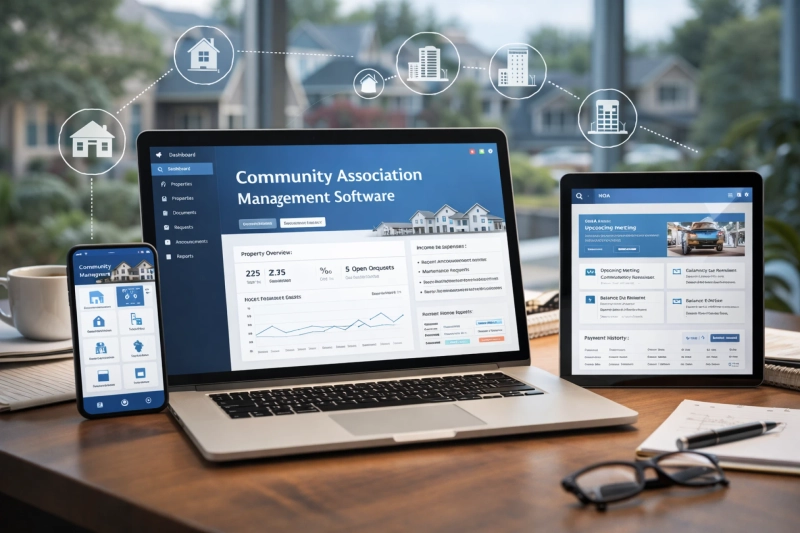
Community Association Management Software has become a core operational system for homeowner associations (HOAs), condominium associations, and community management companies. As communities grow in size and complexity, managing finances, residents, vendors, and compliance manually creates inefficiencies and risk.
In 2026, Community Association Management Software is no longer just an administrative tool. It is a centralized platform that enables transparency, financial accuracy, structured communication, and consistent governance across communities. This guide explains what Community Association Management Software is, how it supports daily operations, and why it has become essential for modern community associations.
What Is Community Association Management Software?
Community Association Management Software is a centralized digital platform designed to manage the administrative, financial, and operational needs of community associations such as HOAs, condo associations, and planned communities.
Most Community Association Management Software platforms support:
- Association, building, and unit records
- Homeowner and resident management
- Dues billing and collections
- Vendor and maintenance coordination
- Financial reporting and budgeting
- Document and compliance management
By consolidating these functions, associations gain a single source of truth for community operations.
Why Community Associations Need Dedicated Software
Community associations operate under governing documents, budgets, and legal requirements that demand accuracy and accountability. Managing these responsibilities with spreadsheets, email, or paper records often leads to confusion and disputes.
Common challenges without Community Association Management Software include:
- Inconsistent dues billing and late fee tracking
- Limited visibility into association finances
- Poor communication with residents
- Disorganized governing documents and records
- Difficulty coordinating maintenance and vendors
Community Association Management Software addresses these challenges by standardizing workflows and improving access to information.
Core Capabilities of Community Association Management Software
1. Association and Unit Management
Community Association Management Software organizes communities into structured hierarchies—association, building, unit, and homeowner.
This structure allows managers to:
- Track ownership and residency status
- Manage unit-specific assessments
- Maintain accurate community records
Structured data ensures consistency across association operations.
2. Homeowner and Resident Management
Effective community management depends on clear, organized homeowner records. Community Association Management Software centralizes resident information for easy access.
Key capabilities include:
- Homeowner contact details
- Ownership and occupancy status
- Communication history
- Account balances and payment status
Centralized records reduce disputes and improve responsiveness.
3. Dues Billing and Financial Management
Financial transparency is one of the most critical responsibilities of community associations. Community Association Management Software automates dues billing and financial tracking.
Most platforms support:
- Automated assessment invoicing
- Online payment options
- Late fee and violation fine tracking
- Budget and reserve fund management
- Financial statements for boards
Automation improves accuracy and reduces manual errors.
4. Maintenance and Vendor Coordination
Community associations are responsible for maintaining shared assets such as common areas, amenities, and infrastructure. Community Association Management Software provides structure for maintenance operations.
Typical features include:
- Maintenance request tracking
- Work order management
- Vendor assignment and oversight
- Maintenance cost tracking
- Preventive maintenance scheduling
This improves service response times and cost control.
5. Communication and Resident Engagement
Clear communication is essential for healthy communities. Community Association Management Software provides tools to improve engagement and transparency.
Common features include:
- Resident portals
- Announcements and notices
- Document sharing
- Community calendars
These tools reduce reliance on email chains and paper notices.
6. Document and Compliance Management
Community associations must maintain governing documents, meeting minutes, and compliance records. Community Association Management Software centralizes these documents securely.
Key benefits include:
- Organized document storage
- Role-based access controls
- Easy retrieval for audits or disputes
- Version control for governing documents
Proper document management supports transparency and legal compliance.
Who Uses Community Association Management Software?
Community Association Management Software is used by:
- Homeowner associations (HOAs)
- Condominium associations
- Planned communities
- Community management companies
- Board members and association administrators
As communities grow, centralized systems become essential.
Cloud-Based Community Association Management Software
Modern Community Association Management Software is typically cloud-based, allowing secure access from anywhere.
Cloud-based platforms offer:
- Remote access for managers and board members
- Automatic updates and security enhancements
- Faster onboarding and deployment
- Easier collaboration across stakeholders
For associations with volunteer boards, cloud access is especially valuable.
Integration With Accounting and Property Systems
Community Association Management Software often integrates with:
- Accounting platforms
- Payment processors
- Property management systems
- Document management tools
These integrations reduce duplicate data entry and improve financial accuracy.
How to Choose the Right Community Association Management Software
When evaluating Community Association Management Software, associations should focus on operational needs and long-term sustainability.
Key considerations include:
- Number of units and communities managed
- Financial reporting and budgeting requirements
- Communication and resident portal features
- Security and access controls
- Vendor support and training
The right platform should support transparency, efficiency, and compliance.
The Future of Community Association Management Software
Community Association Management Software continues to evolve toward:
- Greater automation of administrative tasks
- Improved financial transparency for boards
- Enhanced resident engagement tools
- Unified platforms replacing disconnected systems
As community governance becomes more complex, software will play an even larger role.
Final Thoughts
Community Association Management Software has become the backbone of modern HOA and community operations. It provides the structure, transparency, and accountability required to manage shared assets and serve residents effectively.
For community associations and management companies, investing in the right Community Association Management Software enables better governance, stronger financial control, and more efficient day-to-day operations.