



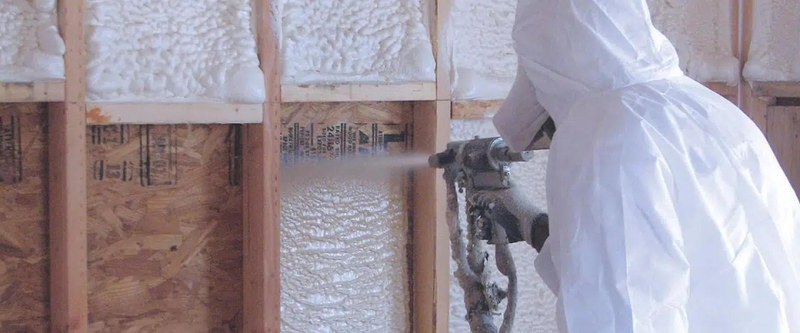
Spray foam insulation is a common choice in both commercial renovations and new construction. Its ability to air seal, resist moisture, and improve energy efficiency makes it useful across a variety of project types. Yet, the way it's applied—and the challenges it solves—can differ based on whether the building is being updated or constructed from scratch.
This article compares how a commercial spray foam insulation company functions in renovations versus new builds. It helps project managers, property owners, and contractors understand how spray foam meets energy codes, solves air infiltration issues, and supports long-term building performance under different project scopes.
Key Differences Between Renovation and New Build Insulation Projects
Spray foam performs well in both use cases, but the planning, installation, and performance goals can differ significantly.
Renovations Require Adaptation to Existing Conditions
Renovations must account for aging structures, outdated materials, and limited accessibility. Installers often need to work around:
- Legacy wall systems
- Uneven framing or roof slopes
- Existing insulation or water damage
These factors influence the type of foam used and how it's applied. Spray foam’s ability to conform to irregular surfaces and seal gaps makes it a good match for older buildings.
New Builds Allow for Optimized Application and Design Integration
In new construction, spray foam is part of the design from the start. This means:
- Precise cavity fills
- Ideal depth for R-value targets
- Seamless integration with other energy-efficient building systems
Planners can align insulation with HVAC sizing, indoor air quality strategies, and energy compliance standards from the beginning.

Insulation Goals: Comparing Project Priorities
The purpose of installing spray foam shifts depending on whether the project is a renovation or a new build. Understanding these distinctions helps inform planning, material selection, and sequencing.
Renovation Focus: Fixing Performance Deficiencies
- Improve air tightness
- Replace deteriorated insulation
- Solve condensation and thermal bridging problems
Retrofitting older structures with spray foam often delivers noticeable upgrades in energy use and occupant comfort.
New Build Focus: Meeting Future Energy Standards
- Meet or exceed current code requirements
- Control indoor moisture from day one
- Design a consistent thermal envelope
Spray foam helps architects achieve performance and airtightness benchmarks early in the building’s lifecycle.
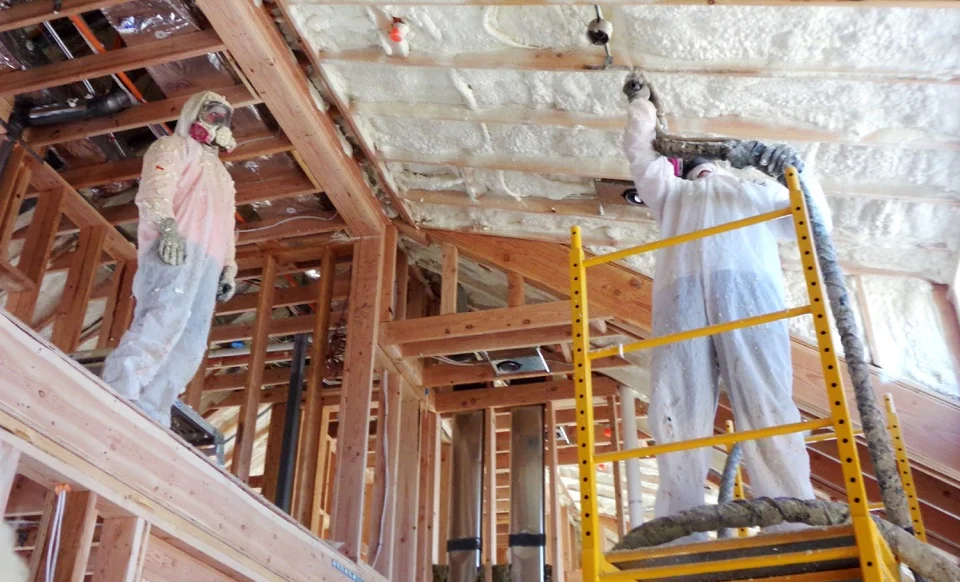
Material Choices: Open-Cell vs. Closed-Cell Spray Foam
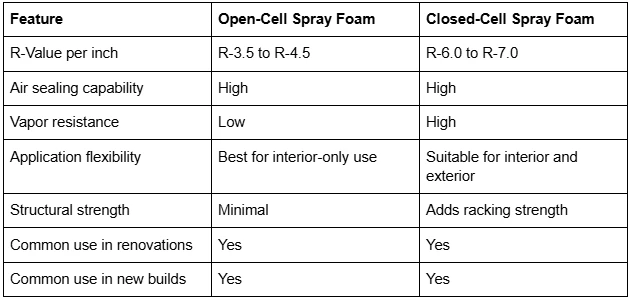
Each project type may require a different spray foam formulation. This comparison outlines key differences between open- and closed-cell foam for commercial applications.
Installation Considerations: Renovations vs. New Construction
The physical process of installing spray foam differs based on site readiness and access. In renovation work, crews often have to coordinate around existing systems and occupants.
Renovation Challenges
- Need for careful prep in finished spaces
- Risk of disturbing electrical, plumbing, or HVAC systems
- Possible removal of old insulation or damaged framing
Crews often use portable spray rigs and containment barriers to isolate work areas and maintain air quality.
New Build Advantages
- Full access to open framing
- Clear sequence in build schedule
- Opportunity to combine foam with air barriers and structural sheathing
This streamlined approach allows for consistent application thickness and optimal adhesion.
Code Compliance and Inspection Differences
Whether retrofitting or starting from scratch, spray foam can help meet energy code requirements. Yet the inspection and approval process varies between renovations and new builds.
Energy Code Pathways for Renovations
Renovation projects often follow prescriptive or performance-based code paths. Spray foam helps achieve compliance by:
- Improving blower door test scores
- Meeting required R-values in limited cavities
- Contributing to assembly U-factor calculations
New Build Code Planning
Spray foam is frequently used to satisfy key commercial code sections like:
- Continuous insulation (CI) requirements
- Thermal bridging reduction
- Air barrier standards such as those in Section C402.5 of commercial codes
Because it combines insulation and air sealing in one step, spray foam simplifies documentation and inspection for new projects.
.jpg)
Performance Longevity and Maintenance
Both new builds and renovations benefit from spray foam’s long lifespan. Still, performance outcomes depend on application quality and building conditions.
Renovation Longevity Factors
- Must address any water intrusion issues before applying foam
- Closed-cell foam may prevent future moisture penetration
- In older buildings, foam’s adherence to wood or masonry must be verified
New Build Performance Stability
- Ideal installation conditions result in better curing and expansion
- Foam bonds directly to clean framing and substrates
- Minimizes long-term thermal drift and air leakage
Conclusion
Commercial spray foam insulation supports both renovation upgrades and new construction goals. In retrofits, it offers adaptive installation that improves thermal performance and air sealing in aging structures. For new builds, it enables designers to meet performance codes, reduce thermal bridging, and create consistent thermal envelopes from the ground up.
Choosing the best spray foam insulation contractor, understanding site limitations, and coordinating with the broader project plan are all critical steps. Spray foam’s versatility, R-value efficiency, and dual role as insulation and air barrier make it a consistent and effective choice for commercial insulation—whether you're improving existing systems or building from scratch.
FAQs
Can spray foam be installed over old insulation during a renovation? It depends on the condition of the existing material. If it’s dry, mold-free, and stable, closed-cell foam can often be applied over it. Removal is typically preferred to ensure consistent performance.
Is spray foam better for exterior walls or roof decks in commercial new builds? Spray foam is effective in both areas. Closed-cell foam is often used for roof decks due to its vapor control and structural properties, while both types can perform well in wall assemblies based on design needs.
What are the safety precautions for spray foam in renovations? Work areas should be isolated, ventilation provided, and proper reentry timelines followed. Protective equipment and controlled application are important in occupied or partially active buildings.
Do code inspectors treat spray foam differently in renovations than new construction? Yes. In renovations, spray foam is evaluated as part of an improvement strategy, while in new construction it must fully satisfy all current insulation, air sealing, and moisture control standards.
How do you prevent thermal bridging in commercial renovations using spray foam? Closed-cell foam reduces thermal bridging by creating a continuous insulation layer. Where framing still penetrates insulation, thermal breaks or additional detailing may be required.
Author: Bob Gasca attended his first spray foam training in 2007 and has continued to pursue yearly trainings to stay current with the latest technology and practices. He is a certified Spray Foam Master Installer through the SPFA and a member of the SPFA. Additionally, Bob serves as a Spray Foam Worldwide Ambassador, sharing information with spray foam professionals globally. Recently, he returned from a building science training, where he expanded his knowledge on how weather conditions affect home performance, helping him better diagnose and improve home health for families. Bob specializes in finding solutions to complex moisture and air infiltration issues.
Reviewer: Noah Gonzalez reviewed this article and drew on 9 years of experience to offer suggestions that make the guidance more directly useful for insulation contractors.