


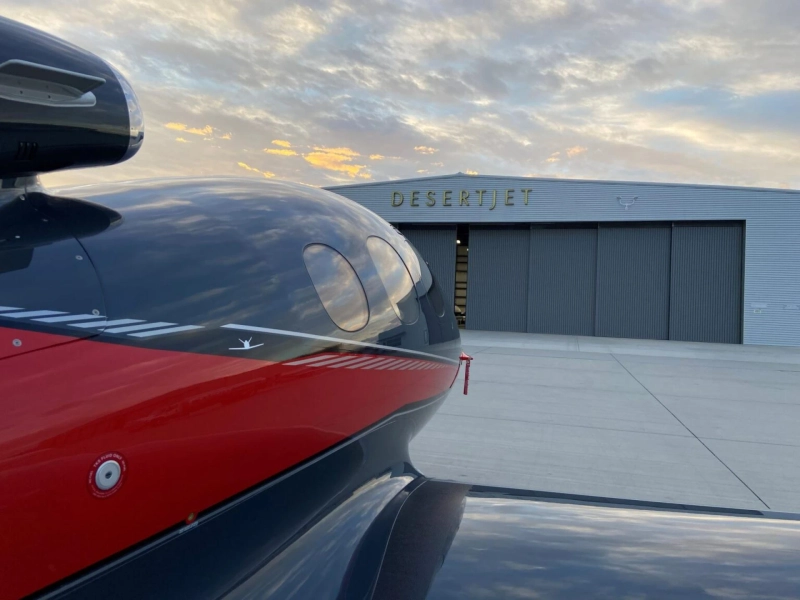
Cirrus Vision Jet® (S/F50) has transformed personal aviation by providing owner/pilots with a single engine; very light jet that provides them the same level of business class service as commercial airlines. The Vision Jet is an innovative aircraft representing a significant step up in the performance, system complexity and operational requirement than piston powered airplanes such as the Cirrus SR20 and SR22, both of which are popular models. Therefore pilots wanting to safely and confidently transition from a piston powered airplane to a jet airplane must undergo transitional training to meet the requirements set forth by regulation.
Why Does Cirrus Vision Jet Transition Training Matters?
Flying a jet as compared to flying a piston powered airplane is not just different in terms of speed but it’s a fundamentally different flying environment. For example a Jet airplane like the Vision Jet (ajet) is typically flown faster, at higher altitudes and through more complicated air space than most pilots have ever encountered while flying general aviation aircraft. These aircrafts often require instrument Flight Rules (IFR) proficiency and an understanding of advanced avionics and energy management technique. Apart from it, jets also have systems and levels of automation that most pilots that fly piston-powered aircraft have never encountered before, such as sophisticated flight management systems and advanced autopilot modes.
Due to these significant differences between general aviation aircraft and jet-powered aircraft, completing a comprehensive transition is required. The training program is valuable for the pilots and helps them with the following:
1. Build confidence in your ability to execute and handle jet performance
2. Gain proficiency with the Garmin Perspective Touch+
3. The avionics suite featured in the Vision Jet.
4. Develop a high level of situational awareness while operating at higher speeds and altitudes.
5. Understand how to effectively manage jet energy, turbo jet engine operation and pressurization systems.
6. Prepare to receive your type rating (the formal certification required to act as Pilot-in-Command of Vision Jet).
Core Elements of Vision Jet Transition Training
Transition training typically begins long before a pilot ever climbs into the jet. Cirrus and its training partners offer a layered training approach:
1. Ground
School and Pre-Training Pilots
Generally covers a preparatory study that includes
· The aircraft systems and limitations.
· Jet aerodynamics and performance charts.
· Jet engines and associated procedures.·
· Emergency procedures and memory items
The Cirrus creates support for this preparatory study using online courses and learning tools, including the Cirrus Approach Flight Training App, which includes resources that allow pilots to use augmented reality tools for pre-flight preparation.
2. Simulator Training
Flight simulators are one of the best ways to conduct jet Cirrus Vision Jet transition training. Cirrus has operated FAA certified Level D full flight simulators at its training centers (Knoxville, TN) that accurately simulate the Vision Jet’s cockpit and system with a high level of fidelity. Pilots can usethese simulators to practice routine, abnormal or emergency procedures, while
minimizing the risk associated with actual flight training.
3. in-Aircraft Instruction
Pilots receive flight experience in a controlled environment to develop their practical skills by having their instructor support them during hands-on training with the following activities:
· Typical flight profile: takeoff, climb, cruise, descent and landing.
· Using the autopilot and integrated avionics.
· Conducting basic instrument flight rules (IFR)
· operations, navigating and communicating.
· Abnormal and emergency operations in live flight
· scenarios.
Training on actual flights reinforces the skills learned in the simulator, so they attain competency to perform the manoeuvres safely when the pilot is flying in real-world conditions.
4. Type Rating Check ride
To operate the Vision Jet legally, one has to possess the SF50 type rating, which is a separate FAA certification from having a private pilot certificate or a commercial pilot license. The checkride has both ground and flight skills tests similar to those a pilot would have to take if they were pursuing a transport pilot rating.
Beyond transition to continue proficiency
Once the type rating is obtained, the training doesn’t stop. Many pilots who have their type rating fly under engage in Supervised Operating Experience (SOE) — real flight time with a mentor to validate that they are competent to operate the Vision Jet under real-world conditions and meet the insurance company requirement for PIC authority. Cirrus emphasizes recurrent training as a method to keep pilots updated in their operational knowledge and improve safety.
Conclusion
Flying the Cirrus Vision Jet is a significant milestone that allows personal aviators more opportunities for travel, but it requires diligence in approaching the additional complexity of transitioning into flying an SF50 (i.e., formal training to transition, sim time, pre-flight training, and formal training for SF50 type rating), all of which are necessary to ensure safety, proficiency and confidence in flying the SF50.