



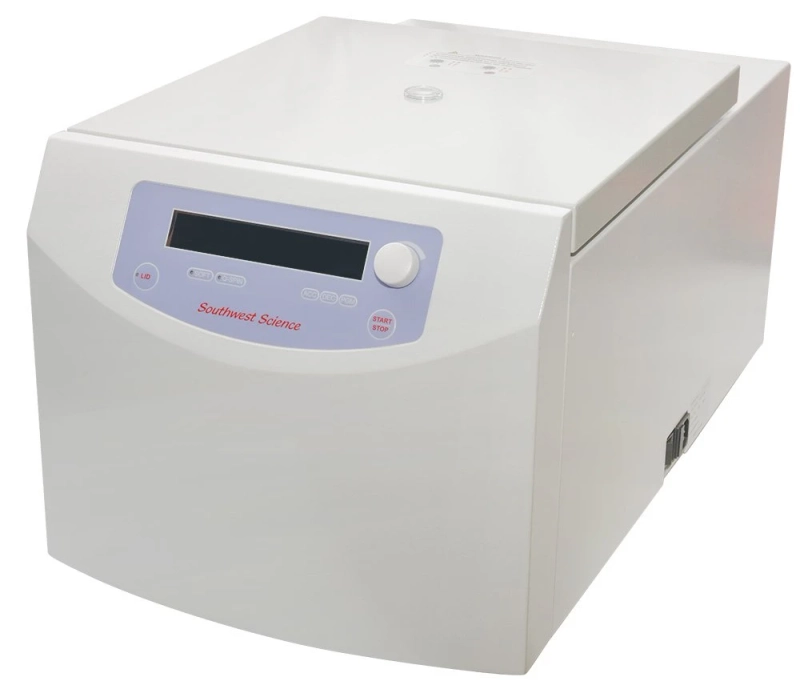
If you work in a laboratory, you already know how often centrifuges are used in daily workflows. From separating biological samples to preparing reagents, this equipment quietly supports many critical tasks. But when it comes to selecting the right benchtop microcentrifuge, the process can feel confusing. There are many models, specifications, and features to compare.
So how do you actually choose the right one for your lab? This article will outline the key factors together so you can make a practical and confident decision.
Understand Your Lab’s Daily Applications
Before looking at product catalogs, start with a simple question: What will you mostly use the centrifuge for?
Different labs have different priorities. Molecular biology labs, diagnostic labs, and research facilities often use centrifuges for different types of samples.
Ask yourself:
● Will you spin microtubes frequently?
● Do you handle DNA, RNA, or protein samples?
● How often will the centrifuge run each day?
If your lab processes many small-volume samples, a compact centrifuge designed specifically for microtubes will be ideal. Choosing equipment that matches daily workflows helps avoid unnecessary costs and improves efficiency.
Check Speed and Performance Requirements
Speed is one of the most important technical factors. Centrifuge performance is typically measured in RPM (revolutions per minute) or RCF (relative centrifugal force).
For most molecular biology applications, a benchtop microcentrifuge should provide sufficient force to separate cellular components or nucleic acids quickly.
Look for models that offer:
● Adjustable speed settings
● Stable acceleration and deceleration
● Consistent performance during repeated runs
Not every lab requires extremely high speeds. In some cases, labs also rely on a low speed refrigerated general purpose centrifuge for larger sample volumes or temperature-sensitive processes. Understanding where each type fits in your workflow helps you build an efficient equipment setup.
Consider Temperature Control
Temperature-sensitive samples require special attention. Heat generated during centrifugation can damage delicate biological materials such as enzymes, proteins, or RNA.
If your lab regularly works with sensitive samples, temperature control becomes an important feature. Some centrifuges offer built-in refrigeration systems that maintain a stable environment during long runs.
This feature is particularly useful in:
● Molecular biology laboratories
● Clinical research labs
● Pharmaceutical testing facilities
Maintaining proper sample conditions helps preserve sample integrity and ensures more reliable experimental results.
Evaluate Rotor Compatibility
Another factor many people overlook is rotor compatibility. Different experiments require different tube sizes, and not all centrifuges support every rotor configuration.
When selecting equipment, check whether the centrifuge supports:
● Standard microcentrifuge tubes (1.5 ml and 2.0 ml)
● PCR strip tubes
● Small specialty tubes used in specific experiments
Some models also allow interchangeable rotors, which increases flexibility. This can be helpful if your lab performs multiple types of experiments.
Pay Attention to Safety Features
Centrifuges operate at high speeds, so safety should never be ignored. Reliable models include built-in protection features that prevent accidents or equipment damage.
Important safety features include:
● Lid lock mechanisms
● Imbalance detection systems
● Automatic shutoff during irregular operation
These features protect both the user and the samples. In busy labs where equipment runs multiple times a day, safety features become even more valuable.
Think About Noise and Lab Environment
Laboratory equipment can sometimes create unnecessary noise, especially during high-speed operation. While this may seem like a minor issue, it can affect the comfort of the working environment.
Modern centrifuges are designed with improved motor technology that reduces vibration and noise levels. If your lab is compact or shared with other equipment, a quieter centrifuge can make daily operations much more comfortable.
Balance Cost with Long-Term Value
Budget always matters, but the cheapest option is not always the smartest one. Instead of focusing only on price, think about long-term reliability and maintenance.
Ask these questions:
● Is the centrifuge durable for daily use?
● Does it come with a warranty or service support?
● Are replacement parts easily available?
Investing in reliable laboratory equipment can prevent downtime and reduce maintenance expenses in the long run.
Key Takeaways:
Choosing the right benchtop microcentrifuge does not need to be complicated. When you focus on your lab’s specific applications, speed requirements, safety features, and flexibility, the decision becomes much clearer.
A well-selected centrifuge improves workflow efficiency, protects sample integrity, and supports consistent research outcomes. Taking the time to evaluate your options today can make everyday lab work smoother tomorrow.