



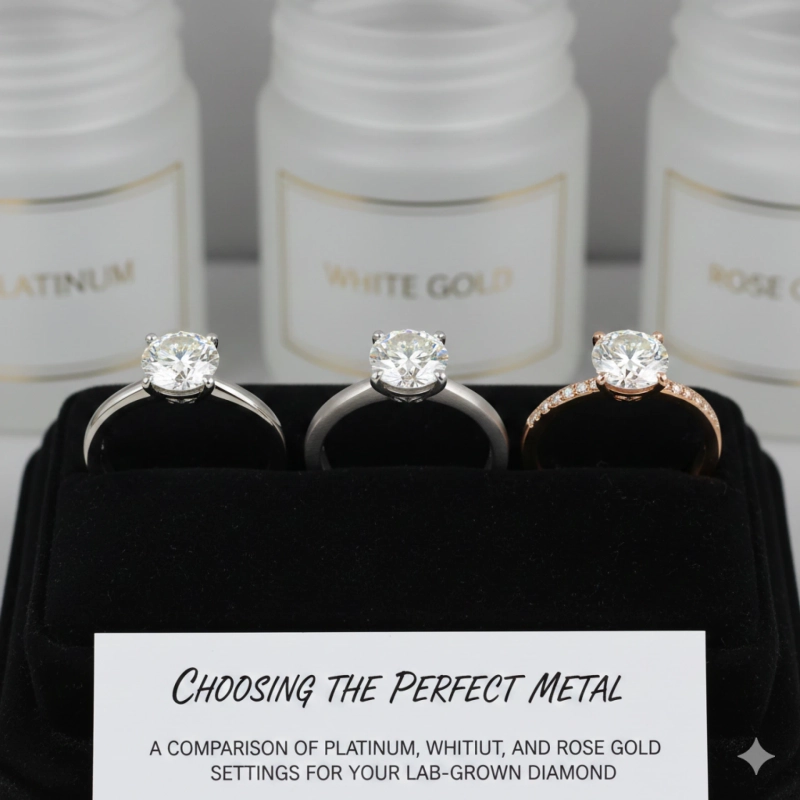
The setting metal dictates how your diamond’s brilliance is reflected, how often you’ll need maintenance, and how the ring will wear over the decades. This is more than a color choice; it’s a long-term commitment. Getting the right lab-grown diamond settings is crucial for security and style.
1. The Enduring Prestige of Platinum
Platinum is often considered the most prestigious of the jewelry metals. It is a naturally white metal, highly valued for its rarity, density, and inherent resistance to corrosion.
Key Characteristics & Benefits
- Purity and Density: Jewelry-grade platinum is typically 90–95% pure, making it significantly heavier and denser than gold alloys. This higher purity makes it an excellent choice for those with metal sensitivities.
- Durability and Security: While platinum is a softer metal, it is incredibly durable. When scratched, the metal merely displaces (it moves from one place to another) rather than wearing away. Over time, this displacement results in a soft, matte finish known as a "patina." Crucially, this means platinum retains its volume and is an exceptionally secure option for holding your diamond over decades of wear.
- Natural Color: Platinum’s luminous, natural white luster perfectly complements the clarity and colorlessness of high-quality lab-grown diamonds, maximizing their brilliance without reflecting any yellow hue.
Trade-offs
- Cost: Platinum has a higher initial cost than gold alloys due to its rarity and density (more material is required for the same volume).
- Maintenance: While it doesn’t change color, it requires professional polishing to restore the high-mirror shine once the patina has developed.
Best For: Individuals seeking maximum security, a truly hypoallergenic option, and a metal that requires the least color maintenance. It is the ultimate choice for a timeless, enduring design where substance and weight are desired.
2. The Classic Versatility of White Gold
White gold is a classic choice, offering the look of platinum at a more accessible price point. It is not a naturally occurring white metal but rather an alloy of pure yellow gold mixed with white metals like palladium, silver, or sometimes nickel.
Key Characteristics & Benefits
- Composition: Typically 14k or 18k gold (meaning 58.3% or 75% pure gold, respectively). The addition of white metal alloys gives it a pale, yellow-tinged white hue.
- The Rhodium Factor: To achieve the brilliant, reflective white finish consumers expect, white gold is always plated with a thin layer of rhodium—a rare, brilliant-white metal in the platinum family.
- Price Point: White gold offers an excellent balance of beauty and budget, making it a globally popular choice for lab-grown diamond settings.
Trade-offs (The Platinum vs White Gold Debate)
- Maintenance: This is the critical difference in the platinum vs white gold comparison. The rhodium plating will inevitably wear away over time, especially on the underside of the band, exposing the slightly warmer, yellowish hue of the underlying gold alloy. To maintain its bright white color, white gold requires re-plating (or "dipping") every 1–3 years, depending on the wearer’s habits.
- Allergies: While modern alloys minimize this, some individuals with severe nickel allergies may react to some white gold compositions, whereas platinum is nearly always hypoallergenic.
Best For: Individuals prioritizing a classic, bright white look within a specific budget, or those who prefer the lighter feel of gold over the density of platinum. It remains a superb choice, provided the owner is prepared for routine, minor maintenance.
3. The Romantic Warmth of Rose Gold
Rose gold (also called pink gold or red gold) has captured the imagination of modern jewelry enthusiasts. Its distinct, warm blush color offers a vintage yet contemporary appeal, making it a favorite for rose gold engagement rings.
Key Characteristics & Benefits
- Composition: Rose gold is an alloy of pure gold and copper. The copper is what imparts the beautiful pinkish-red hue. The higher the copper content, the deeper the red. 14k rose gold (with more copper) tends to be the most popular and durable option.
- Durability: Because copper is a very strong metal, rose gold is often considered the most durable of the colored gold options and is highly resistant to tarnish.
- Unique Aesthetic: The warm, blush tone complements nearly all skin tones and creates a stunning, contrasting effect with colorless lab-grown diamonds. This contrast can make the diamond appear whiter and brighter. It also pairs exceptionally well with other metal colors for stacked or mixed-metal looks.
- Maintenance: Unlike white gold, rose gold requires virtually no maintenance to retain its color.
Trade-offs
- Color Reflection: While generally flattering, the pink hue may reflect slightly into the facets of a very large or intensely colored diamond.
- Timelessness: For some traditionalists, the aesthetic is considered trendy rather than a timeless classic, though its vintage appeal suggests otherwise.
Best For: Romantics, those with a distinct personal style, or buyers looking for a unique, warm, and vintage-inspired metal that requires minimal maintenance.
Making Your Final Decision: A Quick Comparison
Your final choice should align with your lifestyle, budget, and aesthetic vision. When making a metal comparison for diamonds, consider these factors:
Detailed Comparison:
- Color:
- Platinum: Features a Natural White color.
- White Gold: Is Plated Bright White, but the color wears over time to an off-white/yellowish hue.
- Rose Gold: Displays a Warm Pink/Blush tone.
- Maintenance:
- Platinum: Requires Low maintenance (only polishing).
- White Gold: Requires High maintenance, specifically re-plating (or "dipping") every 1–3 years to maintain its bright white color.
- Rose Gold: Requires Low maintenance (only cleaning).
- Durability:
- Platinum: Offers Excellent durability because the metal displaces rather than wears away, meaning its volume is retained.
- White Gold: Is Very Good, but the metal wears away over time, meaning it loses volume.
- Rose Gold: Is Very Good, benefiting from the strength that the copper alloy adds.
- Hypoallergenic:
- Platinum: Is Yes (Virtually 100% hypoallergenic) due to its high purity.
- White Gold: Is Often hypoallergenic, but consumers should check for the presence of nickel alloys, which can cause reactions.
- Rose Gold: Is Yes, as copper is rarely an allergen.
- Weight:
- Platinum: Is the Heaviest and most substantial of the three.
- White Gold: Is Light to Medium in weight.
- Rose Gold: Is Light to Medium in weight.
- Price:
- Platinum: Has the Highest Initial Cost.
- White Gold: Is Moderate in price.
- Rose Gold: Is Moderate in price.
Conclusion
Ultimately, there is no single "perfect" metal—only the perfect metal for you.
- Choose Platinum if your priority is lifelong diamond security, purity, and the lowest ongoing color maintenance.
- Choose White Gold if you seek the classic bright white look at a moderate price point and are comfortable with routine re-plating.
- Choose Rose Gold if you crave a unique, romantic, and warm aesthetic that requires virtually no color maintenance.
At The Royal Carats, every lab-grown diamond settings option we offer is designed to showcase your stone's brilliance. Explore our curated collections to find the setting that perfectly tells your story.