



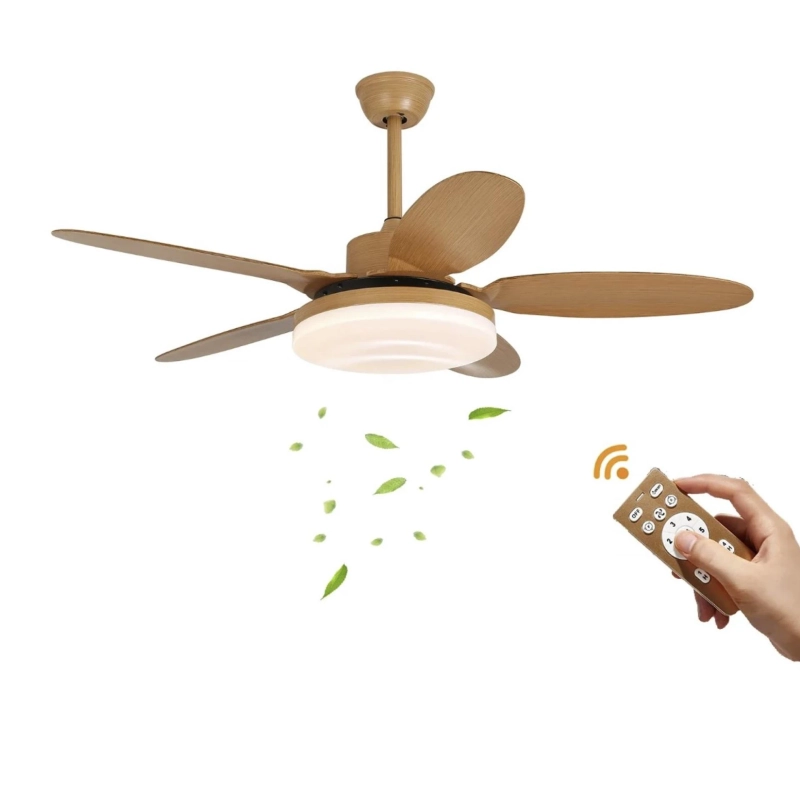

The relationship between ceiling fans and education runs deeper than most people realize. From the sweltering one-room schoolhouses of the 19th century to today's high-tech learning environments, ceiling fans have played a crucial role in creating comfortable conditions that facilitate learning. This connection between air circulation and academic performance has evolved alongside educational philosophy and technology, culminating in today's sophisticated DC ceiling fans and minimalist designs that support modern pedagogical approaches.
The Early School Days: When Fresh Air Meant Everything
In the early days of American education, the one-room schoolhouse dominated the educational landscape. These simple wooden structures, often built without sophisticated ventilation systems, relied heavily on natural air circulation and basic mechanical aids to maintain bearable conditions during hot weather. Teachers and students alike understood the direct correlation between air quality and learning capacity long before scientific studies confirmed these observations.
The introduction of ceiling fans into educational settings began in the late 1800s, initially in urban schools that could afford such modern conveniences. These early installations were typically large, slow-moving fans with wooden blades, operated by belt-driven systems connected to steam engines or early electric motors. The mechanical noise was considerable, but the relief from stifling heat made the distraction worthwhile.
Students of this era often recalled the rhythmic whirring of ceiling fans as part of their school day soundtrack. The gentle breeze created by these early fans not only provided physical comfort but also helped disperse the accumulated odors from oil lamps, wood stoves, and crowded classrooms with limited ventilation. Many former students from the early 20th century fondly remembered the hypnotic effect of watching fan blades rotate during particularly boring lessons, though teachers generally discouraged such distractions.
The Science of Learning Environments
Modern research has validated what educators intuitively understood for generations: comfortable environmental conditions significantly impact learning outcomes. Studies consistently show that students perform better academically when classroom temperatures remain between 68-72°F (20-22°C) with adequate air circulation. Ceiling fans contribute to this optimal learning environment by creating air movement that enhances comfort even at slightly higher temperatures.
The physiological benefits of proper air circulation in educational settings extend beyond simple temperature control. Moving air helps maintain alertness by preventing the buildup of carbon dioxide that can cause drowsiness and reduced cognitive function. This is particularly important in crowded classrooms where dozens of students share limited air space for hours at a time.
Contemporary educational research has also identified the psychological benefits of ceiling fans in learning environments. The gentle, consistent sound of well-designed fans can create white noise that masks distracting external sounds, helping students concentrate on lessons and reducing anxiety levels. This ambient sound masking proves especially valuable in urban schools located near busy streets or construction zones.
Evolution of School Ceiling Fan Technology
The transition from AC to DC ceiling fan technology has been particularly beneficial for educational environments. Traditional AC ceiling fans in schools often suffered from several problems that modern DC technology has largely eliminated. The loud humming of AC motors frequently competed with teachers' voices, forcing educators to speak louder or position themselves strategically to avoid the worst noise zones.
DC ceiling fans address these educational challenges through superior engineering. The virtually silent operation of brushless DC motors means teachers no longer need to compete with fan noise for students' attention. This quiet operation is particularly crucial during activities requiring concentrated listening, such as language instruction, music classes, or multimedia presentations.
Energy efficiency represents another critical advantage of DC ceiling fans in educational settings. School districts operating under tight budget constraints benefit significantly from the reduced electrical consumption of DC motors. A typical classroom equipped with SOVE ceiling fan DC models can reduce cooling-related energy costs by 40-60% compared to traditional AC alternatives.
The precise speed control offered by DC ceiling fans allows educators to fine-tune air circulation based on specific classroom needs. During active periods when students generate more body heat, fans can operate at higher speeds. During quiet study time or testing, lower speeds maintain air circulation without creating distracting air currents that might disturb papers or cause discomfort.
Modern Classroom Design and Minimalist Aesthetics
Contemporary educational philosophy emphasizes creating learning environments that minimize distractions while maximizing functionality. This approach has driven demand for simple ceiling fans that blend seamlessly with modern classroom design principles.
Ultra-thin ceiling fans with low-profile designs work particularly well in modern educational facilities where architects often specify lower ceiling heights to reduce construction costs and improve acoustics. These sleek fixtures provide necessary air circulation without overwhelming classroom spaces or competing visually with educational displays, interactive whiteboards, and other learning tools.
The minimalist aesthetic of contemporary ceiling fans also supports flexible classroom arrangements. Modern educational approaches often require rapid reconfiguration of learning spaces, moving from traditional rows to collaborative circles, small group clusters, or presentation formats. Simple ceiling fan designs accommodate these changes without creating visual conflicts or physical obstacles.
Neutral color schemes typical of simple ceiling fans complement the carefully planned color psychology employed in modern classroom design. Educational researchers have identified specific color combinations that promote learning, creativity, and calm focus. Ceiling fans that maintain visual neutrality support these evidence-based design strategies rather than interfering with them.
Interesting School-Related Ceiling Fan Facts
The history of ceiling fans in educational settings contains numerous fascinating and unusual stories. During the 1918 influenza pandemic, many schools installed additional ceiling fans based on the medical theory that circulating air would prevent disease transmission. While the understanding of airborne pathogens was incomplete at the time, this intuitive response actually did provide some benefit by improving ventilation and air quality.
One of the most unusual educational applications of ceiling fans occurred in the 1950s when a progressive school district in Texas experimented with "learning rhythm" fans. These specially modified ceiling fans could be synchronized to operate at different speeds corresponding to different types of lessons. Fast speeds accompanied energetic activities like physical education or music, while slower speeds supported quiet reading or mathematics instruction.
A quirky tradition developed in some rural schools during the mid-20th century where graduating seniors would autograph the ceiling fan blades as a farewell gesture. Some of these signed fan blades are now preserved in local historical societies as unique artifacts of educational history. Several schools have revived this tradition using specially designated memorial fans installed specifically for this purpose.
The largest ceiling fan installation in an educational facility is located at a university in India, where a single great hall contains 47 interconnected ceiling fans controlled by a central system. This massive installation can create coordinated air currents that effectively cool the entire space without requiring expensive air conditioning systems.
Research conducted in the 1960s discovered that students sitting directly under ceiling fans scored an average of 8% higher on standardized tests compared to students in non-fan areas of the same classroom. This finding led to the widespread adoption of ceiling fans in testing centers and examination halls, a practice that continues today.
Special Considerations for Educational Environments
Installing ceiling fans in schools requires attention to unique safety and operational considerations. Educational facilities must comply with strict safety codes that often exceed residential requirements. Fan mounting systems must withstand not only normal operational stresses but also potential impacts from athletic equipment, science experiments, or exuberant student activities.
Height clearance becomes particularly critical in gymnasiums, auditoriums, and multi-purpose rooms where ceiling fans must operate safely above athletic activities. Many educational facilities choose extra-large, slow-moving fans that provide excellent air circulation while maintaining safe clearances even during high-energy activities.
Remote control capability proves especially valuable in educational settings where teachers need to adjust fan speed or direction without interrupting lessons to access wall switches. Modern DC ceiling fans with smartphone app control allow facility managers to monitor and adjust multiple fans throughout a building from a central location, optimizing comfort and energy consumption across entire campuses.
Maintenance and Durability in School Settings
Educational environments subject ceiling fans to unique challenges that don't exist in residential applications. High usage rates, limited maintenance windows, and exposure to chalk dust, marker fumes, and other classroom contaminants require ceiling fans designed for institutional durability.
DC ceiling fans generally prove more suitable for educational applications due to their robust brushless motor design. The absence of carbon brushes eliminates a common maintenance point while reducing the accumulation of conductive dust that can cause motor problems in traditional AC fans. Sealed bearing systems protect critical components from the various airborne particles common in active learning environments.
School maintenance departments appreciate the reduced service requirements of modern ceiling fans. Scheduled maintenance typically involves blade cleaning and periodic inspection of mounting hardware, tasks that can be performed during regular school breaks without disrupting educational activities.
Energy Education and Environmental Awareness
Many progressive schools have incorporated ceiling fans into their environmental education curricula, using these familiar devices to teach students about energy efficiency, sustainable design, and environmental responsibility. Students can calculate energy savings, measure air circulation patterns, and even build simple fan models as part of science and engineering projects.
The visible energy efficiency of DC ceiling fans provides concrete examples of how technological improvements can reduce environmental impact. Students can compare power consumption between old AC models and new DC alternatives, creating real-world connections between abstract environmental concepts and daily life.
Some schools have implemented student-monitored ceiling fan control programs where responsible students help optimize fan operations based on weather conditions, occupancy levels, and activity types. These programs teach environmental stewardship while reducing energy costs and improving classroom comfort.
Future Trends in Educational Ceiling Fan Applications
The integration of ceiling fans with broader building management systems represents the next frontier in educational facility design. Smart ceiling fans that communicate with HVAC systems, occupancy sensors, and even individual student comfort preferences could revolutionize classroom environmental control.
Emerging technologies like bladeless ceiling fans may eventually address safety concerns in physical education settings while providing even quieter operation for sensitive learning activities. These innovations could expand ceiling fan applications into specialized educational spaces like recording studios, language laboratories, and precision science facilities.
The growing emphasis on sustainable building design in educational construction suggests that energy-efficient ceiling fans will play increasingly important roles in achieving green building certifications and reducing operational costs for school districts facing ongoing budget pressures.
Conclusion
The relationship between ceiling fans and education demonstrates how seemingly simple technologies can profoundly impact learning environments. From the sweltering schoolhouses of the past to today's sophisticated learning spaces, ceiling fans have consistently supported educational goals by maintaining comfortable, healthy conditions that promote academic success.
Modern DC ceiling fans and minimalist designs represent the culmination of over a century of evolution in educational environmental control. These advances in motor technology, design aesthetics, and smart integration make contemporary ceiling fans more suitable than ever for supporting diverse learning activities while maintaining the quiet, distraction-free environments that modern education demands.
As educational institutions continue evolving to meet changing pedagogical needs and sustainability requirements, ceiling fans will undoubtedly adapt alongside them. The simple act of moving air, refined through generations of innovation and understanding, remains as relevant today as it was in those first fan-cooled classrooms of the industrial age.
For educators and facility managers seeking to optimize learning environments, resources like Tuesday's guide provide valuable insights into selecting models that balance educational functionality with contemporary design principles, ensuring that these essential devices continue supporting student success for generations to come.