




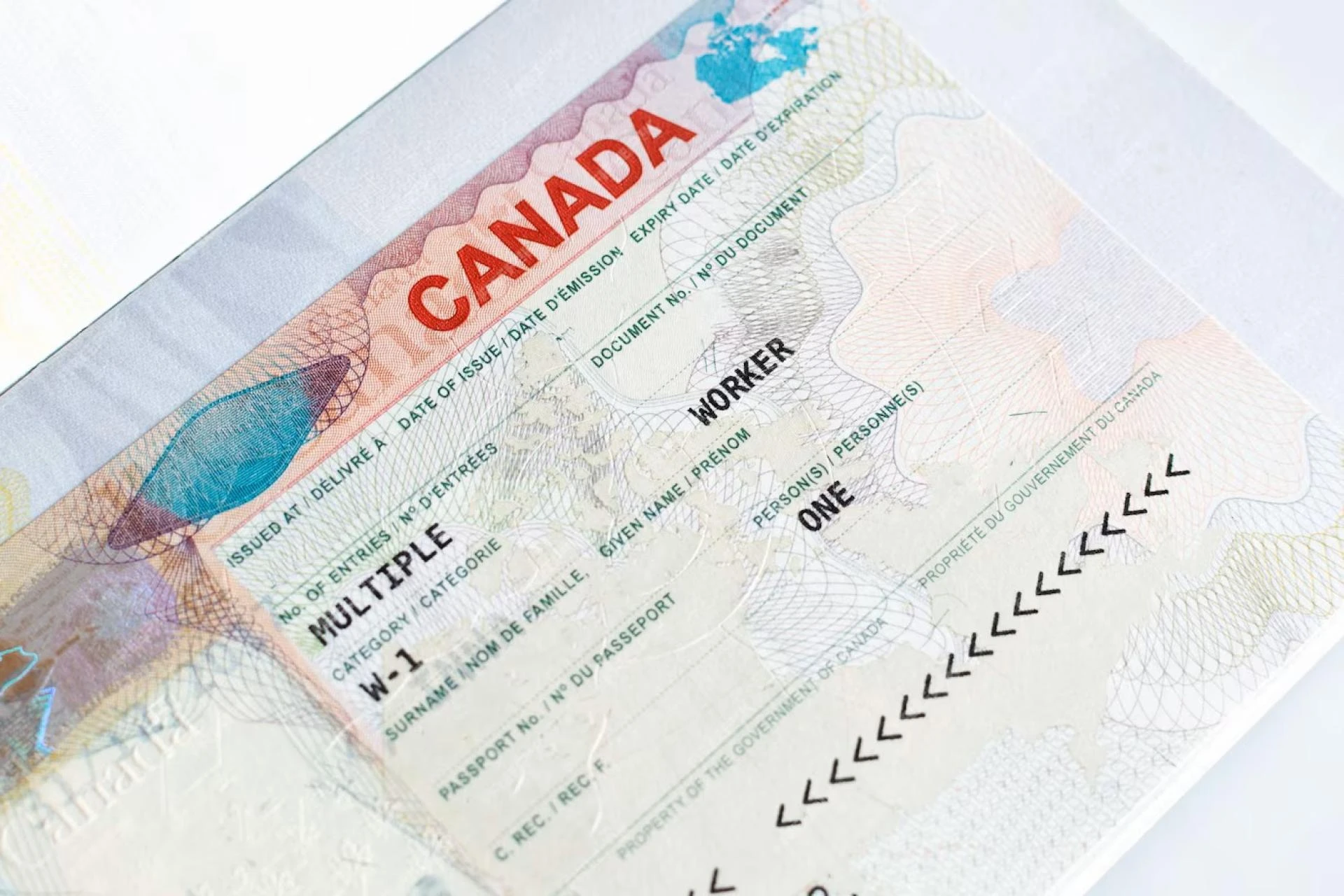
Canada is among the preferred places for foreign workers and skilled professionals looking to live and work in a country with a high standard of living. With a strong economy, pro-immigration policies, and multiple legal avenues to work, obtaining a Canada Work Permit Visa is a significant step toward employment in Canada. This guide provides a detailed overview of the different types of work permits, eligibility requirements, application procedures, and the benefits of working in Canada.
Canada Work Permit Types
Before applying, it's essential to understand the type of work permit you need. The main categories include:
1. Employer-Specific Work Permit
This permit allows foreign workers to be employed by a specific employer under predefined conditions, such as job location and employment duration. The employer typically needs to obtain a Labour Market Impact Assessment (LMIA) from Immigration, Refugees and Citizenship Canada (IRCC) to demonstrate that no Canadian worker is available.
2. Open Work Permit
Unlike an employer-specific permit, an open work permit allows individuals to work for almost any employer in Canada. This type of permit is commonly granted to spouses of skilled workers, international students, or individuals applying for permanent residency.
3. Post-Graduation Work Permit (PGWP)
Graduates from eligible Canadian institutions can apply for a PGWP, which allows them to gain work experience in Canada after completing their studies. This permit is an excellent stepping stone toward permanent residency through programs like the Canadian Experience Class (CEC) under Express Entry.
4. International Mobility Program (IMP) Work Permit
This permit is for individuals who qualify under international trade agreements or intra-company transfers or whose work significantly benefits Canada's social, economic, or cultural interests. Unlike employer-specific work permits, an IMP work permit does not require an LMIA, making the application process faster.
Eligibility Criteria for a Canada Work Permit
To qualify for a Canada Work Permit, applicants must meet specific requirements, including:
- A valid job offer from a Canadian employer (if applicable).
- Proof of financial stability to support themselves and dependents.
- Intention to leave Canada once the permit expires.
- A clean criminal record (police clearance may be required).
- Medical examination clearance (if necessary).
- Compliance with Canada’s immigration laws and regulations.
Canada Work Permit Application Process
Applying for a work permit involves several steps:
- Check Eligibility – Determine whether you need an employer-specific or open work permit.
- Gather Required Documents – These typically include a job offer letter, LMIA (if required), passport, proof of funds, and medical exam results.
- Apply Online – Submit your application through the IRCC website.
- Pay the Application Fees – Fees vary depending on the type of work permit.
- Provide Biometrics – Most applicants must submit fingerprints and a photograph.
- Wait for Processing – Processing times depend on the applicant’s country of residence and type of permit.
- Receive the Work Permit – If approved, you’ll receive a letter of introduction, allowing you to work in Canada upon arrival.
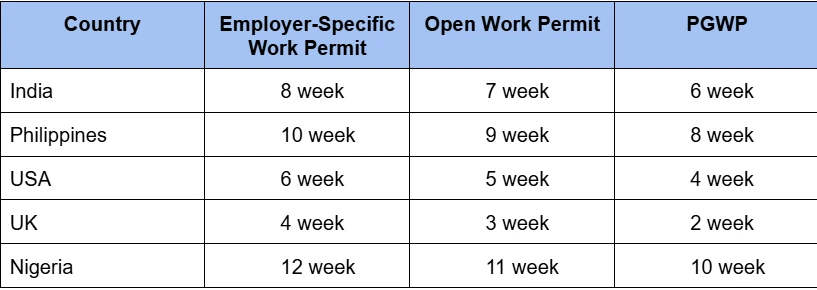
Canada Work Visa Processing Times
Processing times vary depending on the applicant’s country of residence. Below is an estimated table:
Benefits of Working in Canada
There are numerous advantages to working in Canada, including:
- Pathway to Permanent Residency – Canadian work experience can strengthen eligibility for Express Entry and Provincial Nominee Programs (PNPs).
- Competitive Salaries & Job Security – Canada offers high wages and strong labor rights for workers.
- Access to Social Benefits – Some workers qualify for healthcare and other social programs.
- Family Sponsorship Opportunities – Certain work permits allow family members to accompany the primary applicant.
- Multicultural Work Environment – Canada’s diverse workforce fosters inclusivity and career growth opportunities.
Conclusion
A Canada Work Permit Visa opens the door to excellent job opportunities and potential pathways to permanent residency for foreign workers. Understanding the different types of work permits, eligibility criteria, and the application process will help you take the right steps toward working in Canada. Stay updated with the latest information from IRCC to ensure a smooth application process and maximize your chances of success.