



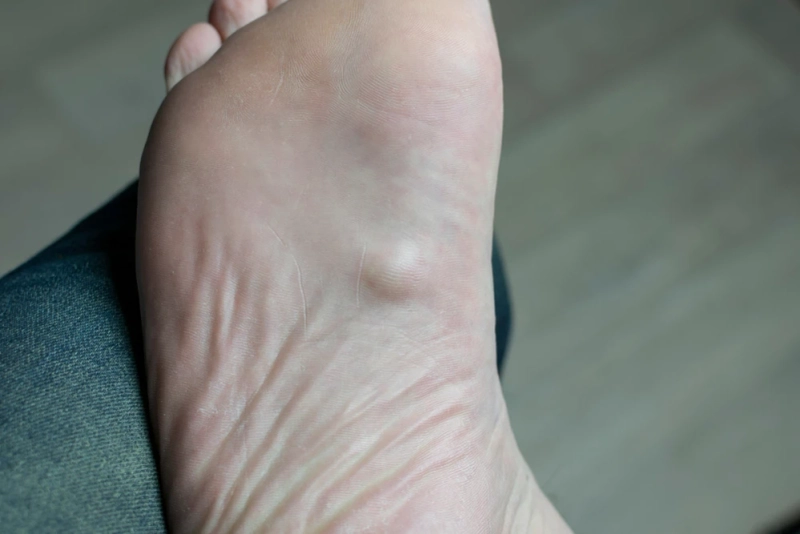
Notice a firm lump in the arch of your foot and wonder if it’ll disappear on its own. You’re not alone. Many people who develop a plantar fibroma—a benign but often uncomfortable mass in the foot—hope it will shrink or vanish without treatment.
So, can plantar fibroma go away on its own? The short answer: No, it rarely resolves without medical intervention. While some home remedies might provide temporary relief, leaving it untreated can lead to increased discomfort and mobility issues over time.
Unfortunately, several myths about plantar fibromas lead to confusion and delays in proper treatment. In this article, we’ll separate myths from facts, explore treatment options, and discuss when you should see a doctor. Some people even consider getting a cure through plantar fibroma clinical trials to find new treatment methods.
What Is a Plantar Fibroma?
A plantar fibroma is a non-cancerous lump that develops in the plantar fascia—the thick band of tissue on the bottom of your foot. It usually appears in the arch area and feels like a firm, rubbery nodule under the skin.
Common Symptoms
- A noticeable lump in the arch of the foot.
- Mild to severe pain, especially when walking or standing for long periods.
- Increased discomfort when wearing certain shoes.
- In some cases, the fibroma remains painless but still affects foot mechanics.
What Causes Plantar Fibroma?
Doctors are not entirely sure what causes plantar fibromas, but they are linked to:
- Genetics – A family history of fibromatosis increases risk.
- Trauma or Injury – Repeated stress on the foot may trigger fibrous tissue overgrowth.
- Certain Medical Conditions – Diabetes, epilepsy, and chronic liver disease have been associated with plantar fibromas.
Since the fibroma is made of fibrous connective tissue, it does not behave like a cyst, which could shrink or drain. This is why waiting for it to disappear naturally is not an effective approach.
Can Plantar Fibroma Disappear Naturally?
Is Waiting for It to Go Away a Good Idea?
Many people hope their plantar fibroma will shrink or disappear without intervention, but this is rarely the case. Unlike some lumps or soft tissue growths, plantar fibromas tend to stay the same size or gradually increase over time.
Why Won’t It Go Away on Its Own?
- The fibroma is made of tough fibrous tissue, not fluid, so it won’t drain or shrink naturally.
- Repeated pressure from walking and standing may encourage it to grow rather than shrink.
- If left untreated, it can begin affecting foot function and lead to persistent pain.
While some people report that the lump remains stable and doesn’t worsen, ignoring it is not a long-term solution. If it starts causing discomfort, early treatment can prevent further complications.
Myths vs. Facts About Plantar Fibromas
Separating Truth from Fiction
Misconceptions about plantar fibromas often lead to confusion. Let’s clear up some of the most common myths.
1. Myth: “It’s just a callus or wart.”
✅ Fact: A plantar fibroma is not a skin condition. Unlike calluses or warts, which affect the outer layers of skin, a plantar fibroma develops deep within the plantar fascia and does not go away with topical treatments.
2. Myth: “Massaging the lump will make it go away.”
✅ Fact: While massage may temporarily reduce discomfort by increasing blood flow, it does not shrink the fibroma. In some cases, excessive manipulation may even make it worse.
3. Myth: “Surgery is the only option.”
✅ Fact: Surgery is not always necessary. Many people manage plantar fibromas with non-surgical treatments, including orthotics, corticosteroid injections, and physical therapy. However, large or painful fibromas may require surgical removal.
4. Myth: “It always causes pain.”
✅ Fact: Not everyone experiences pain. Some people have painless fibromas that only become a problem if they grow larger or interfere with normal movement.
Understanding these facts can help you make informed decisions about your foot health rather than relying on misconceptions.
Treatment Options: What Can You Do?
How Can You Manage a Plantar Fibroma?
If your fibroma is causing discomfort, several treatment options can help:
1. Non-Surgical Treatments
- Orthotics & Shoe Inserts – Custom insoles can help distribute weight more evenly, reducing pressure on the lump.
- Stretching & Physical Therapy – Certain foot exercises may help relieve tightness and discomfort.
- Corticosteroid Injections – These may temporarily reduce the size of the fibroma, but the effects are not permanent.
2. Surgical Options (Only When Necessary)
If the fibroma grows larger or becomes too painful, surgical removal might be an option. However, this carries risks, including scar tissue formation and arch instability.
Early treatment often prevents the need for surgery, so don’t ignore persistent symptoms!
Lifestyle Changes to Prevent Worsening
Protecting Your Feet from Further Discomfort
To reduce the risk of the fibroma growing larger, consider these foot-friendly habits:
- Wear Supportive Shoes – Avoid high heels or flat shoes with no arch support.
- Minimize Pressure on the Arch – If standing for long periods, use cushioned mats or insoles.
- Gentle Foot Stretches – Stretching the plantar fascia can help maintain flexibility.
- Taking these steps won’t make the fibroma disappear but can help manage discomfort and prevent further complications.
When Should You See a Doctor?
Is It Time to Get Professional Help?
You should consult a doctor if:
- The lump is growing or causing persistent pain.
- You experience difficulty walking or standing.
- Conservative treatments aren’t providing relief.
A podiatrist can confirm the diagnosis and recommend the best treatment plan based on your symptoms.
Dig Deeper: Plantar Fibroma: Early Signs & When to Seek Treatment
Conclusion
Plantar fibromas do not disappear on their own, despite common myths suggesting otherwise. While some people experience no symptoms, others find that the lump grows larger over time and causes discomfort.
Key Takeaways:
Plantar fibromas are benign but persistent growths.
They do not shrink naturally—early intervention is best.
Non-surgical treatments can help manage symptoms.
Surgery is a last resort for severe cases.
Is Plantar Fibroma a Disability?
In most cases, plantar fibroma is not considered a disability. However, if the lump becomes large enough to cause chronic pain and mobility issues, it could significantly impact daily activities.
Ready to take the next step? If you suspect you have a plantar fibroma, consult a doctor to discuss treatment options that suit your needs.