



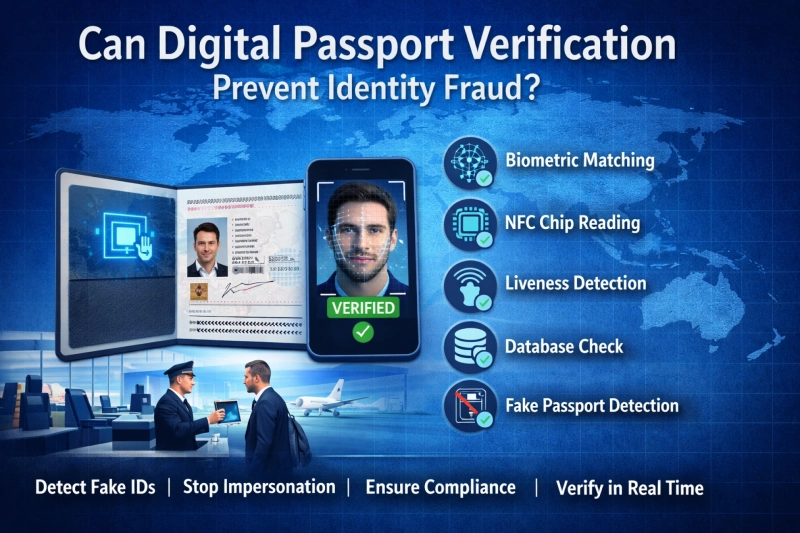
Identity fraud is rising across the globe. Criminals are using stolen documents, synthetic identities, and deepfake technology to bypass security systems. Banks lose billions each year due to fraudulent account openings. Fintech companies struggle with fake onboarding requests. Airports face risks from forged travel documents. Even remote hiring processes are vulnerable to impersonation.
As fraud tactics grow more advanced, traditional document checks are no longer enough. Manual reviews can miss altered data or high quality fake passports. This is where Digital Passport Verification is changing the game.
By combining biometric checks, secure chip reading, and real time identity validation, this technology strengthens identity fraud prevention across industries.
What Is Digital Passport Verification
Digital Passport Verification is a technology driven process that confirms whether a passport is genuine and belongs to the person presenting it. It goes beyond visual inspection.
Modern systems use passport identity verification tools, biometric passport verification, and e passport verification through NFC chips. They also perform database validation against official records.
Most modern passports are e passports. These contain an embedded NFC chip that stores encrypted personal information, including name, date of birth, passport number, digital photograph, and biometric identifiers.
When scanned using document authentication technology, the system reads this chip securely. It then compares the digital data with the person live image through facial recognition verification.
This layered approach makes secure document verification much stronger than manual checks.
How Digital Passport Verification Works
To understand how Digital Passport Verification prevents fraud, it helps to break down the process step by step.
Step 1 Passport Scan
The process begins with scanning the passport. The system captures the Machine Readable Zone or MRZ, personal details, and visible security features. The MRZ contains structured information that can be digitally checked. If the format is incorrect, the passport may be flagged immediately.
Step 2 Chip Reading Using NFC
For e passport verification, the system uses NFC technology to access the embedded chip. The chip contains encrypted data signed by the issuing government. If the digital signature does not match official records, the document is rejected. This adds a powerful layer of secure document verification.
Step 3 Biometric Matching
Next comes biometric passport verification. The system compares the stored passport photo with a live selfie taken by the user. Using facial recognition verification, the software checks if both images match. Even subtle facial structures are analyzed to prevent impersonation attempts.
Step 4 Liveness Detection
Fraudsters often try to use printed photos or pre recorded videos. Liveness detection technology checks eye movement, head rotation, light reflection, and depth patterns. This ensures that a real person is present during verification.
Step 5 Database Cross Check
The final step involves real time identity validation. The system checks watchlists, lost or stolen passport databases, and government identity records. This makes Digital Passport Verification highly effective in detecting suspicious identities within seconds.
How Digital Passport Verification Prevents Identity Fraud
Identity fraud prevention requires multiple security layers. Digital Passport Verification provides exactly that.
Detects Fake Passports
Fake passports often fail MRZ validation or digital signature verification. The NFC chip data cannot be copied easily. Any mismatch is flagged immediately.
Prevents Impersonation
Biometric matching ensures the person holding the passport is its rightful owner. Even if someone steals a passport, biometric passport verification can stop misuse.
Stops Altered Documents
Traditional fraud involves editing printed information. However, chip data cannot be altered without breaking encryption. Digital identity verification systems compare printed and chip data. If there is any inconsistency, verification fails.
Reduces Onboarding Fraud
In fintech and banking, criminals often attempt account creation using stolen passport images. Online passport verification with liveness detection ensures the document is genuine, the user is physically present, and the identity matches official records. This significantly strengthens the KYC verification process.
Strengthens Regulatory Compliance
Financial institutions must follow KYC and AML regulations. Digital Passport Verification supports secure document verification, real time identity validation, and audit trails for compliance. This reduces regulatory risks while improving customer trust.
Industries That Benefit Most from Digital Passport Verification
Many industries rely on strong identity checks. Digital Passport Verification provides scalable and secure solutions.
Banking and Fintech
Banks and digital payment platforms use passport identity verification during onboarding. Automated checks reduce manual workload and fraud losses. Benefits include faster account approval, lower fraud rates, and improved KYC compliance.
Travel and Immigration
Airports rely on airport passport verification systems to confirm traveler identity. Biometric e gates combine chip reading and facial recognition verification. This speeds up passenger processing while maintaining high security.
E Commerce and Online Marketplaces
High value sellers and buyers must verify their identities. Online passport verification helps reduce fake seller accounts and chargeback fraud.
Government Services
Public benefit programs require accurate identity checks. Secure document verification prevents fraudulent claims and duplicate registrations.
Remote Hiring and Human Resources
Remote onboarding has increased identity risks. Employers use digital identity verification tools to confirm candidate authenticity before hiring.
Limitations and Challenges of Digital Passport Verification
While Digital Passport Verification is powerful, it is not perfect. Understanding limitations is important for responsible implementation.
Deepfake Risks
Advanced deepfake technology can attempt to bypass facial recognition verification. Although liveness detection technology reduces this risk, systems must be regularly updated.
Data Privacy Concerns
Biometric data is sensitive. Organizations must store data securely, follow privacy regulations, and minimize data retention. Failure to protect biometric information can damage trust.
Implementation Cost
Deploying document authentication technology requires software integration, hardware support for NFC reading, and compliance frameworks. Smaller organizations may face higher setup costs.
Regulatory Complexity
Different countries have different identity laws. Businesses must align Digital Passport Verification systems with local KYC and AML standards.
Best Practices for Safe Implementation of Digital Passport Verification
To maximize identity fraud prevention, organizations should follow structured best practices.
Use Certified Verification Providers
Work with providers that meet international standards. Certification ensures systems follow secure encryption and compliance frameworks.
Implement Strong Encryption
All passport data and biometric information must be encrypted during transmission and storage. This protects against breaches.
Follow Global Compliance Standards
Ensure your system aligns with KYC verification process requirements, AML guidelines, and data protection laws. Compliance strengthens both security and trust.
Conduct Regular System Audits
Fraud techniques evolve. Regular audits help detect vulnerabilities, update facial recognition models, and improve liveness detection accuracy. Continuous improvement is key to maintaining reliable Digital Passport Verification systems.
Also Read: Importance of GST Search Report in Vendor Verification
Conclusion
Digital Passport Verification significantly reduces identity fraud when implemented securely and responsibly.
It offers multi layered document authentication technology, biometric passport verification, liveness detection safeguards, and real time identity validation.
No system can guarantee zero fraud. However, combining secure document verification with compliance best practices dramatically lowers risk.
For banks, fintech companies, airports, governments, and remote employers, adopting Digital Passport Verification is a necessary step toward stronger identity fraud prevention and regulatory compliance.
Organizations that invest in secure, certified, and privacy focused digital identity verification systems build trust, reduce fraud losses, and protect both customers and operations. When properly implemented, Digital Passport Verification remains one of the most effective tools available to combat modern identity fraud.