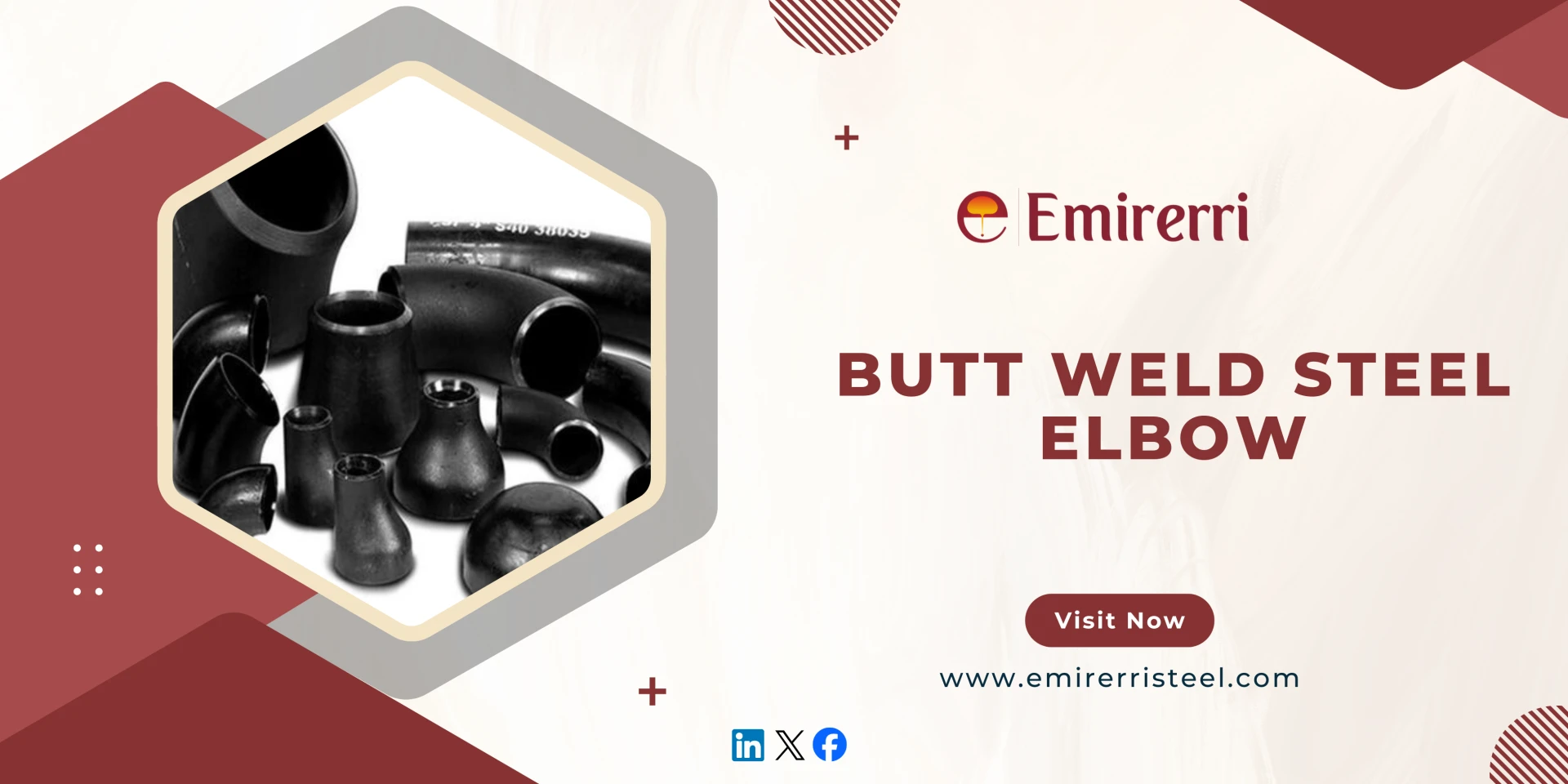
A Butt Weld Steel Elbow is an essential component in piping systems used to change the direction of flow, ensuring smooth and efficient transportation of liquids, gases, and other materials. These elbows are welded directly to pipes, forming a strong, leak-proof connection that provides superior strength and durability. They are most commonly available in 45° and 90° angles, with the 90 degree butt weld being the most widely used due to its versatility in connecting pipelines at right angles.
What is a Butt Weld Steel Elbow?
A butt weld steel elbow is a type of pipe fitting that allows for a directional change in a pipeline. It connects two pipes of the same or different diameters through a welded joint, providing a continuous, seamless flow path. The term “butt weld” refers to the process of joining pipes and fittings end-to-end by welding them together. This ensures high structural integrity and prevents leakage under high pressure or temperature.
Butt weld elbows are preferred in critical applications like oil & gas, chemical plants, water treatment, power generation, and shipbuilding industries. Their smooth inner surface minimizes pressure loss and turbulence, making them ideal for high-performance piping systems.
Types of Butt Weld Elbows
Depending on the angle and design, butt weld steel elbows are classified into several types:
- 90 Degree Butt Weld Elbow (Butt Weld 90):
- This is the most common elbow type, used to connect pipes at a 90° angle. The butt weld 90 provides a smooth directional change in pipelines and is widely used in plumbing, industrial, and construction applications.
- 45 Degree Butt Weld Elbow:
- This elbow type provides a gentle change in flow direction, minimizing pressure loss. It is often used where space and flow efficiency are crucial.
- 180 Degree Butt Weld Elbow:
- Also known as a return bend, this elbow type changes the flow direction by 180°, allowing the fluid to reverse its path within the system.
Materials Used in Butt Weld Steel Elbows
The choice of material depends on the nature of the fluid, operating temperature, and pressure conditions. The most common materials include:
- Stainless Steel Butt Weld Elbow:
- Offers excellent resistance to corrosion, oxidation, and high temperatures. Common grades include SS 304, SS 316, and SS 904L. Ideal for food processing, chemical, and marine industries.
- Carbon Steel Butt Weld Elbow:
- Known for high strength and durability, carbon steel elbows are suitable for high-pressure and high-temperature applications, such as oil refineries and power plants.
- Alloy Steel Butt Weld Elbow:
- Made from a blend of alloying elements like chromium, molybdenum, and nickel, these elbows provide enhanced hardness, wear resistance, and mechanical strength. They are used in heat exchangers, boilers, and heavy-duty industrial systems.
Manufacturing Process
The manufacturing of butt weld steel elbows involves precise forming and welding techniques to ensure dimensional accuracy and strength. The main steps include:
- Forming: Using hot or cold forming methods to shape the elbow from a steel plate or pipe segment.
- Heat Treatment: Enhancing mechanical properties and relieving internal stress.
- Beveling: Preparing the ends for butt welding with proper angles.
- Inspection: Conducting tests like radiography, hydrostatic pressure, and visual inspection to ensure quality.
High-quality elbows are produced in compliance with international standards such as ASME B16.9, MSS-SP-43, and DIN 2605.
Advantages of Butt Weld 90 Elbows
- Leak-proof Connection: The welded joint ensures a strong, leak-resistant pipeline.
- Smooth Flow Transition: Reduces turbulence and pressure drop inside the system.
- High Strength: Ideal for systems operating under extreme pressure and temperature.
- Durability: Long service life with minimal maintenance requirements.
- Cost-Effective: Compared to flanged or threaded connections, butt weld 90 elbows provide a more economical long-term solution.
Applications of Butt Weld Steel Elbow
The 90 degree butt weld and other elbow types are used in a variety of industries, including:
- Oil & Gas Industry: For connecting pipelines transporting crude oil, natural gas, and refined products.
- Petrochemical Plants: To handle corrosive and high-temperature media.
- Water Supply Systems: For redirecting flow in municipal and industrial water lines.
- Power Generation: In steam lines and heat exchangers requiring robust performance.
- Food & Beverage Processing: Using stainless steel elbows for hygienic and corrosion-resistant piping systems.
- Pharmaceutical and Marine Sectors: Where precision and corrosion resistance are critical.
Installation and Welding Considerations
Proper installation is crucial for the performance and longevity of a butt weld steel elbow. Before welding, ensure:
- Pipe ends are clean, beveled, and aligned.
- Welding parameters (temperature, filler material, current) are set according to material type.
- Post-weld heat treatment (PWHT) is applied for alloy and carbon steel elbows to relieve stress.
- All welded joints undergo non-destructive testing (NDT) to verify integrity.
Conclusion
The butt weld steel elbow plays a vital role in creating efficient, leak-proof, and durable piping systems across diverse industries. Whether it’s a butt weld 90, 45°, or 180° elbow, each serves a specific function in maintaining flow efficiency and direction. With superior mechanical strength, corrosion resistance, and a seamless design, 90 degree butt weld elbows remain an indispensable choice for modern piping infrastructure.