



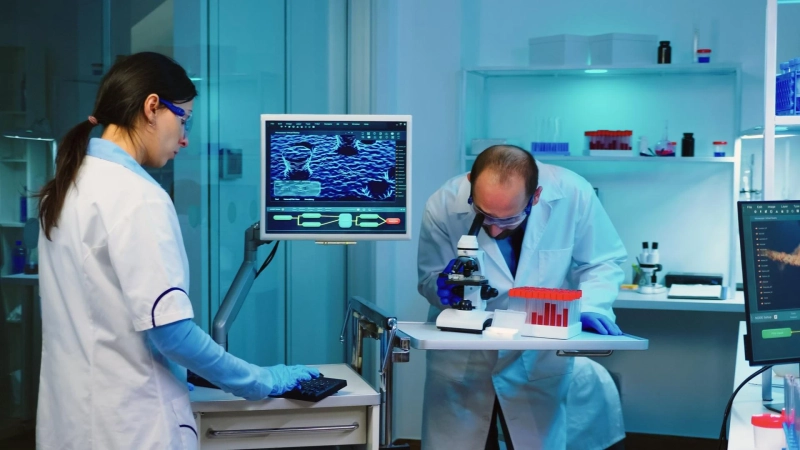
The medical sector increasingly relies on specialised professionals to care for critically ill patients. These professionals use advanced medical technologies in demanding clinical environments. Research in intensive care practice shows that better patient outcomes are achieved when trained technologists support clinical teams. Their responsibilities include patient monitoring, ventilation support and emergency response.
The rising incidence of trauma, respiratory disorders and chronic illnesses has increased the need for structured education in critical care services. In response, BSc Critical Care Technology has developed as a focused academic programme. It prepares students for high-intensity clinical settings where precision and sensitivity are essential.
About the BSc Critical Care Technology Course
The course combines scientific principles with hands-on clinical training. This structure helps learners connect human physiology with real-time patient management. The programme balances theory and hands-on experience. It meets the growing demand for qualified specialists in intensive and emergency care units while building efficiency in high-pressure environments.
Overview of the BSc Critical Care Technology Syllabus
The BSc Critical Care Technology syllabus can be described as interdisciplinary because the current critical care practice is interdisciplinary. It is a blend of fundamental medical skills and technology-driven education and moral aspects. One should be able to identify that the syllabus becomes increasingly in-depth and complex each academic year before proceeding to examine individual subjects.
The key research subjects usually involve-
- Human anatomy, physiology and pathophysiology relevant to critical illness
- Fundamentals of intensive care, emergency medicine and trauma response
- Handling and maintenance of ventilators, monitors and life support systems
- Pharmacology with emphasis on drugs used in critical care settings
- Infection control practices, patient safety and professional ethics
These learning elements collaborate to ensure continuity between classroom learning and its application in the clinical setting. Consequently, learners attain conceptual and technical confidence.
Academic Focusing of the Programme
The BSc Critical Care Technology curriculum follows a structured and progressive design. The initial semesters focus on core medical sciences. These subjects help students understand normal body functions and basic disease processes. This knowledge prepares them for managing complex clinical conditions in later stages of the programme.
In advanced semesters, the coursework emphasises critical care principles and emergency procedures. Students learn to use technology assisted treatment methods in clinical settings. Teaching approaches encourage critical thinking and clinical reasoning. Learners also develop skills to interpret physiological data and support decision making under professional supervision.
Clinical Training and Practical Exposure
This programme is based on practical learning. The students are exposed to managed clinical placements in the intensive care units, emergency departments and recovery wards. These settings allow us to see the process of patient care and learn the duties of the critical care teams.
Guided exposure allows the learners to practice patient monitoring, assist in procedures and learn about standards of clinical documentation. Constant monitoring promotes safe practice as well as professional responsibility and discipline.
Professional Readiness and Skill Development
Besides theoretical knowledge, the programme aims to equip professionals with the competencies required for critical care-based positions. The skills help individuals adapt to rapid clinical workflows.
- Accurate patient assessment and interpretation of clinical data
- Operation and troubleshooting of critical care equipment
- Effective communication within multidisciplinary healthcare teams
- Time management and prioritisation in emergency situations
- Adherence to ethical standards and patient safety protocols
Collectively, the skills promote efficiency in the clinical arena and equip learners with real world duties. The frequency of assessment keeps learners on track toward the desired professional standards upon graduation.
Conclusion
The BSc Critical Care Technology programme is well aligned with the needs of modern healthcare systems. The programme equips students with significant roles in critical and emergency care by integrating medical sciences, technology-based training and organised clinical exposure.
The BSc Critical Care Technology syllabus enhances gradual academic development and strengthens practical competency. It combines academic knowledge with clinical skills and professional responsibility to improve patient care and career prospects. Specialised technologists play a critical role in modern healthcare delivery. They monitor patients and operate life-support systems. This reliance underscores the programme's importance.