



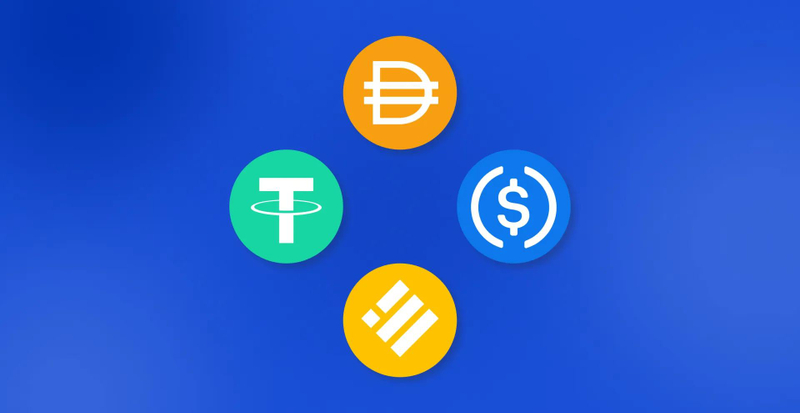
As the global financial landscape rapidly evolves, 2025 is shaping up to be a defining year for digital money. Stablecoin 2025 represents more than just the next phase of crypto evolution — it symbolizes the bridge between Traditional Finance (TradFi) and Decentralized Finance (DeFi). With increasing regulatory clarity, institutional adoption, and real-world use cases, stablecoins are becoming the backbone of a more connected, programmable, and efficient financial ecosystem.
The convergence of TradFi and DeFi is no longer theoretical. Banks, payment networks, and asset managers are now integrating blockchain-based stablecoins into their operations, transforming how liquidity, settlements, and cross-border transactions function. Stablecoin 2025 captures this transformation — a moment where traditional and decentralized systems finally align toward a shared financial future.
Why Stablecoins Are the Missing Link in Financial Infrastructure
Traditional finance has long struggled with inefficiencies — slow settlement times, high transaction fees, and fragmented systems across borders. Stablecoins, pegged to fiat currencies like the dollar or euro, offer the stability of traditional assets combined with the flexibility and transparency of blockchain.
In Stablecoin 2025, these digital assets are emerging as a universal settlement layer, allowing money to move globally with near-zero friction. They bridge the gap between bank accounts, digital wallets, and blockchain applications, enabling seamless interaction between centralized and decentralized systems.
Whether it’s a DeFi lending platform using stablecoins for instant liquidity or a multinational company settling invoices in USDC or PYUSD, stablecoins are redefining how value moves — securely, transparently, and efficiently.
Institutional Adoption: The Turning Point of Stablecoin 2025
What makes Stablecoin 2025 a milestone year is the growing institutional embrace. Central banks, fintechs, and asset custodians are integrating stablecoin frameworks to improve payment speed and compliance. Major financial institutions are exploring tokenized deposits and on-chain treasury management, powered by regulated stablecoin networks.
Moreover, regulatory clarity is driving confidence. The introduction of stablecoin-specific legislation in the U.S., EU, and Asia is paving the way for a compliant, interoperable ecosystem. These regulations ensure that stablecoins meet transparency, reserve, and audit standards — key steps toward mass adoption in global banking and commerce.
Stablecoin 2025 and the DeFi Revolution
In the DeFi world, stablecoins are the lifeblood of liquidity pools, yield strategies, and on-chain lending. They enable predictable value transfer and remove the volatility that often limits crypto usability. With Stablecoin 2025, DeFi protocols are evolving to support multi-chain stablecoin ecosystems, cross-chain bridges, and institutional-grade DeFi products.
AI-driven risk assessment and automated governance mechanisms are being layered into stablecoin-powered DeFi protocols, creating smarter, safer systems that merge the reliability of TradFi with the innovation of decentralized technology.
The Future: Stablecoin 2025 as the Foundation of Global Finance
The vision of Stablecoin 2025 extends beyond payments — it’s about building a digital economic infrastructure where money, assets, and data flow freely across borders and systems. In this model, stablecoins become programmable units of value, capable of powering AI agents, on-chain contracts, and even national-level financial systems.
As stablecoins continue to evolve, they’re not just supporting the economy — they’re reshaping it. By bridging TradFi and DeFi, Stablecoin 2025 is creating a financial fabric that is open, inclusive, and resilient. This is the foundation for the next era of global finance — one where stability meets innovation, and where every transaction is faster, smarter, and more connected than ever before.
Would you like me to make a follow-up blog on “Stablecoin 2025: The Infrastructure Layer for Autonomous AI Payments” next? It would fit well as a sequel to this one.