



With its vast consumer base, growing industrial sector, and robust infrastructure development, India ranks among the fastest-growing economies worldwide. This rapid growth has made India an attractive destination for foreign manufacturers looking to expand their global footprint. However, entering the Indian market involves more than simply exporting products. India enforces strict quality, safety, and compliance regulations, and one of the most critical approvals for foreign manufacturers is BIS-FMCS Certification.
For many regulated products, BIS-FMCS certification is mandatory to sell legally in India. This blog explains what BIS-FMCS certification is, why it is essential, and how it supports long-term, sustainable business success for foreign manufacturers.
BIS-FMCS Certification
BIS stands for the Bureau of Indian Standards, India’s national standards authority. FMCS, or BIS Foreign Manufacturers Certification Scheme, is a certification framework specifically created for manufacturers located outside India who wish to sell their products in the Indian market.
Under the BIS-FMCS scheme:
- Products are tested as per Indian Standards
- Manufacturing facilities are inspected by BIS
- Quality and safety compliance is verified
Only after successful approval is the manufacturer permitted to use the ISI mark, allowing the product to be sold legally in India.
Why India Has a Separate Certification Scheme for Foreign Manufacturers
Foreign manufacturers operate outside India, making routine monitoring difficult. To ensure consistent quality and safety, BIS introduced the FMCS scheme, which enables it to:
- Inspect overseas manufacturing facilities
- Verify quality control and testing systems
- Ensure compliance with Indian safety standards
This system protects Indian consumers while ensuring fair competition in the marketplace.
Who Needs BIS-FMCS Certification?
BIS-FMCS certification is required if:
- You are a manufacturer located outside India
- Your product falls under mandatory BIS certification
- You intend to export or sell that product in India
The requirement applies regardless of whether products are sold through an importer, distributor, or under the manufacturer’s own brand. If the product is notified, FMCS certification is compulsory.
Products Commonly Covered Under BIS-FMCS
Several product categories fall under mandatory BIS certification, including:
- Electrical and electronic products
- Steel and metal products
- Industrial and construction materials
- Household and consumer goods
Each product category is governed by a specific Indian Standard, making applicability verification the first and most important step.
Why BIS-FMCS Certification Is Essential for Sustainable Business
Many companies treat certification as a one-time compliance task, but BIS-FMCS certification is much more than a legal formality—it is the foundation of sustainable business growth.
1. Legal and Risk-Free Market Entry
Without certification, products may be detained at customs, rejected, or banned from sale. BIS-FMCS certification ensures lawful entry, uninterrupted operations, and long-term regulatory security.
2. Trust and Credibility with Indian Buyers
The ISI mark signifies compliance with Indian quality and safety standards. Certified products inspire confidence, leading to repeat orders, long-term contracts, and stable business relationships.
3. Strong Brand Reputation
Foreign manufacturers that comply with Indian regulations demonstrate commitment, responsibility, and long-term intent—strengthening brand credibility in a highly competitive market.
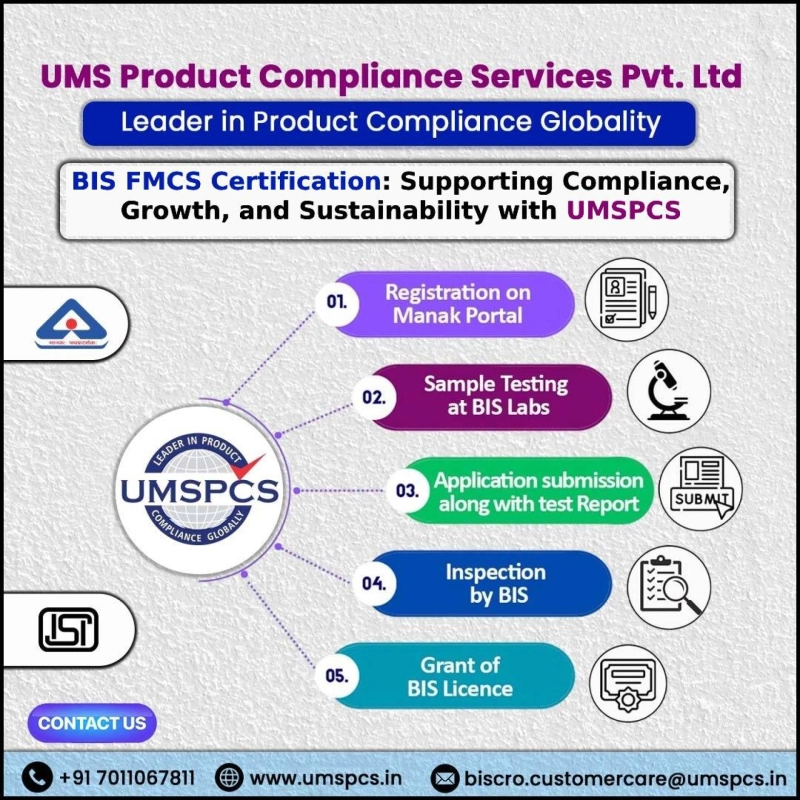
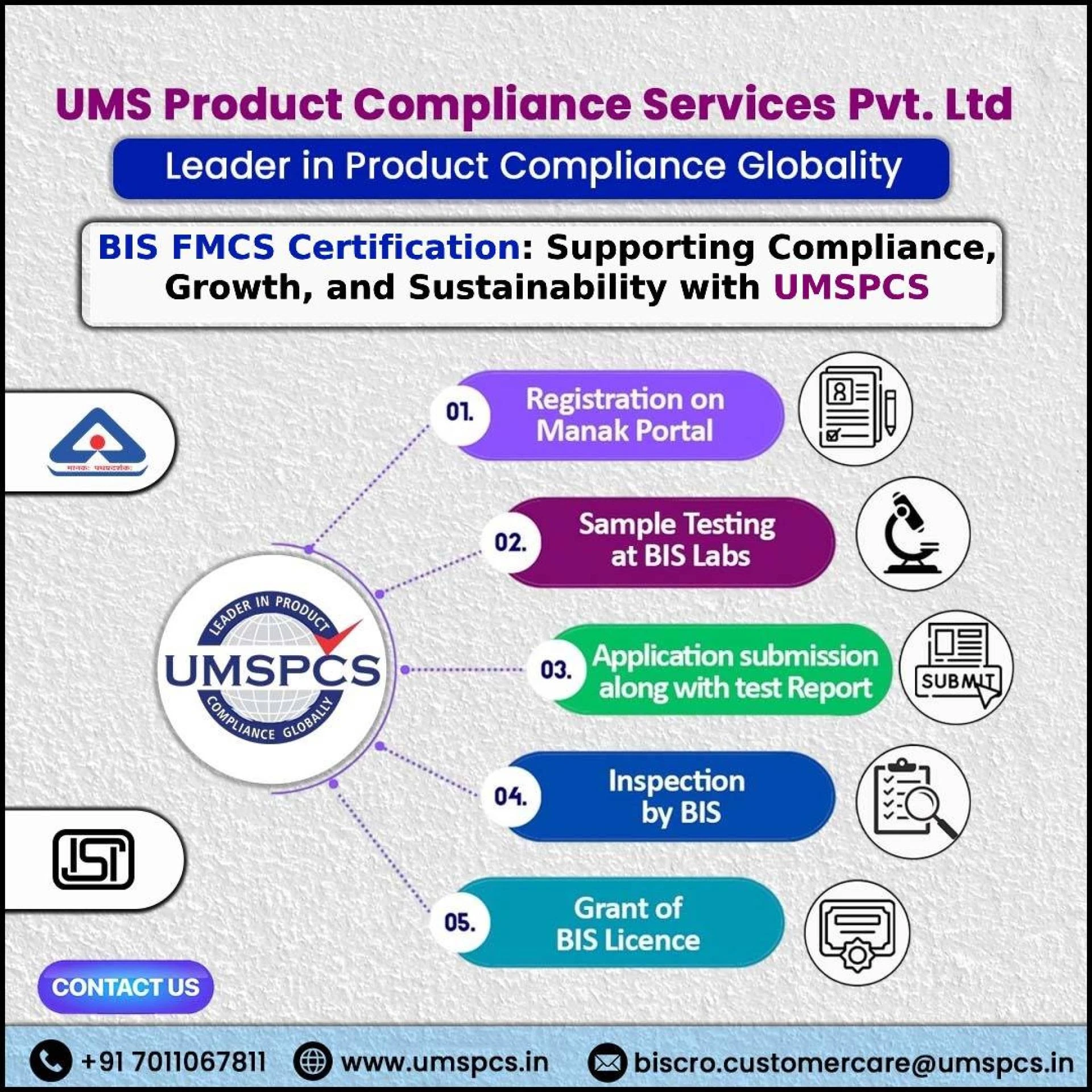
Overview of the BIS-FMCS Certification Process
The FMCS certification process is structured and detail-oriented:
- Product Applicability Check – Confirm whether certification is required and identify the applicable Indian Standard.
- Documentation Preparation – Compile company details, manufacturing processes, quality systems, and product specifications.
- Product Testing – Samples are tested in BIS-recognized laboratories as per Indian Standards.
- Factory Inspection – BIS officials inspect the overseas manufacturing facility, including production, testing, and traceability systems.
- Licence Grant – Upon successful evaluation, BIS issues the FMCS licence and ISI marking permission.
Role of the Authorized Indian Representative (AIR)
Appointment of an Authorized Indian Representative (AIR) is mandatory. The AIR acts as BIS’s local point of contact, manages communication, and supports ongoing compliance. FMCS certification cannot be obtained without an AIR.
Challenges Faced by Foreign Manufacturers
Foreign companies often struggle due to:
- Limited understanding of Indian Standards
- Communication and language barriers
- Inadequate factory inspection preparation
- Documentation errors and procedural delays
These challenges can significantly extend approval timelines if not managed properly.
Importance of Choosing the Right FMCS Consultant
BIS-FMCS certification involves technical evaluations, audits, and strict compliance requirements. An experienced BIS FMCS consultant helps by:
- Interpreting BIS regulations accurately
- Preparing factories for inspection
- Avoiding costly errors
- Reducing approval timelines
How UMSPCS Supports Foreign Manufacturers
UMSPCS is a trusted compliance partner for foreign companies entering the Indian market. With in-depth expertise in BIS regulations and FMCS procedures, UMSPCS provides end-to-end support, including:
- Product applicability assessment
- Indian Standard identification
- Documentation and testing coordination
- Factory inspection assistance
- AIR services
- Post-certification compliance and renewals
UMSPCS manages the entire certification journey efficiently and transparently.
Sustainability Through Continuous Compliance
BIS-FMCS certification requires ongoing compliance through surveillance inspections, quality system maintenance, and timely licence renewals. Companies that prioritize compliance avoid disruptions, maintain market access, and achieve steady long-term growth in India.
Conclusion
India offers immense opportunities for foreign manufacturers, but success depends on responsibility and compliance. BIS-FMCS certification is not merely a regulatory requirement—it is the gateway to legal market entry, buyer confidence, and sustainable business growth.
With proper planning and expert support from UMS Product Compliance Services Pvt. Ltd. (UMSPCS), the FMCS certification process becomes structured, predictable, and manageable. For foreign manufacturers committed to long-term success in India, BIS-FMCS certification is not optional—it is essential.