


The global construction industry is undergoing a massive transformation, driven by the adoption of Building Information Modeling (BIM) technologies. Today, precision, collaboration, and data-driven design are essential for project success, and this is exactly where BIM consulting services and Scan to BIM services play a vital role.
In the USA, BIM is no longer optional. From architects and engineers to contractors, facility managers, and AEC professionals, every stakeholder is embracing BIM to enhance productivity, accuracy, and sustainability. Let’s explore how these services are reshaping the construction landscape.

Introduction to Building Information Modeling
Building Information Modeling (BIM) is revolutionizing the way construction projects are planned, designed, built, and managed. At its core, BIM is a digital process that creates and manages 3D digital models, capturing both the physical and functional characteristics of buildings and infrastructure. These BIM models serve as comprehensive information repositories, enabling seamless collaboration among architects, engineers, contractors, and facility managers throughout the entire project lifecycle.
By integrating all project stakeholders into a unified workflow within a Common Data Environment (CDE), BIM services ensure that everyone has access to accurate, real-time information. This collaborative approach supports informed decision-making, reduces errors, and enhances project outcomes. Our BIM services encompass architectural modeling, structural modeling, MEP coordination, and as-built documentation, all designed to deliver detailed, precise, and functional BIM models that drive project success.
With BIM, information modeling goes beyond simple 3D visualization it provides a holistic view of a building’s design, construction, and operational data. This empowers facility managers and project teams to optimize performance, streamline maintenance, and ensure that every aspect of the building meets the highest standards of quality and efficiency. Whether you’re embarking on a new construction project or managing an existing facility, BIM services offer the coordination, accuracy, and insight needed to achieve your goals.
1. What Are BIM Consulting Services?
BIM consulting services involve expert guidance and implementation support to help organizations adopt and optimize BIM workflows. These consultants bring in-depth technical expertise, industry knowledge, and the latest technology to ensure seamless BIM integration across all project stages from design and planning to construction and facility management. BIM consulting services also include modeling (architectural, structural, MEP, fire protection), coordination, clash detection, quantity take-off, and 4D/5D implementation. Additionally, they define and document project workflows, quality checklists, and file naming conventions related to the BEP, ensuring consistency and clarity throughout the project. Challenges related to fire protection system installation and integration such as ceiling space optimization and pipe elevation are addressed as part of comprehensive MEPF planning.
BIM consultants help stakeholders align their digital strategies with real-world project goals, ensuring better collaboration and cost efficiency. Enhanced collaboration in BIM is achieved through a centralized shared model for all project stakeholders. A Common Data Environment (CDE) acts as a central source of truth for all project data in BIM, ensuring consistency and accessibility. Choosing the right Level of Detail (LOD) ensures that stakeholders have the precise information they need at every stage of design, construction, and facility management.
Key Benefits of BIM Consulting Services
- Optimized Project Planning: Consultants help define clear BIM execution plans (BEPs) tailored to project requirements. To create a BEP, a meeting with clients to understand their goals and current practices is essential.
- Error Reduction: Advanced clash detection and coordination minimize costly on-site rework, resulting in significant cost savings.
- Improved Collaboration: Centralized data and shared models enhance communication across teams.
- Sustainability and Compliance: Ensures adherence to U.S. BIM standards and sustainability goals.
- Increased ROI: Efficient project workflows and reduced waste drive better financial outcomes.
- System Simulations: BIM enables performance optimization before construction begins, reducing risks and improving outcomes.
- 4D Scheduling: Links the BIM model to a project timeline to visualize construction progress, improving planning and execution.
Industries Benefiting from BIM Consulting
- Architecture and Engineering
- Construction and Infrastructure
- Real Estate and Facility Management
- Energy, Healthcare, and Manufacturing
Whether it’s designing a hospital, a skyscraper, or an industrial plant, BIM consulting services ensure that every project is efficient, accurate, and future-ready. Consultants may develop custom BIM object libraries and project templates to enhance efficiency.
2. The Growing Demand for BIM Services in the USA
In recent years, the USA has seen rapid BIM adoption due to government initiatives, sustainability goals, and the need for better cost control. Companies are now actively seeking BIM services in the USA to stay competitive in an increasing digital construction environment.
BIM is now a standard requirement for most public infrastructure and large-scale commercial projects in the U.S. The country’s AEC (Architecture, Engineering, and Construction) sector recognizes BIM as a game-changer in achieving higher quality and lower risk. General contractors, in particular, benefit from BIM through improved coordination and planning, enabling more efficient project delivery and reduced errors.
Why BIM Services Are in High Demand in the USA
- Regulatory Requirements: Federal and state-level BIM mandates for public projects.
- Sustainability Goals: Support for green building certifications like LEED and BREEAM.
- Efficiency: Streamlined workflows and reduced project delays.
- Data Integration: Centralized models that improve decision-making.
- Lifecycle Value: BIM extends beyond construction it supports facility maintenance and management.
From New York to Los Angeles, construction firms are increasingly partnering with BIM service providers in the USA to optimize every phase of their building lifecycle.
3. Understanding Scan to BIM Services
While BIM creates new models, Scan to BIM services focus on digitizing existing structures. Using 3D laser scanning technology, real-world environments are captured in the form of point cloud data, which is then converted into an intelligent BIM model.
Scan to BIM leverages 3D modeling techniques to create detailed digital models of existing structures, facilitating collaboration and informed decision-making.
This process bridges the gap between the physical and digital worlds, making it invaluable for renovation, restoration, and facility management projects.
How Scan to BIM Works
- Data Capture: 3D laser scanners capture millions of spatial points of a building or site.
- Point Cloud Generation: These points form a detailed digital representation of space.
- Model Conversion: The point cloud data is processed and converted into a Revit-compatible BIM model.
- Model Verification: The BIM model is validated for geometry, model accuracy, and compliance.
Applications of Scan to BIM Services
- Historical building preservation
- Renovation and retrofit projects
- Construction validation and progress tracking
- Facility management and maintenance
- As-built documentation
Scan to BIM services ensure that architects and engineers work with precise, real-time building data reducing design errors and saving significant project time.
4. The Role of Scan to BIM Software
Behind every successful Scan to BIM project lies powerful Scan to BIM software. These tools process laser scan data, align point clouds, and help modelers convert real-world geometry into accurate 3D BIM models.
Some of the most widely used Scan to BIM software tools include:
- Autodesk ReCap: Processes and prepares point clouds for BIM modeling.
- Autodesk Revit: The go-to platform for creating intelligent 3D building models.
- NavVis and Leica Cyclone: Used for detailed point cloud visualization and manipulation.
- Trimble RealWorks: Offers advanced registration and modeling capabilities.
These software tools also facilitate the creation of shop drawings, which are essential for accurate fabrication and installation in architectural and structural BIM services.
Benefits of Using Scan to BIM Software
- High accuracy and detail level
- Reduced modeling time
- Enhanced visualization for complex geometries
- Seamless integration with Revit and AutoCAD
- Real-time validation and quality checks
This combination of technology and expertise empowers organizations to digitize old buildings or validate construction progress with unmatched precision.
5. BIM + Scan to BIM: A Powerful Combination
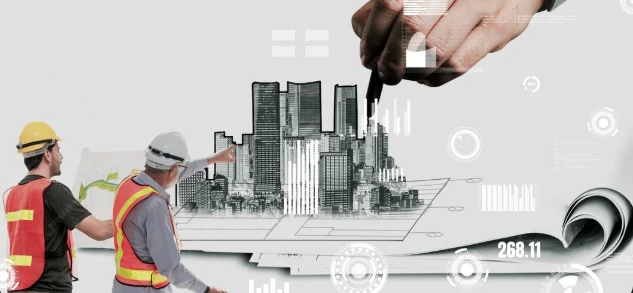
When BIM consulting services and Scan to BIM services work together, the results are extraordinary. The synergy between these two technologies enables end-to-end digital transformation across construction projects.
Here’s how they complement each other:
- BIM consultants plan and implement efficient workflows.
- Scan to BIM experts digitize existing assets for accurate modeling.
- Together, they deliver precise, data-rich, and sustainable project outcomes.
Field teams can access real-time data from digital models, enabling precise planning and on-site execution.
This integration allows teams to make informed decisions, reduce costs, and ensure that as-built data matches design intent all while improving lifecycle management of buildings.
BIM Projects and Implementation
Successful BIM projects require a strategic and tailored approach to implementation. Our BIM services are designed to support every stage of construction projects, from initial design development to long-term facility management. We understand that each project is unique, which is why our expert team delivers customized BIM modeling services that address specific client needs and project requirements.
Our comprehensive BIM execution plan ensures that every aspect of the project is carefully coordinated, leveraging advanced tools like Autodesk Revit and state-of-the-art coordination software. This enables precise point cloud processing, effective scan to BIM workflows, and seamless integration for renovation and restoration projects. By focusing on model accuracy and proactive clash detection, we help reduce material waste, minimize errors, and deliver projects faster and more efficiently.
Throughout the project lifecycle, our BIM consulting services optimize workflows, boost productivity, and drive cost savings through strategic planning and expert implementation. We facilitate collaboration among architects, engineers, contractors, and facility managers, ensuring that every stakeholder is aligned and informed. Whether you’re working on restoration projects, new construction, or complex renovations, our BIM modeling services provide the expertise and technology needed to achieve superior results in the AEC industry. With a commitment to quality and innovation, we help clients deliver projects on time, within budget, and to the highest standards of excellence.
6. BIM Coordination and Management
Effective BIM coordination and management are at the heart of successful construction projects. Our BIM services are designed to ensure that every stakeholder from architects and engineers to contractors and facility managers is aligned and working efficiently toward shared project goals. Conducting BIM audits can identify improvement areas and ensure a smooth transition to BIM-based workflows. Our dedicated BIM team leverages advanced coordination software to facilitate seamless collaboration, real-time monitoring, and proactive issue resolution throughout the project lifecycle. Quality assurance in BIM includes procedures for model accuracy, version control, and performing clash detection.
A key component of our approach is comprehensive clash detection and management. By identifying and resolving potential conflicts early in the design phase, we help reduce costly errors and rework during construction. Our BIM coordination services are tailored to the specific requirements of each project, ensuring that solutions are customized to address unique challenges and objectives. This focus on precision and communication enables our clients to deliver projects faster, with fewer errors and reduced costs, while maintaining the highest standards of quality and efficiency.
7. Autodesk Revit and BIM
Autodesk Revit stands as a cornerstone of our BIM modeling services, empowering our team to create highly detailed, data-rich 3D models that drive project success. BIM modeling services involve creating detailed 3D digital twins for architecture, structure, and MEP systems. With Revit, we support every stage of the project lifecycle from initial design development through to construction documentation and beyond. Contractors, architects, and engineers rely on BIM modeling services to deliver projects faster, with fewer changes and lower costs. Our experienced professionals excel in Revit family creation, ensuring that every digital model is accurate, comprehensive, and tailored to the project’s needs. Additionally, 5D BIM capabilities allow for the generation of accurate material quantities and cost estimates directly from the model, enhancing project planning and budgeting.
Our BIM modeling services extend to architectural, structural, and MEP coordination, providing a holistic approach to project delivery. By coordinating all trades in one environment, BIM minimizes rework and on-site conflicts while ensuring accuracy and compliance. We also offer specialized training programs to help clients optimize their workflows, maximize the benefits of BIM, and stay ahead in a competitive industry. Industry veterans often conduct BIM training to ensure teams are up to date with the latest technologies and practices. By integrating Autodesk Revit into our processes, we enable real-time collaboration, improved coordination, and the creation of intelligent 3D models that support informed decision-making throughout the construction process. BIM training incorporates best practices that enhance team collaboration and communication, ensuring seamless adoption and effective use of BIM tools.
8. Commercial Building Applications
Our BIM services are extensively utilized in commercial building projects, where precision, coordination, and efficiency are paramount. MEP BIM modeling simplifies complex construction projects by preventing costly clashes and optimizing building performance. Whether working on office complexes, retail centers, or industrial facilities, our expert team delivers tailored solutions that address the unique demands of each sector. We provide comprehensive architectural modeling, structural modeling, and MEP coordination, ensuring that every aspect of the project is meticulously planned and executed.
Through detailed construction documentation and advanced modeling techniques, we help clients achieve greater cost control, reduce material waste, and improve overall project efficiency. BIM Coordination Services resolve interdisciplinary and intradisciplinary clashes in BIM models to ensure project requirements are met. Our experience in delivering BIM projects for commercial buildings means we understand the complexities involved and can provide the expertise needed to navigate them successfully. From initial concept to final handover, our BIM services support the seamless coordination and management required for successful commercial construction.
9. BIM Conversion and Migration
Transitioning from traditional CAD systems to advanced BIM platforms is a critical step for organizations seeking to modernize their construction processes. Our BIM conversion and migration services are designed to make this transition seamless and efficient. Consultants provide training on BIM software and ongoing technical support for seamless workflows and troubleshooting. Utilizing point cloud processing and scan to BIM services, we convert existing data whether from legacy drawings or point cloud scans into detailed, accurate BIM models that support both renovation and restoration projects as well as new construction projects.
Our expert team provides strategic planning and guidance throughout the migration process, ensuring that each client receives tailored solutions that align with their specific project requirements and operational goals. Successful BIM adoption requires appropriate training for all team members involved in the project. Training on BIM also covers software specifics, such as Revit, important for model creation and coordination. By facilitating collaboration among architects, engineers, contractors, and facility managers, our BIM conversion services help boost productivity, reduce costs, and optimize workflows. Whether you’re updating an existing facility or embarking on a new build, our services ensure that your BIM models are accurate, reliable, and ready to support every phase of your project.
10. Future of BIM Consulting and Scan to BIM Services
The future of BIM services in the USA is driven by innovation. Artificial intelligence (AI), cloud collaboration, and digital twins are redefining how the AEC industry operates.
- AI-powered BIM tools automate clash detection and optimize design workflows.
- Cloud-based platforms enable real-time collaboration among geographically dispersed teams.
- Digital twins integrate real-time operational data for predictive maintenance and lifecycle management.
BIM models now include not only physical details but also functional characteristics, providing comprehensive information about a building’s operational systems and performance traits. This supports advanced simulations and enhances facility management capabilities.
Emerging Trends
- AI-Powered BIM: Automates clash detection and design optimization.
- Digital Twins: Connect real-time operational data to BIM models.
- Cloud-Based Collaboration: Enables multi-location project teams to work seamlessly.
- IoT Integration: Smart sensors feed live data into BIM environments for maintenance and analytics.
As technology evolves, Scan to BIM software will become faster and more intelligent, automating much of the conversion process and allowing real-time 3D visualization of complex environments.
11. Why Choose Professional BIM Consulting Services
Working with an experienced BIM consulting firm ensures your project leverages the full potential of digital construction. Selecting the right BIM consultant involves evaluating their experience, technical capabilities, communication skills, and quality assurance processes. Consultants provide:
- Tailored BIM execution strategies
- Software implementation and staff training
- Quality audits and process optimization
- Project coordination and BIM model management
- Ongoing support for lifecycle management
Customized solutions from consultants ensure that services are tailored to meet unique project requirements and goals.
Partnering with experts not only ensures compliance with U.S. standards but also maximizes project profitability and long-term value. The effectiveness of a BIM consultant can be assessed by their proven track record with similar projects and their client references. United BIM is recognized as a leading provider of BIM consulting services, known for their expertise, extensive experience across numerous projects, and a comprehensive approach to BIM implementation including strategy development, training, and project execution support. MartLenz Knowledge Services has a proven track record of happy clients across various sectors, demonstrating our reliability and commitment to successful project delivery.
Frequently Asked Questions (FAQs)
1. What are BIM consulting services?
BIM consulting services provide expert guidance for adopting and implementing Building Information Modeling. Consultants help organizations plan, execute, and manage BIM workflows to improve project efficiency and collaboration.
2. Why are BIM services important in the USA?
BIM services in the USA are essential for achieving accurate, efficient, and sustainable construction. They are increasingly required by government projects and help improve design coordination and cost control.
3. What is Scan to BIM, and how does it work?
Scan to BIM uses 3D laser scanning technology to capture real-world structures and convert them into detailed BIM models. This process ensures accurate as-built documentation and supports renovation, retrofit, and maintenance projects.
4. What software is used for Scan to BIM?
Popular Scan to BIM software includes Autodesk ReCap, Revit, Trimble RealWorks, and Leica Cyclone. These tools process point clouds and convert them into intelligent 3D building models for design and analysis.
5. What are the advantages of combining BIM and Scan to BIM services?
Combining both services provides end-to-end accuracy from capturing existing conditions to modeling and managing projects. It enhances collaboration, reduces costs, and ensures the built environment matches the design intent.
Conclusion
The adoption of BIM consulting services, BIM services in the USA, and Scan to BIM solutions marks a pivotal shift in how the construction and architecture industries operate. By integrating Scan to BIM software and expert BIM strategies, businesses can achieve higher precision, reduce project risk, and improve long-term asset performance.
As digital transformation accelerates, companies that embrace BIM and Scan to BIM today are setting new benchmarks for efficiency, innovation, and sustainability in the built environment.