



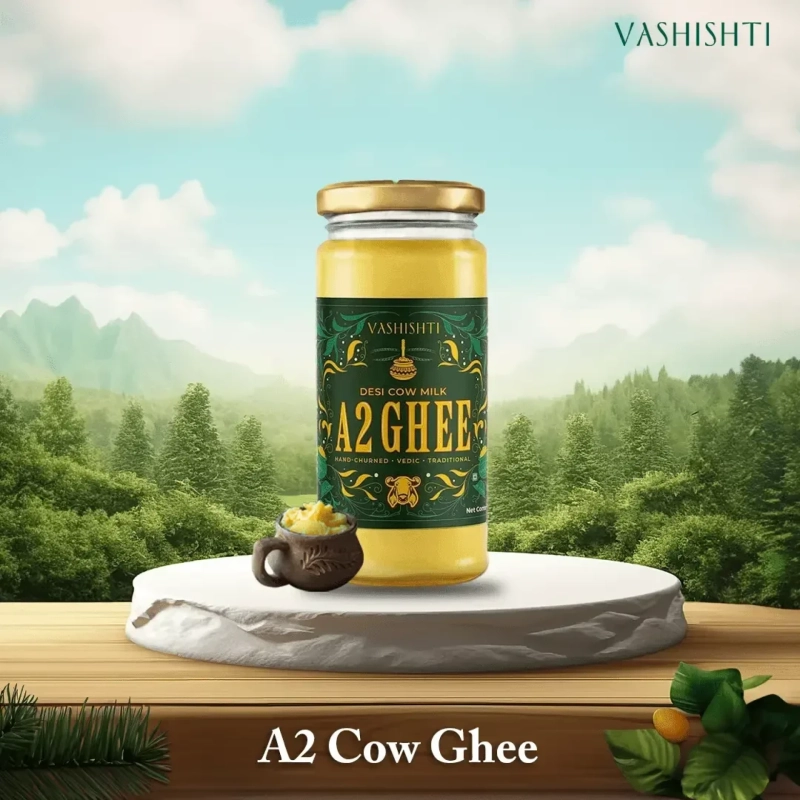
Most people don’t start thinking about ghee deeply. It’s just there. In the kitchen. On the stove. On hot rice.
But once you taste ghee made the old way, you notice the difference. And then it’s hard to forget.
That’s usually where bilona ghee enters the picture. Not as a trend. Just as something familiar that somehow disappeared for a while.
What Bilona Ghee Actually Is
Bilona ghee isn’t a special invention. It’s just the original way ghee was made in Indian homes.
Milk is boiled. Then it’s set into curd. That curd is churned slowly with a wooden bilona. Butter comes out naturally.
That butter is then heated gently until it turns into ghee.
That’s it. No shortcuts. No machines doing the thinking.
The thing is, this process takes time. And time is exactly what modern production removed.
Why the Method Matters
You can rush ghee. Many do.
But when you rush it, something changes. The smell sharpens. The taste flattens.
With the bilona method, the ghee feels softer. Even when solid, it breaks gently. When heated, it melts quietly, not aggressively.
You notice this only if you’ve eaten it long enough.
Texture, Aroma, and Taste
Traditional ghee doesn’t look perfect. Sometimes it’s grainy. Sometimes the colour shifts slightly with the season.
That’s normal.
The smell is mild. It doesn’t hit you in the face. It sits in the background, warm and nutty.
Taste-wise, it doesn’t fight the food. It blends. Rice tastes fuller. Dal feels rounder. Even plain roti feels complete.
You don’t need much. And honestly, you don’t want much. A little is enough.
Why People Still Prefer It
People like to say it’s about health. Maybe partly.
But most people choose traditional ghee because it feels right.
It reminds them of how food used to be cooked. Of kitchens where things took time. Of elders who didn’t measure nutrition but somehow got it right.
That emotional connection matters more than labels.
Everyday Use in Indian Homes
In many homes, ghee is used daily. Not heavily. Just thoughtfully.
A spoon on steaming rice. A drizzle on khichdi. A little added to dal before serving.
Some still put it on rotis straight off the flame.
It also shows up quietly in rituals. A diya. A festive sweet. Something offered before eating.
These habits weren’t created by marketing. They came from repetition over generations.
A Simple Word on Ayurveda and Nutrition
You don’t need deep knowledge of Ayurveda to understand why ghee stayed important.
Ghee is lighter than many cooking fats. It doesn’t sit heavy when used properly.
It makes food feel filling, so you don’t feel like eating too much
Ayurveda talks about balance, not extremes. Ghee fits into that thinking.
Not too much. Not too little. Just enough.
No dramatic claims needed.
Bilona Ghee in Today’s Kitchens
You don’t need to cook traditional meals every day to use it.
People add it to vegetables. To lentils. Some even take a little in the morning, the way their elders suggested.
It fits into modern routines without effort.
That’s the beauty of it. It doesn’t demand change. It just slips in.
Why Vashishti Keeps It Traditional
At Vashishti, the focus stays on the method, not the noise around it.
There’s respect for how ghee was made earlier. Respect for slowness.
No need to dress it up with big promises.
When something has worked quietly for generations, it doesn’t need exaggeration.
A Thought Before Ending
Here’s the funny thing.
People return to traditional food not because it’s new, but because it feels steady.
Bilona ghee isn’t trying to impress anyone. It just exists, the way it always has.
And maybe that’s why it still has a place in Indian kitchens.
Conclusion
Bilona ghee comes from patience, not pressure.
You can feel the slow process in its taste, smell, and texture
For many families, it's not about choosing something better.
It’s about choosing something familiar, honest, and quietly dependable.