



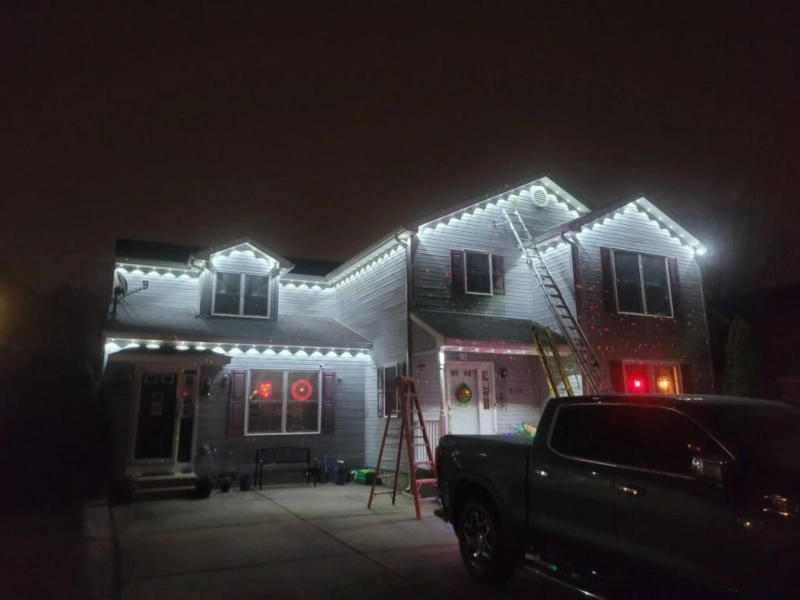
Permanent home lighting installation has completely changed how homeowners think about lighting. For a long time, lighting meant buying lamps, swapping bulbs, and adding fixtures one room at a time. I used to think that was just part of owning a home. Over the years, though, I’ve realized how disconnected that approach feels. Rooms don’t match, outdoor lighting feels like an afterthought, and energy bills quietly climb.
Permanent home lighting installation shifts the focus from individual fixtures to a complete system. Instead of reacting to dark corners or outdated lights, homeowners design lighting with purpose. From my experience, once people understand how permanent home lighting installation works, they stop seeing lighting as décor and start seeing it as infrastructure.
This article uses the PAS framework to explain why traditional lighting falls short, why those problems are more frustrating than most people admit, and how permanent home lighting installation solves them in a practical, long-lasting way.
The Problem: Homes Are Lit in Pieces, Not as Systems
Most homes in the U.S. were not designed with a cohesive lighting plan. According to the U.S. Department of Energy, many residential lighting layouts evolve randomly over time as homeowners add fixtures where they feel something is missing. I’ve seen this firsthand in my own home and in homes I’ve visited. One room is bright and efficient, another relies on old lamps, and outdoor areas barely get attention.
This piecemeal approach creates inconsistency. Permanent home lighting installation addresses the core problem by treating lighting as a system rather than a collection of parts. Without a system, homeowners often overuse lamps and high-watt bulbs to compensate for poor placement.
The problem extends outdoors too. Many homeowners install basic porch lights and forget about pathways, architectural lines, and security coverage. Permanent home lighting installation brings indoor and outdoor lighting together so the entire property feels intentional.
When lighting isn’t planned as a whole, it affects comfort, safety, and energy use. That’s the gap permanent home lighting installation is designed to fill.
Agitation: The Hidden Frustrations of Traditional Lighting
The frustration builds slowly, which is why many homeowners tolerate it for years. I’ve heard people complain about rooms that never feel quite right, glare from mismatched bulbs, and outdoor areas that feel unsafe after dark. These aren’t dramatic problems, but they’re constant.
Energy costs make it worse. The Energy Information Administration reports that lighting still accounts for about 15 percent of residential electricity use in the U.S. Homes with outdated bulbs and inefficient layouts often use more power than necessary. Permanent home lighting installation reduces waste by placing light where it’s actually needed.
Maintenance is another issue. Replacing bulbs, fixing fixtures, and adjusting timers takes time. I’ve personally lost count of how many times I’ve replaced the same outdoor bulbs due to weather exposure. Permanent home lighting installation minimizes this by using long-life LED systems designed for continuous use.
Safety is also part of the frustration. Poorly lit stairs, walkways, and driveways increase the risk of accidents. The National Safety Council has linked inadequate lighting to a higher risk of falls at home. Permanent home lighting installation improves visibility without relying on temporary fixes.
These issues don’t usually push homeowners to act right away, but together they create a sense that the home never fully works the way it should.
The Solution: What Permanent Home Lighting Installation Really Means
Permanent home lighting installation isn’t about adding more lights. It’s about planning how light flows through and around your home. In my experience, the biggest shift happens when homeowners realize lighting can be consistent, efficient, and automated.
A permanent home lighting installation typically uses LED technology integrated into ceilings, walls, rooflines, and outdoor features. LEDs last significantly longer than traditional bulbs. The U.S. Department of Energy states that LEDs can last up to 25 times longer than incandescent bulbs while using far less energy.
Control is a major advantage. Modern systems allow homeowners to adjust brightness, color temperature, and scheduling from a phone or control panel. Permanent home lighting installation adapts to daily routines instead of forcing homeowners to adjust manually.
I’ve seen systems installed by companies offering Long Island LEDs permanent lighting that blend seamlessly into a home’s design. When the lights are off, the system is barely noticeable. When they’re on, everything feels balanced.
Permanent home lighting installation solves the core issues of inconsistency, inefficiency, and maintenance by replacing guesswork with planning.
Designing a Cohesive Indoor Lighting Experience
Indoor lighting is where homeowners feel the biggest difference first. Permanent home lighting installation allows rooms to work together instead of competing with each other. I’ve noticed that homes with cohesive lighting feel calmer and easier to live in.
A well-designed permanent home lighting installation layers light properly. General lighting provides even coverage, task lighting supports specific activities, and accent lighting highlights features without overpowering the space. Because the system is permanent, these layers are built in rather than added later.
Color temperature matters too. Mixing warm and cool bulbs randomly can make a home feel disjointed. Permanent home lighting installation standardizes color temperatures so rooms transition smoothly. According to ENERGY STAR, consistent LED lighting improves visual comfort and reduces eye strain.
In real-world projects, U.S. homeowners often report improved mood and productivity after upgrading to permanent home lighting installation. I’ve personally felt this effect in my workspace, where even lighting makes long hours more comfortable.
Extending the System Outdoors
Outdoor lighting is often overlooked, yet it plays a huge role in how a home functions. Permanent home lighting installation extends the same principles used indoors to exterior spaces. Pathways, entry points, and architectural lines are lit intentionally rather than randomly.
Security is a major factor. The U.S. Department of Justice has consistently noted that well-lit properties are less attractive to opportunistic crime. Permanent home lighting installation provides consistent coverage without relying on motion lights alone.
I’ve seen homeowners who installed Long Island LEDs permanent lighting outdoors say they use their patios and yards more often. Soft, even lighting makes outdoor spaces usable after sunset without harsh glare.
Weather resistance is another benefit. Permanent home lighting installation uses sealed systems designed to handle rain, heat, and cold. That durability reduces maintenance and replacement costs over time.
By treating outdoor lighting as part of the same system, permanent home lighting installation creates a seamless experience from the front door to the backyard.
Cost, Energy Savings, and Long-Term Value
One of the biggest concerns homeowners have is cost. Permanent home lighting installation does require a higher upfront investment than buying a few lamps. However, the long-term math tells a different story.
LED systems use significantly less power. The Department of Energy estimates that widespread LED adoption could save U.S. households billions in energy costs over time. Permanent home lighting installation captures those savings consistently, year after year.
Maintenance savings matter too. Fewer bulb replacements and fewer repairs reduce ongoing expenses. I’ve talked to homeowners who haven’t touched their lighting systems in years after installation.
There’s also resale value. While exact figures vary, real estate professionals often note that energy-efficient upgrades make homes more attractive to buyers. Permanent home lighting installation signals that a home has been thoughtfully upgraded.
Companies offering Long Island LEDs permanent lighting often include warranties, which adds confidence and protects the investment.
Real-World Experiences and Lessons Learned
From my own experience, the biggest lesson is that lighting affects daily life more than most people expect. Permanent home lighting installation changes how homes feel in subtle but important ways.
I’ve seen small homes feel larger because lighting was balanced correctly. I’ve seen outdoor areas become extensions of living space. Permanent home lighting installation doesn’t change the structure of a home, but it changes how people use it.
Case studies across the U.S. show similar results. Homeowners report lower energy bills, fewer maintenance issues, and better overall comfort. Permanent home lighting installation works best when it’s planned early, but even retrofits deliver noticeable improvements.
Working with experienced providers like those offering Long Island LEDs permanent lighting helps ensure the system fits the home rather than feeling forced.
Conclusion
Permanent home lighting installation represents a shift in how homeowners think about lighting. Instead of reacting to problems, they design solutions that last. The problems with traditional lighting are real, and the frustration builds over time.
By addressing energy use, maintenance, safety, and comfort all at once, permanent home lighting installation offers a clear solution. From my perspective, it’s one of the few upgrades that improves daily life immediately and continues to pay off long-term.
As more homeowners experience the benefits, permanent home lighting installation is becoming the standard rather than the exception. Whether indoors or outdoors, a cohesive lighting system brings balance, efficiency, and peace of mind.
If you’re ready to move beyond lamps and bulbs, permanent home lighting installation is the logical next step for a home that truly works as a system.