



Digital marketing in 2026 is more data-driven than ever. Agencies are no longer judged only by creativity, they are evaluated on performance, attribution accuracy, and measurable ROI. In that environment, even something as simple as a short link plays a strategic role.
For years, Bitly has been one of the most recognized URL shortening platforms. It helped marketers transform long, cluttered URLs into clean, shareable links while providing basic click analytics.
But as agencies scale, their needs evolve.
Today, many teams are actively searching for the best Bitly alternative, not because Bitly is ineffective, but because modern agencies require more structure, collaboration, and campaign-level clarity than traditional shorteners were designed to provide.
Let’s explore why.
What Is Bitly?
Bitly is a link shortening and tracking platform that converts long URLs into short, manageable links. It allows users to:
- Monitor click counts
- Track referral sources
- Create branded short links
- View basic performance metrics
For freelancers, creators, and small teams, Bitly offers a simple and effective solution. It makes sharing links easier and provides lightweight analytics that help measure engagement.
However, agencies managing multiple brands and high-budget campaigns often require more than simplicity.
Why Agencies Outgrow Basic URL Shorteners
When you manage a single brand, a short link is just a convenience tool.
When you manage multiple brands across paid ads, email campaigns, influencer collaborations, affiliate networks, and social media channels, link management becomes operational infrastructure.
Agencies today require:
1. Clear Client Separation
Each client must have isolated data. Shared dashboards with mixed campaigns create confusion and reporting risks.
2. Campaign-Level Organization
Links should be grouped logically by objective, funnel stage, or marketing channel — not stored in one flat list.
3. Team Collaboration Controls
Different team members require different access levels. Designers may need link access, while strategists need analytics.
4. Branded Domains Per Client
Brand trust improves when links reflect the client’s own domain rather than a generic shortener.
5. Structured Reporting
Agencies must present organized performance reports, not manually filtered click logs.
At this level, link management is no longer a utility. It becomes part of the agency’s performance system.
What Agencies Actually Need in 2026
A strong URL shortener for agencies should function like structured marketing software — not just a redirect tool.
Modern agencies need:
Contextual Analytics
Clicks alone are not enough. Teams need insights segmented by campaign, source, device, geography, and timeframe.
Workspace-Based Organization
Campaigns must remain separated by brand, ensuring clarity and preventing cross-client data overlap.
Scalable Infrastructure
As campaigns expand across platforms and regions, link tracking should scale without creating data chaos.
Real-Time Insights
Agencies operate in fast cycles. Waiting hours for updated reports slows decision-making.
Workflow Integration
Link tracking should align naturally with paid ads, social media scheduling, email marketing, and reporting systems.
The challenge is not just shortening links, it is managing them intelligently.
The Shift Toward Structured Link Management Platforms
In response to growing agency needs, a new category of link analytics platforms has emerged. These platforms are designed specifically for teams managing multiple brands and performance-driven campaigns.
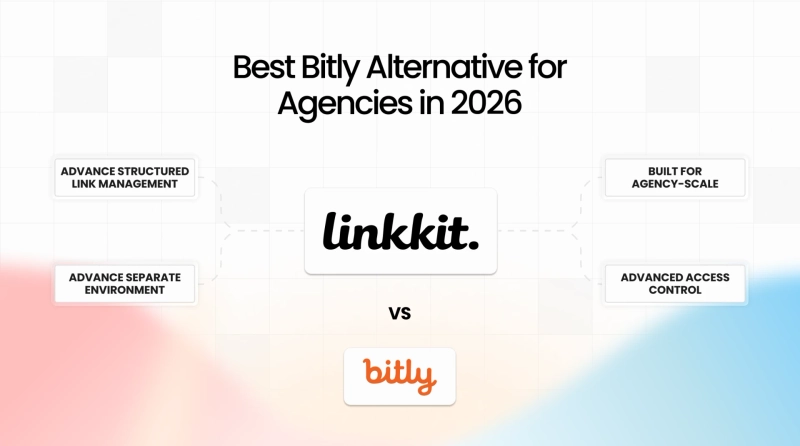
One example is Linkkit, a link management platform built around structured workspaces and scalable campaign tracking.
Rather than storing every link inside one shared environment, structured platforms allow agencies to:
- Create separate workspaces for each client
- Organize campaigns by objective
- Assign controlled team access
- Maintain branded domains per client
- Analyze performance in context
This structured approach transforms link tracking from a simple counting tool into a strategic performance asset.
Bitly vs. Modern Link Platforms
Bitly remains a reliable and widely recognized platform for general link shortening and analytics. For small businesses or independent creators, it provides exactly what is needed: simplicity and speed.
However, agencies operating at scale often experience friction due to:
- Flat link storage systems
- Limited campaign-level organization
- Overlapping data across teams
- Reporting limitations
- Scaling costs as usage grows
The best Bitly alternative in 2026 is not necessarily the platform with the longest feature list. It is the one that aligns with how agencies actually work.
And agencies today operate through structured workflows, multi-client dashboards, and measurable performance frameworks.
Why Structured Link Tracking Impacts Revenue
It may seem minor, but link organization directly impacts marketing performance.
Here’s how:
Cleaner Attribution
When links are categorized correctly, teams can identify which campaigns drive revenue — not just traffic.
Faster Optimization
Real-time, organized reporting allows agencies to pause underperforming campaigns quickly.
Improved Client Reporting
Clear data separation builds trust. Clients see accurate performance without confusion.
Stronger Brand Presence
Branded short links increase click-through rates and reinforce brand credibility.
Operational Efficiency
Team members spend less time searching for links and more time improving campaigns.
In performance marketing, clarity equals speed — and speed influences results.
Choosing the Best Bitly Alternative for Your Agency
Before switching tools, agencies should evaluate their operational needs.
Ask these questions:
- Do we manage multiple brands simultaneously?
- Do we need client-specific reporting dashboards?
- Are we using branded domains consistently?
- Does our current system support campaign categorization?
- Is link tracking integrated into our overall performance strategy?
If link management feels like an afterthought rather than structured infrastructure, it may be time to consider a modern alternative.
The Future of Link Analytics
As marketing ecosystems become more complex, attribution accuracy becomes more critical. Paid media, organic content, affiliate networks, influencer campaigns, and cross-platform funnels all depend on reliable tracking systems.
In 2026, link management platforms are evolving into performance intelligence tools.
They are no longer just shortening URLs.
They are:
- Organizing campaign data
- Supporting multi-team collaboration
- Protecting brand identity
- Enabling revenue-focused analytics
The agencies that treat link tracking as strategic infrastructure — rather than a basic utility — will operate with greater clarity and efficiency.
Final Thoughts
Bitly helped standardize short links across the internet. Its impact on digital marketing is undeniable.
But agency workflows in 2026 demand more structure, separation, and scalability than traditional shorteners were originally built to provide.
The best Bitly alternative is not simply another URL shortener. It is a structured link analytics platform designed for collaboration, campaign clarity, and measurable growth.
For agencies, links are not just clickable paths.
They are data connectors.
They connect campaigns to insights.
Insights to decisions.
And decisions to revenue.
Choosing the right platform ensures those connections remain clear, organized, and scalable — exactly what modern agencies need to stay competitive in a performance-driven digital landscape.