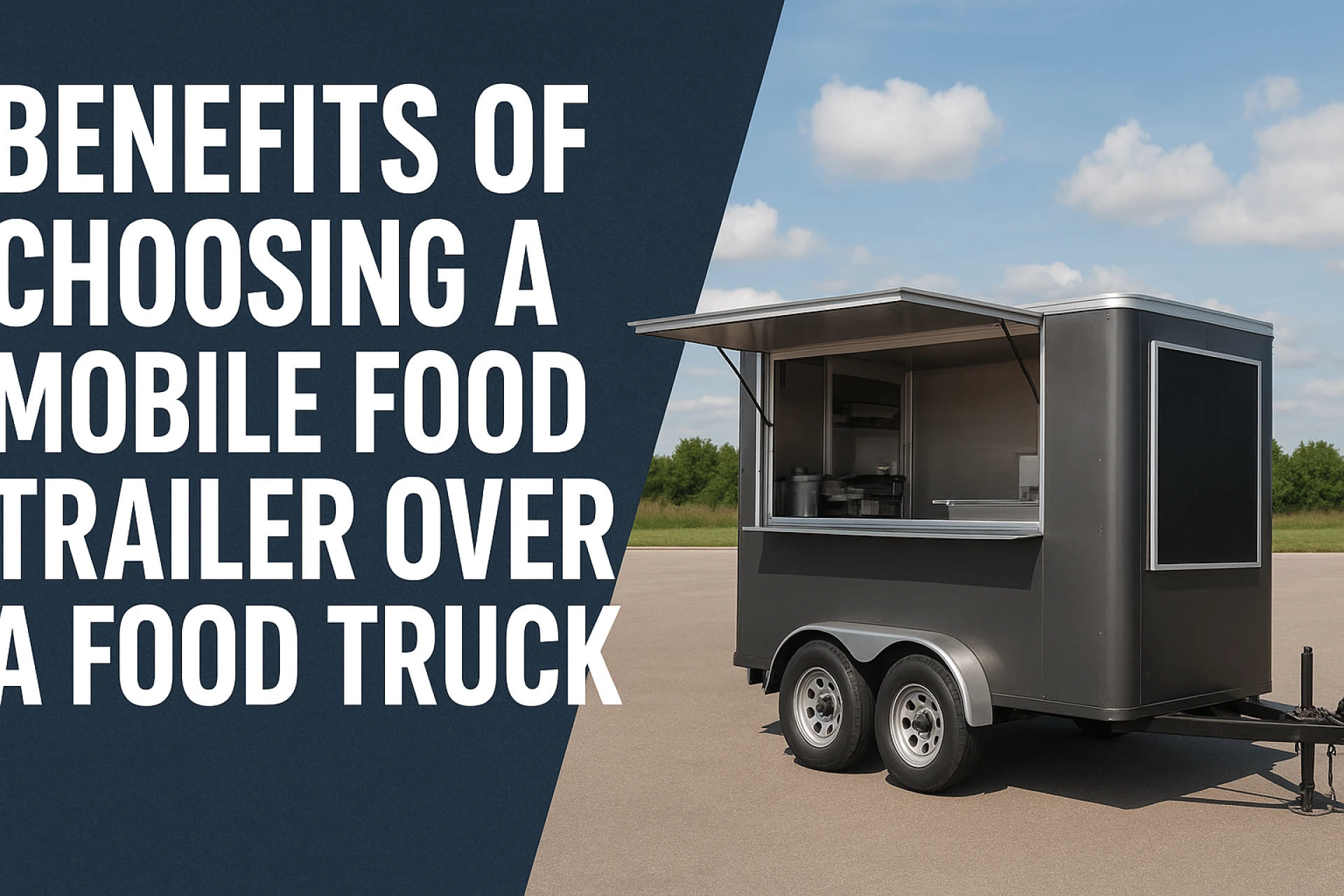
Starting a food business on wheels often begins with a critical decision: mobile food trailer or food truck? Both options offer mobility, direct customer engagement, and independence from brick-and-mortar expenses. Yet the mobile food trailer stands out in ways that significantly impact long-term operations, especially for entrepreneurs seeking control, flexibility, and cost-conscious investments.
1. Lower Initial Investment
A food trailer is typically more affordable than a food truck. While a fully outfitted truck can run into six figures, a comparable trailer setup generally costs less—sometimes by a wide margin. The absence of an onboard engine and cab reduces both manufacturing complexity and mechanical maintenance needs.
The financial entry point matters, particularly for new operators testing a concept or looking to grow gradually. Spending less upfront often allows for greater investment in equipment, branding, or initial inventory.
2. More Room for Equipment and Layout
Because the trailer doesn’t need to share space with a driver’s cab or engine, there’s often more usable kitchen area. That translates into better layout customization, storage capacity, and workflow efficiency.
Many trailer configurations include full-size appliances, prep tables, sinks, and refrigeration without feeling cramped. Whether you’re preparing artisan pizza, gourmet coffee, or tacos, a roomier setup can support higher volume service and smoother daily operations.
3. Lower Operating and Maintenance Costs
Food trucks require vehicle maintenance on top of kitchen upkeep. Engine problems, transmission failures, and brake system issues can disrupt operations or lead to unexpected repair bills.
Mobile food trailers separate the kitchen from the tow vehicle. If the tow vehicle has issues, it can be swapped or serviced without shutting down the kitchen. Maintenance becomes more predictable, and downtime is often shorter.
4. Flexibility in Transportation
A food trailer can be towed by various vehicles—pickup trucks, SUVs, or even commercial vans—depending on the trailer’s weight. This opens the door to flexibility in how the trailer is moved and who can operate it.
This is especially useful for businesses with multiple events on the calendar. If one vehicle isn’t available, another can take its place. For mobile caterers or event-based vendors, this adds a layer of resilience to their business logistics.
5. Business Expansion Made Easier
Once a food trailer concept proves itself, scaling becomes more straightforward. Operators can add another trailer with lower capital investment than purchasing a second food truck. They can even keep one stationary while moving another to new locations.
The ability to disconnect the kitchen from the tow vehicle also gives owners more options. A trailer can remain parked at a semi-permanent site—such as a brewery, market, or outdoor venue—while the tow vehicle is used elsewhere. That flexibility can turn a food trailer into a semi-fixed asset, blending the benefits of mobile and stationary setups.
6. Fewer Licensing and Inspection Headaches
Licensing for food trucks and trailers varies by region, but many jurisdictions treat them differently. In some cases, food trailers may be subject to less stringent vehicle inspections since they are not self-powered.
Additionally, trailers may be able to stay parked longer on private property or in designated zones, depending on local regulations. This can make permitting easier and more affordable over time.
7. Easier Insurance Options
Insurance coverage for food trailers often costs less than food truck insurance. Since trailers don’t carry passengers and don’t operate under their own power, liability risks can be lower.
In addition to general liability and property coverage, owners may find separate policies for the tow vehicle and trailer that better match their risk profile and budget.
8. Practical for Staffing and Storage
Food trailers can be more practical for team-based operations. Since there’s often more internal space, multiple staff members can work without the crowding that sometimes affects food trucks.
When not in use, trailers can also double as storage units for dry goods, small equipment, or supplies. This is particularly valuable for businesses without commercial kitchen space between events.
FAQs
Is a mobile food trailer easier to park than a food truck?
In many cases, yes. Trailers can be detached and positioned manually if needed. This makes tight event spaces or unconventional locations more accessible.
Can a trailer operate year-round?
Yes, provided it’s equipped for weather protection and climate control. Insulation, heating, and cooling systems allow trailers to function in both hot and cold environments.
Do I need a commercial driver’s license to tow a food trailer?
Most food trailers do not require a commercial license, but this depends on weight and local regulations. Always verify towing laws in your area.
How long does it take to set up a mobile food trailer?
Setup time varies by trailer design and menu complexity. With efficient systems in place, many operators are ready to serve within 30 to 60 minutes of arrival.
Are food trailers permitted at the same events as food trucks?
Yes, trailers are welcomed at most festivals, markets, and catering events. Be sure to check with organizers about space, towing access, and utility availability.
Closing Thought
For those weighing options between mobile food platforms, the food trailer presents a compelling case grounded in practicality, cost savings, and operational freedom. With fewer mechanical concerns, more interior space, and flexible usage patterns, a mobile food trailer often meets the needs of both new entrepreneurs and established culinary brands looking to expand their reach without taking on more complexity than necessary.