



In a world where communication is at the heart of every innovation, the unassuming hero that enables lightning-fast data transfer, crystal-clear calls, and high-definition streaming is the optical fibre. These sleek, slender threads of glass or plastic have revolutionised how information travels. However, have you ever wondered about the intricate process of manufacturing these wonders?
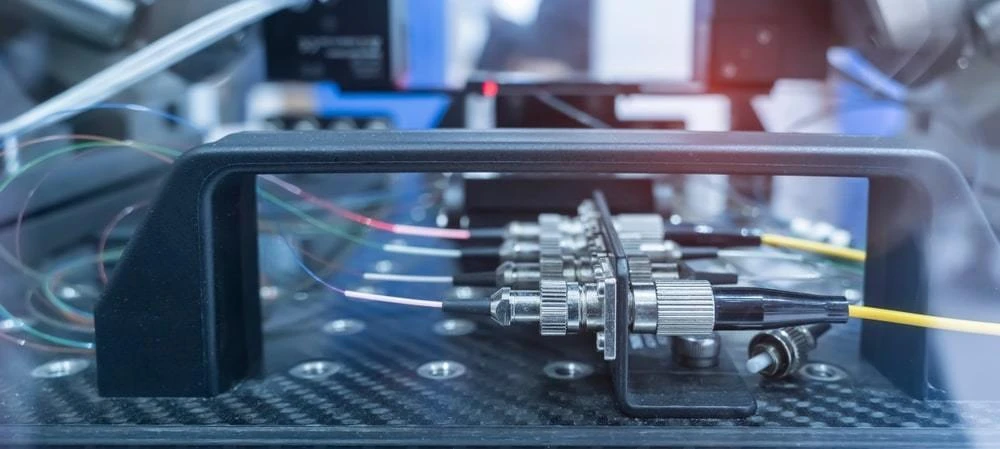
Today, we\'ll take you on a journey behind the scenes of the optical fibre manufacturing process, shedding light on its complexities and the technological marvels that underpin it.
Understanding the Fibre Optic Cable Manufacturing Process
Fibre optic cables, constructed by a leading optical fibre manufacturer, with components like core, cladding, coating, buffer, fibre count, cable arrangement, subunits, filling, strength member, and outer jacket, come in various types, each tailored to specific applications. These cables transmit data using light signals, offering unparalleled advantages over traditional copper cables – greater bandwidth, faster speeds, and enhanced reliability.
- Preform Production: Crafting the Heart of the Cable
The journey begins with a silica tube, which will become the cladding. Gases injected into the core region solidify upon heating, forming the core. Four manufacturing processes, including MCVD, PVDC, OVD, and VAD, shape the glass preform. The MCVD technique, a common choice, involves injecting chloride gases like SiCI4, GeCIe, and POCI3. The tube is heated to 1500 degrees, forming deposits that ultimately create the glass preform.
- Drawing: Transforming Glass Preform to Optical Fibre
The glass preform progresses to the draw tower, where it enters an induction graphite furnace heated to around 2000 degrees. At this temperature, the glass becomes malleable, allowing it to flow through the tower, creating the optical fibre.
- Coating: Protection and Insulation
The freshly formed optical fibre receives its initial insulation, known as a coating. Various materials are used based on the cable\'s application. Acrylate, high-temperature acrylate, fluoracrylate, and silicone coatings provide specific characteristics required for diverse scenarios.
- Cabling: Crafting the Cable
The number of fibres within a cable and how they are arranged—tight buffer or loose tube—influence cable construction. Tight buffers offer individual fibre insulation, ideal for indoor cables, while loose tubes, housing multiple fibres, suit outdoor installations. Grouping and identifying fibres is a crucial step involving subunits for cables exceeding 12 fibres.
The optical fibre price of multimode optical fibres is higher than that of singlemode fibers owing to the higher number of fibres packed within a cable.
- Testing and Inspection: Ensuring Quality
Rigorous testing follows fibre creation. Tensile strength, optical properties like attenuation and bandwidth, and geometric characteristics are assessed. This step ensures that the fibre meets quality standards before being wound onto reels.
Applications of Fibre Optic Cables
The applications of fibre optic cables are as diverse as they are revolutionary. From high-speed communication to smart cities, these cables power various sectors:
- Communication - Delivering voice, video, and data signals with immunity to electromagnetic interference, making them suitable for intranet, Ethernet, and more
- Automotive Industry - Fibre optics provide efficient, versatile lighting solutions and communication between vehicle components
- Factory Automation - Reliable communication in harsh environments, enabling efficient machine-to-machine communication
- Renewable Energy - Fibre optics\' durability and resistance to harsh conditions make them valuable in controlling wind and solar power systems
- Smart Cities - Facilitating urban mobility management and efficient public lighting
- Disaster Prevention - Fibre sensing aids in energy management, water leak detection, and more.
Innovation and Evolution
At STL, our focus has always been on innovating at every step to produce optical solutions for the future that overcome challenges of the past and present. In light of this, here is one of our latest innovations that epitomises our commitment to evolutionary, state-of-the-art optical fibre solutions: the Stellar Fibre.
It is the world’s first G.657.A2 bend-resilient fibre which is compatible with legacy network fibres as well. It has the industry\'s lowest macro-bend signal loss of 0.2 dB at 1550 nm wavelength and 0.5 dB at 1625 nm wavelength, enabling the fulfilment of deep fiberisation across regions.
The Future is Fibre!
The optical fibre manufacturing process is a symphony of precision and innovation, bringing us the seamless connectivity we often take for granted. From core creation to testing and application, each step contributes to the success of this technology. As we move into a future driven by data, communication, and interconnectedness, the vital role of optical fibre in shaping our world becomes ever clearer.
We, at STL, will continue to be a pioneer in the group of optical fibre manufacturers, enabling a more interconnected world untethered by the limitations of connectivity.
Frequently Asked Questions (FAQs)
- What factors influence the choice of coating materials in fibre optic cables?
The choice of coating materials depends on the cable\'s application, such as using high-temperature acrylate for harsh environments and silicone for resistance to water vapour and chemicals
- What is attenuation and what is its significance in fibre optic cables?
Attenuation refers to the loss of signal strength as light travels through the fibre. Lower attenuation ensures better signal quality and longer transmission distances, a critical factor in cable performance.
- How is quality ensured during the manufacturing process?
Rigorous testing includes assessing the tensile strength, optical properties, and geometric characteristics of the fibres to ensure they meet quality standards before being used.
- How do diameter sensors contribute to the quality control of the manufacturing process?
Diameter sensors monitor core, cladding, and coating diameters, ensuring precision and adherence to specifications, which directly impacts the cable\'s performance and reliability.