



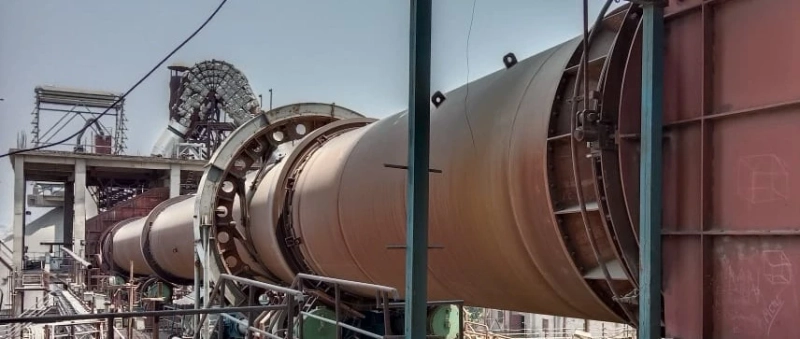
A rotary cement kiln plant mainly consists of a cylinder whose dimensions vary depending upon the volume of the operation. It is used for cement manufacturing. It is important to understand the basics of a cement kiln plant before investing in such a venture.
Material
Since cement manufacturing operations may occur at temperatures as high as 1400°C, mild steel is suitable for constructing a rotary kiln. Steel with 18-25 mm thickness should be used to withstand such a high temperature. The front end is equipped with additional heat resistance as this is where the flame is introduced from. The internal of the kiln is usually lined with bricks to protect the material from direct heat. This prolongs the life of a rotary kiln cement plant.
Specifications
The length of a rotary kiln may vary from 40 to 95 m with a respective diameter of 2.5 to 6 m. A kiln is placed at a slope that may range from 3.5 to 4% to facilitate the movement of raw material through it. The slope is determined from the length of the rotary kiln. A rotary kiln may have a capacity anywhere from 180 to 10,000 t/d.
Maintenance
Due to extreme conditions prevailing in a rotary kiln during operation, it is important to schedule regular maintenance operations. Check the rotary kilns for holes, leaks, and fixtures. The discharge end should be cleaned thoroughly to avoid any blockage. The friction ring of the kiln should be inspected and replaced if found to be worn out. Additionally, oil supply and purity should be checked to avoid any blockage in the supply that may lead to an abrupt halt in the operation.