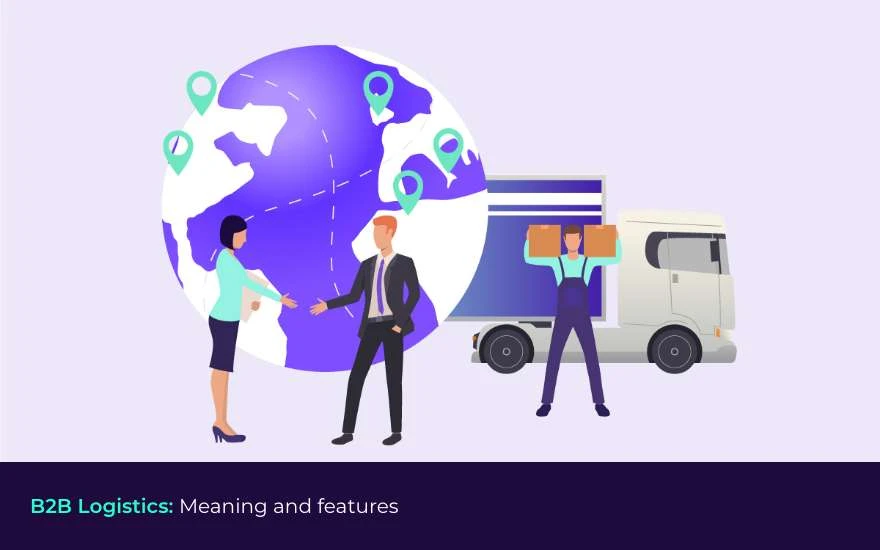
B2B Logistics refers to the planning, execution, and management of the movement of goods between businesses rather than directly to end consumers. It forms a critical part of industrial and commercial supply chains, enabling manufacturers, distributors, wholesalers, and service providers to source materials, transfer inventory, and distribute products efficiently across locations.
Unlike consumer-focused logistics, B2B logistics typically involves larger shipment volumes, structured delivery schedules, and strict compliance requirements. It emphasizes accuracy, consistency, and coordination to support uninterrupted business operations.
Nature of B2B Logistics Operations
B2B logistics operations cover multiple stages of the supply chain, including inbound logistics, internal transfers, and outbound distribution. Inbound logistics focuses on transporting raw materials or components from suppliers to manufacturing or processing units. Internal transfers may involve movement between plants, warehouses, or distribution centers. Outbound logistics manages the delivery of finished goods to distributors, wholesalers, or retail hubs.
These operations are often planned in advance and aligned with production cycles, inventory levels, and contractual commitments between businesses.
Types of Goods Handled in B2B Logistics
B2B logistics handles a wide range of goods across industries. Common categories include industrial raw materials, machinery components, FMCG products, pharmaceuticals that do not require cold storage, electronics, automotive parts, construction materials, textiles, and packaged goods. Shipments are typically palletized or packed in bulk to allow efficient handling and transportation.
Because these goods are critical to downstream operations, precision in quantity, condition, and delivery timelines is essential. Any disruption in B2B logistics can impact production schedules or supply availability.
Transportation Models and Routing
Transportation in B2B logistics uses various models depending on shipment size, frequency, and urgency. These include full truckload (FTL) for high-volume shipments, partial truckload (PTL) for moderate volumes, and multi-point distribution for deliveries to multiple business locations.
Route planning plays a key role in B2B logistics. Efficient routing helps reduce transit time, manage fuel consumption, and ensure predictable delivery schedules. Businesses often rely on fixed routes and time windows to maintain operational stability.
Warehousing and Inventory Flow
Warehousing is an important component of B2B logistics. Warehouses function as storage, consolidation, and distribution points within the supply chain. Goods may be stored temporarily before onward movement or transferred between regional and central warehouses.
Effective inventory flow within B2B logistics requires systematic tracking and standardized handling procedures. This helps maintain stock accuracy, reduces losses, and supports timely replenishment.
Documentation and Regulatory Compliance
B2B logistics requires adherence to various regulatory and documentation standards. These include invoices, e-way bills, transport permits, and compliance with taxation and transportation regulations. Proper documentation ensures smooth movement of goods and minimizes delays during inspections.
Digital systems are commonly used to manage documentation, track shipments, and generate reports, contributing to transparency and accountability across business supply chains.
Importance in Business Ecosystems
B2B logistics plays a vital role in enabling businesses to operate efficiently and scale sustainably. Reliable logistics supports inventory planning, production continuity, and effective coordination between suppliers and buyers. It allows businesses to focus on core activities while ensuring that goods are available where and when needed.
As supply chains grow more interconnected and geographically distributed, structured B2B logistics helps businesses adapt to changing market demands and operational complexities.
Conclusion
B2B Logistics is a foundational element of modern commerce, facilitating the organized movement of goods between businesses. Through planned transportation, effective warehousing, controlled inventory flow, and regulatory compliance, it supports stable and efficient supply chain operations. With continued industrial growth and evolving supply networks, B2B logistics remains essential for sustaining business productivity and economic development.