



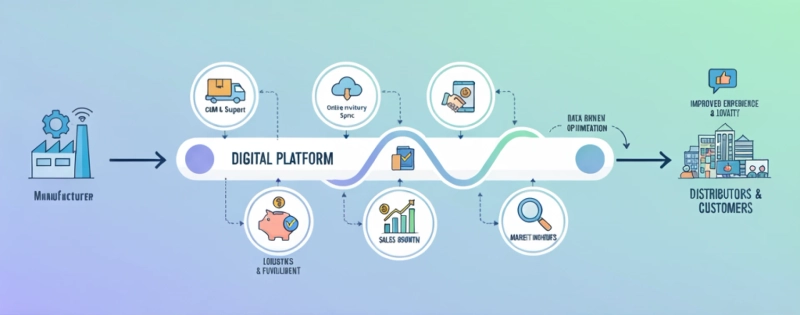
For manufacturers, the distributor journey has traditionally relied on in-person sales reps, manual ordering processes, and siloed communication. But as B2B buyers increasingly expect the same convenience and transparency they experience in B2C eCommerce, manufacturers are rethinking how they support distributors from initial research through post-purchase engagement. Digitizing the full distributor journey is no longer a “nice to have”—it’s a competitive necessity that improves revenue, strengthens channel relationships, and enhances operational efficiency.
1. Digital Discovery and Product Research
Distributors typically begin their journey by researching products, comparing specifications, and validating compatibility with their customers’ needs. A modern B2B eCommerce experience gives them a centralized, always-up-to-date source of truth. Rich product content—detailed specs, application guides, drawings, certifications, and comparison tools—reduces friction and accelerates the decision-making process. When manufacturers offer self-service access to technical documentation and transparent pricing structures, they empower distributors to confidently promote the manufacturer’s products without waiting for a sales rep.
2. Personalized Distributor Portals
The next stage of digitization involves offering tailored, secure portals where distributors can log in to see contract-specific pricing, availability, order history, and promotions. These portals streamline the buying experience by replacing manual communications and spreadsheets with real-time data. Advanced platforms integrate with ERP systems so distributors see accurate stock levels and lead times. Manufacturers can also segment distributors by tier, region, or product line to deliver tailored experiences—helping each partner access the exact tools, incentives, and content they need.
3. Seamless Ordering and Reordering
Digitizing the ordering process is one of the biggest value drivers. A robust B2B eCommerce system supports complex purchasing workflows, such as bulk orders, configurable products, request-for-quote (RFQ) submissions, and multi-user buyer roles with approval hierarchies. Distributors gain the ability to place orders 24/7, check shipping progress, and reorder with one click using saved lists or personalized dashboards. This reduces order errors, accelerates fulfillment, and frees up internal sales teams to focus on strategic account management instead of transactional tasks.
4. Digital Tools for Sales Enablement
Manufacturers can extend value beyond the transaction by providing digital sales enablement resources. These include co-branded marketing assets, product training modules, virtual demos, and calculators that help distributors showcase ROI to their customers. When these tools are integrated directly into the eCommerce environment, distributors stay within one ecosystem—strengthening loyalty and increasing the likelihood they’ll choose your products over competitors’.
5. Data-Driven Channel Insights
One of the most transformative benefits of digitizing the distributor journey is the visibility it provides. With a digital-first ecosystem, manufacturers gain insights into buying patterns, demand shifts, product performance, and partner engagement. This data supports smarter forecasting, more targeted marketing, and proactive inventory planning. Additionally, analytics can help identify underserved regions or high-potential distributors who may benefit from additional support.
6. Post-Purchase Support and Lifetime Value
Digitization doesn’t end at checkout. Manufacturers can strengthen long-term relationships through digital service portals that offer warranty registration, replacement parts ordering, support tickets, and maintenance documentation. Automated notifications for product updates, training refreshers, and cross-selling opportunities help maintain engagement and increase lifetime value.
Ultimately, digitizing the complete distributor journey enables manufacturers to scale more effectively, deliver exceptional partner experiences, and operate with greater agility. When viewed holistically, the benefits of eCommerce for manufacturing extend far beyond online ordering—they include improved operational efficiency, real-time visibility into channel performance, stronger distributor loyalty, and the ability to compete in a digital-first marketplace. B2B eCommerce isn’t just a platform—it’s a long-term strategy for growth.