



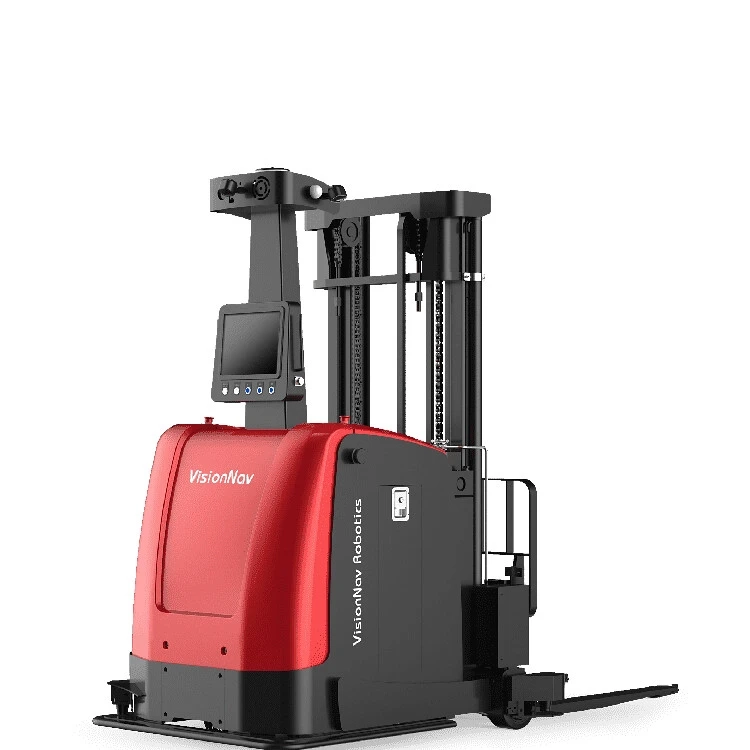
In today’s rapidly evolving industrial environment, businesses are constantly looking for solutions that improve efficiency, reduce costs, and enhance safety across warehouses, factories, and distribution centers. One of the most significant innovations helping companies reach those goals is the adoption of autonomous forklifts. These machines are engineered to transport pallets and goods through indoor and outdoor facilities with minimal or no human intervention. Instead of relying on manual drivers, autonomous forklifts use advanced sensors, navigation systems, onboard computing, and fleet management software to carry out tasks within structured environments. This technology aligns with broader movements in automation, robotics, artificial intelligence, and Industry 4.0 strategies, all of which are reshaping how organizations structure their operations.
What an Autonomous Forklift Actually Is
An autonomous forklift is a type of material handling equipment designed to perform transport, stacking, and pallet movement tasks without a human sitting in the operator seat controlling every move. Although traditional forklifts have been a staple in warehouses and industrial spaces for decades, the autonomous version introduces advanced capabilities that make the machine more than just a piece of heavy equipment. These forklifts incorporate cameras, laser sensors, lidar scanners, radar, onboard navigation software, and safety systems to identify obstacles, detect pallet positions, monitor surrounding traffic, and navigate paths safely. Businesses can connect them to a warehouse management system, enterprise resource planning platform, or fleet coordination software that assigns tasks, monitors progress, and optimizes movement based on real-time demand. As a result, autonomous forklifts become part of a coordinated material handling ecosystem that ensures goods flow predictably and efficiently.
How Autonomous Forklifts Navigate Facilities
Instead of being controlled manually by a driver, autonomous forklifts follow predetermined routes or dynamically generated paths using advanced navigation technology. There are several common navigation approaches that manufacturers use depending on facility layout and customer needs. Some machines rely on lidar-based mapping that scans the environment and builds a 3D map, allowing the forklift to learn safe routes and recognize obstacles without installing reflective markers or floor tracks. Others use geoguidance systems that interact with facility infrastructure such as QR codes, RFID tags, or magnetic strips to identify precise locations. More advanced autonomous forklifts may integrate sensor fusion, combining data from multiple systems like cameras, sonar, and GPS to create consistent awareness regardless of lighting or environmental conditions. In controlled environments, these navigation systems allow forklifts to adjust speed, pause when detecting movement, and reroute themselves to avoid congestion or blocked aisles.
Advantages of Bringing Automation to Material Handling
Companies exploring autonomous forklifts often do so to solve labor shortages, increase productivity, reduce the risk of workplace injury, and streamline operations. One of the most compelling advantages is consistent performance. Machines do not experience fatigue, distractions, or variations in skill level, so businesses can rely on stable work output throughout the day, including overnight shifts and weekends if desired. This level of predictability is important in industries where demand fluctuates, deadlines tighten, and storage density increases. Another advantage is enhanced safety. While no technology eliminates all risks, autonomous forklifts remove the need for people to operate heavy equipment manually, which reduces the chances of collisions caused by human error. The onboard safety systems used in autonomous forklifts constantly monitor surroundings and can stop or slow the machine if obstacles appear. In addition, businesses benefit from improved inventory flow and fewer bottlenecks in high-traffic warehouse zones because autonomous fleets can be coordinated and timed more precisely than human-driven operations. These efficiencies translate into lower operational costs, fewer damaged goods, and better use of facility space.
Common Use Cases and Industries Adopting the Technology
Autonomous forklifts are most commonly found in warehouses, manufacturing plants, distribution centers, logistics hubs, food and beverage storage facilities, and e-commerce fulfillment centers. Retail businesses with large-scale supply chains increasingly rely on automation to keep stores stocked and online orders delivered on time, making autonomous forklifts a natural fit for their operations. In automotive and industrial manufacturing, autonomous forklifts help move raw materials, components, and finished goods between production stages without interrupting assembly flow. Cold storage facilities also benefit from automation because they reduce the need for workers to stay in low-temperature environments for extended periods. Even sectors like pharmaceuticals and electronics that require precise inventory handling and controlled movement are adopting autonomous forklifts as part of larger automation systems.
Safety Considerations and System Design
Despite the advantages, the success of autonomous forklifts depends heavily on proper safety engineering, facility preparation, and system integration. Autonomous machines are designed with multiple layers of safety features, including obstacle detection sensors, emergency stop protocols, speed modulation, and geofencing capabilities that prevent forklifts from entering unsafe or restricted areas. These systems allow forklifts to operate in parallel with human workers where appropriate, without requiring complete isolation of machines from personnel. While autonomous forklifts reduce the need for manual operation, they still require oversight in the form of monitoring, maintenance, and occasional intervention by trained staff. Facilities may have to improve lighting, floor quality, signage, and digital infrastructure to ensure that navigation systems work as intended. The goal is not just to deploy advanced machinery, but to build an environment that supports safe and efficient automation.
Challenges Businesses Face When Adopting Autonomous Forklifts
Although autonomous forklifts provide significant benefits, organizations exploring this technology may find certain challenges during adoption. One of the most common barriers is upfront cost, as autonomous vehicles involve higher capital investment than traditional forklifts. However, businesses often evaluate the return on investment based on long-term labor savings, reduced downtime, and fewer incidents of damage or inventory loss. Integration complexity is another challenge. Successful autonomous forklift deployments require compatibility with warehouse management systems, digital mapping setups, and possibly new communication networks such as Wi-Fi or private 5G. Facilities with irregular layouts, extremely narrow aisles, or unpredictable traffic may need to make adjustments before automation can perform reliably. Additionally, companies must consider change management because introducing automation shifts job roles, workflows, and daily routines. Many warehouses adopt a blended model where autonomous forklifts handle repetitive transport tasks, while human workers focus on jobs that require judgment, coordination, or customer-related decision making.
The Future of Autonomous Forklifts and Smart Warehousing
The development of autonomous forklifts represents just one part of a broader transformation occurring in industrial automation. Over the next several years, experts expect to see increased use of artificial intelligence, digital twins, collaborative robots, automated storage and retrieval systems, and predictive maintenance platforms that all connect into a unified warehouse ecosystem. Autonomous forklifts will likely gain enhanced perception capabilities, better fleet coordination tools, more energy-efficient power systems, and improved integration with enterprise software. Some companies are exploring autonomous indoor–outdoor forklifts that can transition between loading docks and yard storage without manual intervention, further reducing the need for traditional forklifts. As urban logistics, e-commerce, and on-demand fulfillment continue to grow, the need for faster, safer, and more reliable material handling will accelerate innovation in the autonomous forklift space.
Conclusion
Autonomous forklifts are reshaping how modern warehouses and industrial environments operate by providing a reliable, safety-conscious, and efficient alternative to traditional manual equipment. They integrate robotics, navigation technology, and software intelligence to optimize movement of goods while reducing strain on human labor and improving overall facility safety. While challenges exist—such as integration, training, and cost—the long-term benefits are pushing more companies to explore automation as a strategic investment. As the technology continues to advance and become more accessible, autonomous forklifts will move from being an emerging innovation to a standard feature in smart warehouses and industrial logistics networks, helping businesses meet the increasing demands of speed, accuracy, and operational resilience.