



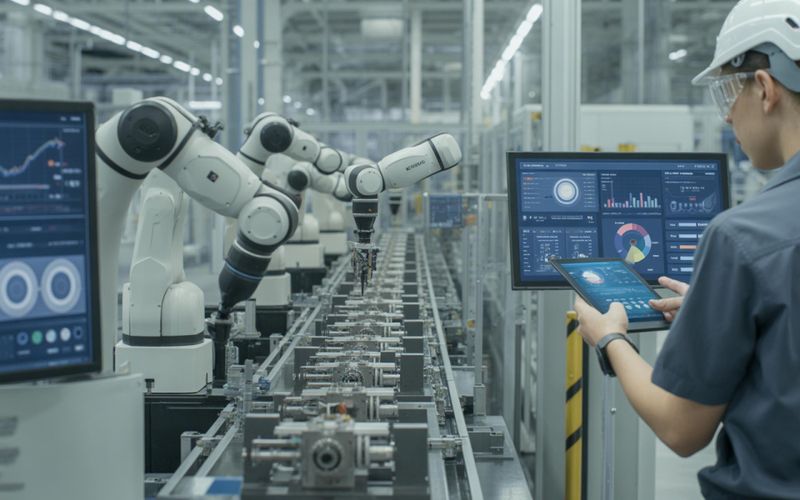
Manufacturing quality control has evolved significantly over the past decade. As production volumes increase and products become more complex, traditional manual inspection methods struggle to keep pace with modern manufacturing demands. Inconsistent inspections, delayed feedback, and human error can all lead to defects, production downtime, and costly recalls.
Automation is reshaping quality control by introducing speed, precision, and real-time visibility into manufacturing processes. Automated inspection systems, intelligent sensors, and data-driven quality tools enable manufacturers to maintain consistent standards while improving efficiency and reducing operational risk.

This article explores how automation enhances manufacturing quality control and process reliability, helping manufacturers achieve long-term operational excellence.
Understanding Manufacturing Quality Control
Manufacturing quality control is the process of ensuring that products meet defined specifications, standards, and customer requirements. It involves inspecting materials, monitoring processes, and verifying finished products before shipment.
Traditional quality control often relies on manual sampling and post-production inspection. While effective in limited scenarios, these approaches leave room for variability and delayed detection of defects. Automation improves quality control by embedding inspection directly into the production process and enabling continuous monitoring.
Why Automation Is Critical for Modern Quality Control
Automation addresses many of the limitations of manual quality control methods.
1. Consistency Across Production Runs
Automated systems apply identical inspection criteria to every product, eliminating variation caused by human judgment. This ensures stable quality across batches and shifts.
2. Real-Time Defect Detection
Automation identifies defects immediately as they occur, allowing corrective actions before defects spread across production.
3. Faster Production Without Compromising Quality
Automated inspection keeps pace with high-speed manufacturing lines, preventing quality control from becoming a bottleneck.
4. Reduced Operational Costs
By minimizing scrap, rework, and warranty claims, automation lowers the total cost of quality over time.
5. Improved Compliance and Documentation
Automated quality records provide traceable documentation that supports regulatory audits and customer requirements.
Core Automation Technologies in Quality Control
Automation in quality control combines multiple technologies that work together to deliver reliable results.
Automated Visual Inspection Systems
Machine vision systems inspect surfaces, dimensions, and assemblies with high accuracy and repeatability.
Robotic Inspection Units
Robots perform inspections in hazardous or repetitive environments, improving safety and consistency.
Sensor-Based Process Monitoring
Sensors track critical process parameters such as temperature, pressure, and vibration in real time.
AI and Data Analytics
Artificial intelligence analyzes inspection data to identify patterns, predict failures, and improve defect detection accuracy.
Digital Quality Management Platforms
Automated QMS platforms centralize inspection data, corrective actions, and performance metrics.
How Automation Improves Process Reliability
Process reliability refers to the ability of manufacturing processes to operate consistently within defined limits. Automation strengthens reliability in several ways.
Early Process Deviation Detection
Automated monitoring identifies process drift before it leads to defects or downtime.
Standardized Process Control
Automation enforces predefined process parameters, reducing variation and ensuring stability.
Predictive Maintenance Support
Inspection and sensor data help predict equipment failures before they disrupt production.
Reduced Human Dependency
Automation minimizes errors caused by fatigue, skill differences, or inconsistent procedures.
Benefits of Automation for Manufacturers
Manufacturers that adopt automation in quality control experience wide-ranging benefits.
Higher Product Consistency
Automated inspection ensures every product meets the same quality standards.
Improved Throughput
Quality control keeps pace with production without slowing output.
Lower Risk of Recalls
Early defect detection prevents defective products from reaching customers.
Better Resource Utilization
Quality teams can focus on improvement initiatives rather than repetitive inspection tasks.
Scalability for Growth
Automation supports production expansion without compromising quality performance.
Challenges in Implementing Quality Control Automation
Despite its benefits, automation requires careful planning and execution.
System Integration Complexity
Integrating automation with existing production systems can be challenging without proper planning.
Initial Capital Investment
Automation requires upfront investment, but long-term savings often outweigh costs.
Workforce Training Needs
Employees must be trained to operate and maintain automated systems effectively.
Data Management Requirements
Automated systems generate large volumes of data that require proper analysis and storage.
Best Practices for Successful Automation Adoption
Manufacturers can maximize automation success by following best practices:
- Identify high-impact inspection areas first
- Clearly define quality standards and acceptance criteria
- Train teams on automated system operation and data analysis
- Regularly validate and calibrate inspection systems
- Use quality data to drive continuous improvement
The Role of Automation in Supplier and Production Alignment
Automation not only improves internal quality control but also strengthens alignment between suppliers and manufacturing operations. Automated inspection data helps ensure incoming materials meet specifications, reducing disruptions and improving production stability.
By sharing quality data across supplier and production teams, manufacturers can create a unified quality ecosystem that supports consistent outcomes across the supply chain.
Frequently Asked Questions (FAQs)
Q1: How does automation improve manufacturing quality control?
Automation provides consistent inspection, real-time monitoring, and data-driven insights that reduce defects and variability.
Q2: Can automation work alongside manual inspection?
Yes. Automation complements manual inspection by handling repetitive tasks while humans focus on analysis and decision-making.
Q3: Is automation suitable for low-volume production?
Automation can be tailored to both high- and low-volume environments through flexible inspection systems.
Q4: How long does it take to see results from automation?
Many manufacturers see improvements within months through reduced defects and improved process stability.
Q5: Does automation support regulatory compliance?
Yes. Automated inspection records provide traceable documentation required for audits and certifications.
Conclusion
Automation is transforming manufacturing quality control by enabling consistent inspection, reliable processes, and real-time visibility. By embedding intelligent inspection systems into production workflows, manufacturers can reduce defects, improve efficiency, and strengthen compliance.
When implemented strategically, automation becomes a powerful tool for achieving process reliability and scalable manufacturing excellence. Organizations that embrace automation position themselves to meet future production challenges with confidence and control.