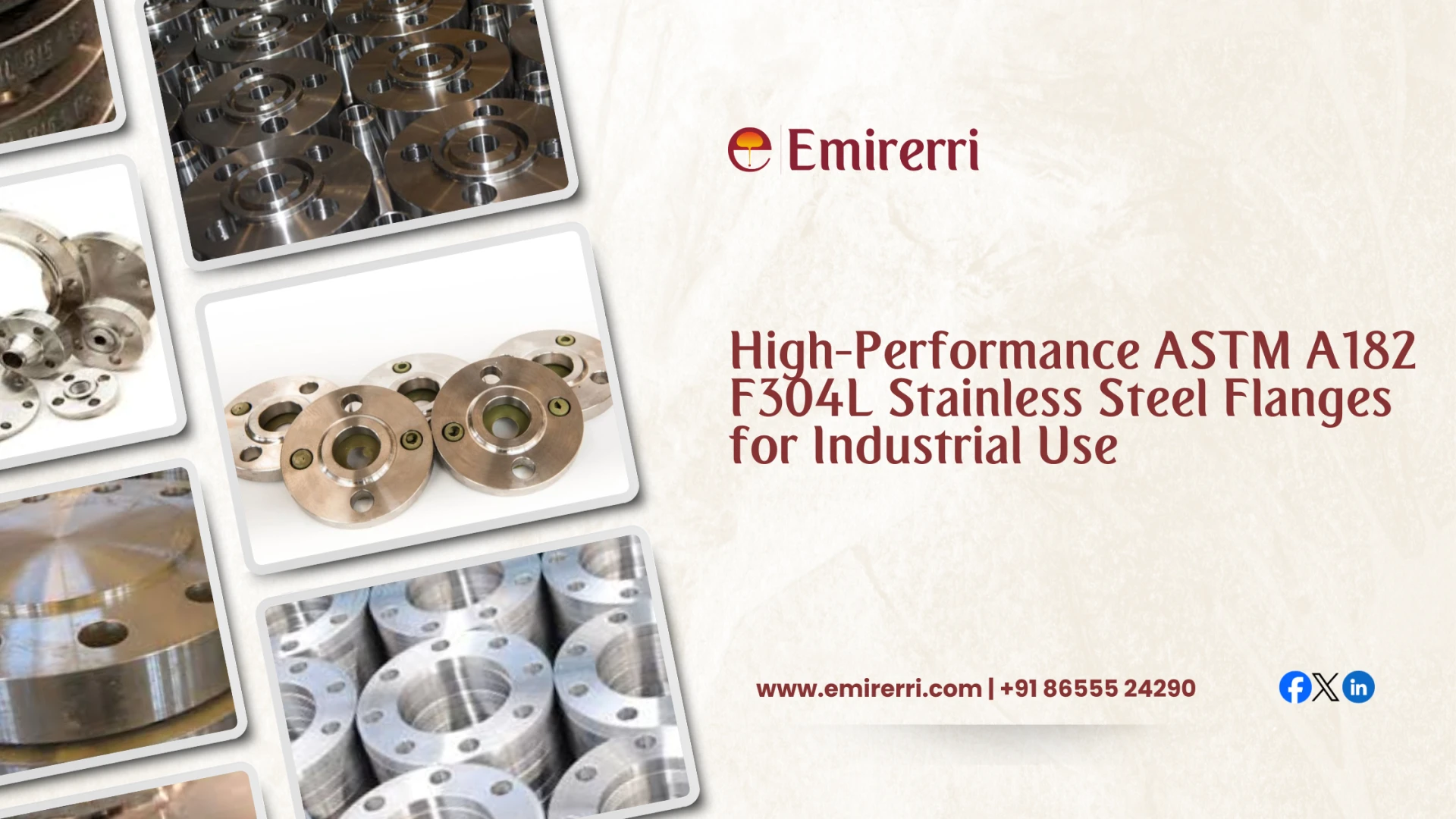
ASTM A182 F304L stainless steel flanges are widely used in industrial piping systems, offering exceptional performance in a variety of applications. Designed for high strength, durability, and resistance to corrosion, these flanges are a critical component in chemical, petrochemical, oil & gas, and power generation industries.
Understanding ASTM A182 F304L Flanges
The ASTM A182 F304L stainless steel flange is a low-carbon version of the standard F304 stainless steel. The “L” in F304L indicates a low carbon content (max 0.03%), which provides superior weldability and reduces the risk of carbide precipitation during welding. This makes F304L ideal for applications where welding is required, as it maintains corrosion resistance even after heat treatment.
These flanges are manufactured according to ASTM A182 specifications, ensuring consistent quality and performance. A182 F304L flanges are available in various shapes such as slip-on, weld neck, blind, threaded, and lap joint, allowing flexibility in designing piping systems.
Chemical Composition of F304L
The chemical composition of ASTM A182 F304L stainless steel flange ensures excellent corrosion resistance and durability:
Element
Composition (%)
Carbon (C)
0.03 max
Chromium (Cr)
18–20
Nickel (Ni)
8–12
Manganese (Mn)
2 max
Silicon (Si)
1 max
Phosphorus (P)
0.045 max
Sulfur (S)
0.03 max
This composition makes SA182 F304L flanges highly resistant to oxidation and corrosion in various environments, including acidic and chloride-containing solutions.
Mechanical Properties
ASTM A182 F304L stainless steel flange provides impressive mechanical properties that make it suitable for high-pressure and high-temperature applications. Typical properties include:
Property
Value
Tensile Strength
515 MPa min
Yield Strength
205 MPa min
Elongation
40% min
Hardness
187 HB max
These properties ensure that F304 F304L flanges can withstand mechanical stress, pressure, and thermal expansion in demanding industrial environments.
Types of ASTM A182 F304L Stainless Steel Flanges
Flanges in ASTM A182 F304L are available in multiple types to suit different piping requirements:
- Weld Neck Flange: Provides excellent strength and is ideal for high-pressure systems.
- Slip-On Flange: Easy to install and cost-effective for low-pressure applications.
- Blind Flange: Used to close the ends of piping systems or valves.
- Threaded Flange: Can be installed without welding, ideal for sensitive environments.
- Lap Joint Flange: Used with a stub end for easy alignment and maintenance.
Advantages of F304L Stainless Steel Flanges
- Corrosion Resistance: The low-carbon F304L material prevents carbide precipitation and enhances resistance to pitting, making it suitable for chemical and marine applications.
- Weldability: Unlike standard F304, A182 F304L allows welding without compromising corrosion resistance, making it ideal for fabrication projects.
- Durability: These flanges offer long service life even under high pressure and temperature conditions.
- Versatility: Compatible with multiple piping materials and systems, providing flexibility for diverse industrial applications.
Applications of ASTM A182 F304L Flanges
ASTM A182 F304L stainless steel flanges are extensively used in industries where strength, corrosion resistance, and reliability are critical. Common applications include:
- Oil & Gas pipelines
- Chemical processing plants
- Power generation equipment
- Food and pharmaceutical processing systems
- Water treatment plants
Because of their low carbon content, F304L flanges are particularly suitable for welded piping systems, ensuring integrity and long-term performance.
Standards and Compliance
These flanges adhere to ASTM A182 standards, which define the material specifications for forged or rolled alloy and stainless steel flanges used in high-temperature and pressure applications. Additionally, they meet international standards like ASME, ensuring compatibility with global piping systems.
Why Choose SA182 F304L Flanges?
When selecting a flange for critical industrial applications, SA182 F304L provides the best balance of strength, corrosion resistance, and weldability. Using astm a182 f304l stainless steel flange ensures:
- High reliability in extreme environments
- Minimal maintenance due to corrosion resistance
- Compatibility with a wide range of piping materials
- Long-term performance in high-pressure systems
Conclusion
ASTM A182 F304L stainless steel flanges are a reliable choice for industries requiring high-strength, corrosion-resistant, and weldable components. Whether it’s for chemical plants, oil refineries, or power generation facilities, F304L flanges deliver consistent performance and durability. By using A182 F304L flanges, engineers and project managers can ensure their piping systems remain robust and efficient for years.
For anyone looking for superior quality, reliability, and long-lasting performance, F304 F304L flanges are the optimal solution, making them an essential component in modern industrial infrastructure.