



The top tiers of motorsport demand extreme precision. Drivers calculate every turn. They manage tire degradation. They adjust fuel load moment to moment. Formula-style board games translate this intensity to the tabletop. They are not about chaotic speed. They focus on fine-tuned control. These games teach players a great lesson. The smallest decision holds massive weight. Moving a few millimeters on the track matters a lot. Success comes from perfect execution, not just luck. You must master the subtle art of mechanical management.
The Critical Importance of the Racing Line
Real Formula racing centers on the ideal racing line. This is the fastest path around the track. Board games bring this concept to life on a grid or hex map. The track is painted with distinct lanes. Certain lanes offer benefits. They might reduce the penalty for cornering. These preferred paths become the focal point of the race. Everyone wants to occupy the best space.
Players must fight for track position. A perfect line requires precise movement planning. You must calculate every single space. Your goal is to enter the turn wide. You clip the apex perfectly. You then exit wide to maximize speed on the following straight. Deviating from this line costs precious time. More importantly, it exposes you to opponents. An opponent might block your path. They might force you onto a slower outer lane. The interaction is a constant physical chess match. Players are not just moving their own car. They are attempting to manipulate the position of others. It teaches a valuable strategic lesson. Your movement is never independent of your rivals. Every centimeter on the board is a contested asset.
The Art of Drafting and Slipstreaming Tactics
Formula racing is not an individual sport. It involves a massive amount of teamwork and rivalry. Drafting or slipstreaming is a major part of the experience. A car following another at high speed gains a movement bonus. It benefits from reduced air resistance. Board games incorporate this mechanic beautifully. It provides a catch-up mechanism for players trailing the leader.
This creates fascinating tactical choices. Should you sprint ahead and break free from the pack? Running solo means no drafting bonus. It forces you to rely only on your own car's power. Should you stay in the slipstream of a rival? It saves your car's energy. It lets you surge past them on the final straight. The rules reward tight, close-quarters driving. They punish players who isolate themselves. This mechanic turns the race into a dynamic group dance. The cars cluster together in tense packs. Overtakes happen in rapid succession. The smallest gap can be exploited for a passing move. It teaches aggressive patience. You wait for the exact moment. You then strike with decisive action.
Evolving Mechanics of F1 Board Games
The genre of F1 Formula Car Racing Games has a rich and inventive history. Designers have constantly refined the mechanisms of control. Early versions might have used simple tracks and fixed movement. Newer games use complex card-driven systems. They give players a hand of cards to play each turn. This card play determines speed and maneuverability. This increases player agency dramatically. The outcome depends less on a lucky die roll. It relies more on how a player manages their hand.
The evolution shows a move toward greater simulation. Modern designs attempt to capture the nuances of professional racing. They integrate rules for weather, tire compounds, and even rule penalties. This makes the experience feel more like managing a race team. You are a strategist, not just a driver. The genre’s longevity speaks to its successful design. It taps into a universal fascination. It gives players a sense of mastery. You feel like a genius when your plan works perfectly. The continued popularity proves the appeal of strategic control.
Legacy of Precision and Future of the Track
Formula-style board games are masters of teaching control. They show that success depends on minute calculations. It teaches the value of resource conservation. It proves the power of perfect timing. The feeling of executing a perfect sequence of moves is incredibly rewarding. It is the core of the appeal. The tension remains high until the very last turn. Every player stays involved.
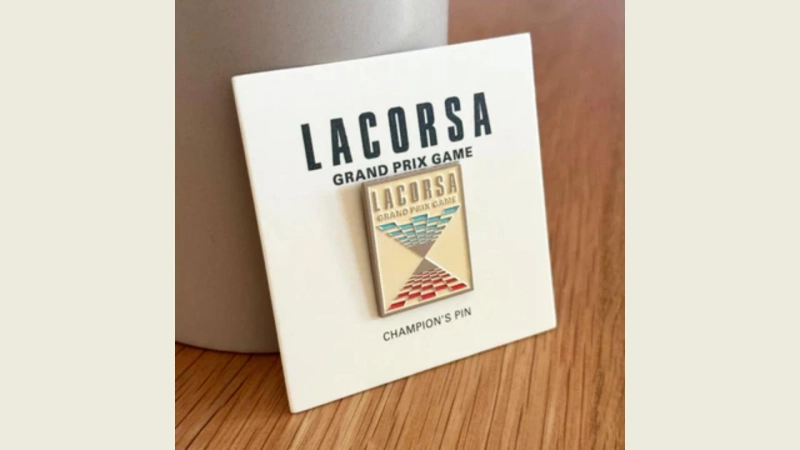
The company Lacorsa Grand Prix Game provides a stunning example of this refined design philosophy. The game’s focus is on capturing the elegance and strategic depth of classic Grand Prix racing. Their system forces players to manage speed and position with elegant card play. It requires careful planning to secure the best racing line. This Historical Board Game captures the beautiful style of a bygone era of racing. It delivers deep, modern strategic gameplay. The company’s design choices demonstrate a profound respect for the sport's rich history and complex tactics. They deliver a pure, high-stakes tabletop racing experience. The game is a true testament to the enduring appeal of controlled speed on the board.