



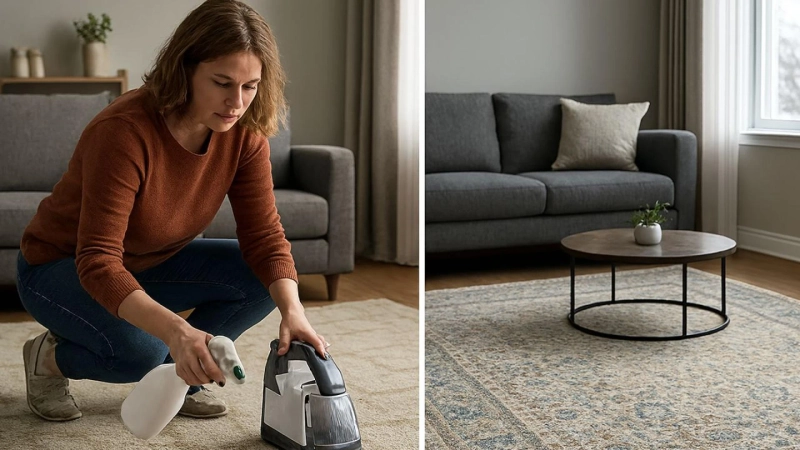
Area rugs make homes warmer, quieter and more comfortable. In Toronto, they also deal with snow salt, street dust, pet hair and everyday spills. Because of this, many homeowners search for ways to clean rugs themselves before calling professionals. DIY rug cleaning feels cost-effective and convenient, but it is not as simple as it looks.
This guide explains the real pros and cons of DIY area rug cleaning and the truths most people only learn after damaging a rug. Everything here is written for Toronto homes, real conditions and real mistakes people make.
What DIY Area Rug Cleaning Really Means
DIY area rug cleaning usually involves vacuuming, spot cleaning or washing a rug at home using store-bought products. According to Better Homes & Gardens, homeowners often rely on carpet shampoos, mild detergents or vinegar solutions for surface cleaning. These methods can help with light dirt, but they are limited.
Most area rugs are not designed to handle heavy moisture, aggressive scrubbing, or improper drying. The type of rug matters more than people think. Wool, silk and handmade rugs react very differently compared to synthetic rugs.
The Real Pros of DIY Area Rug Cleaning
DIY rug cleaning does have benefits when used correctly and in the right situations.
Cost savings for basic maintenance
The biggest advantage is saving money. Vacuuming and quick spot cleaning cost very little and help reduce surface dirt. Consumer Reports confirms that frequent vacuuming prevents soil from grinding into rug fibers, which can extend rug life.
Quick response to spills
DIY cleaning allows immediate action. According to The American Cleaning Institute, blotting spills quickly reduces the chance of permanent stains. Waiting even a few hours can cause liquids to bond with fibers.
Works for light, synthetic rugs
Low-cost, machine-made rugs made from nylon or polypropylene can often tolerate gentle DIY cleaning. These rugs are less sensitive to moisture and color bleeding.
Convenient for small areas
For apartments and condos in Toronto, small rugs are easier to manage at home compared to large room-size rugs that are heavy and hard to move.
The Cons Most People Underestimate
DIY rug cleaning also comes with serious downsides that often outweigh the savings.
Limited deep cleaning power
Home methods cannot remove embedded dirt, allergens, or pet dander. The Institute of Inspection Cleaning and Restoration Certification (IICRC) states that soil trapped deep in fibers requires professional extraction to be fully removed.
High risk of fiber damage
Using the wrong cleaner can permanently damage rugs. Better Homes & Gardens warns that alkaline cleaners can strip natural oils from wool, making fibers brittle and dull over time.
Color bleeding and fading
Many rugs use natural dyes. Oriental Rug Retailers of America reports that moisture and incorrect pH levels can cause dyes to bleed, especially in handmade rugs.
Over-wetting and mold risk
One of the biggest hidden dangers is moisture. According to Health Canada, damp textiles can develop mold within 24 to 48 hours if not dried properly. Toronto’s humidity makes this risk even higher.
What No One Tells You About DIY Rug Cleaning
This is where most online advice falls short.
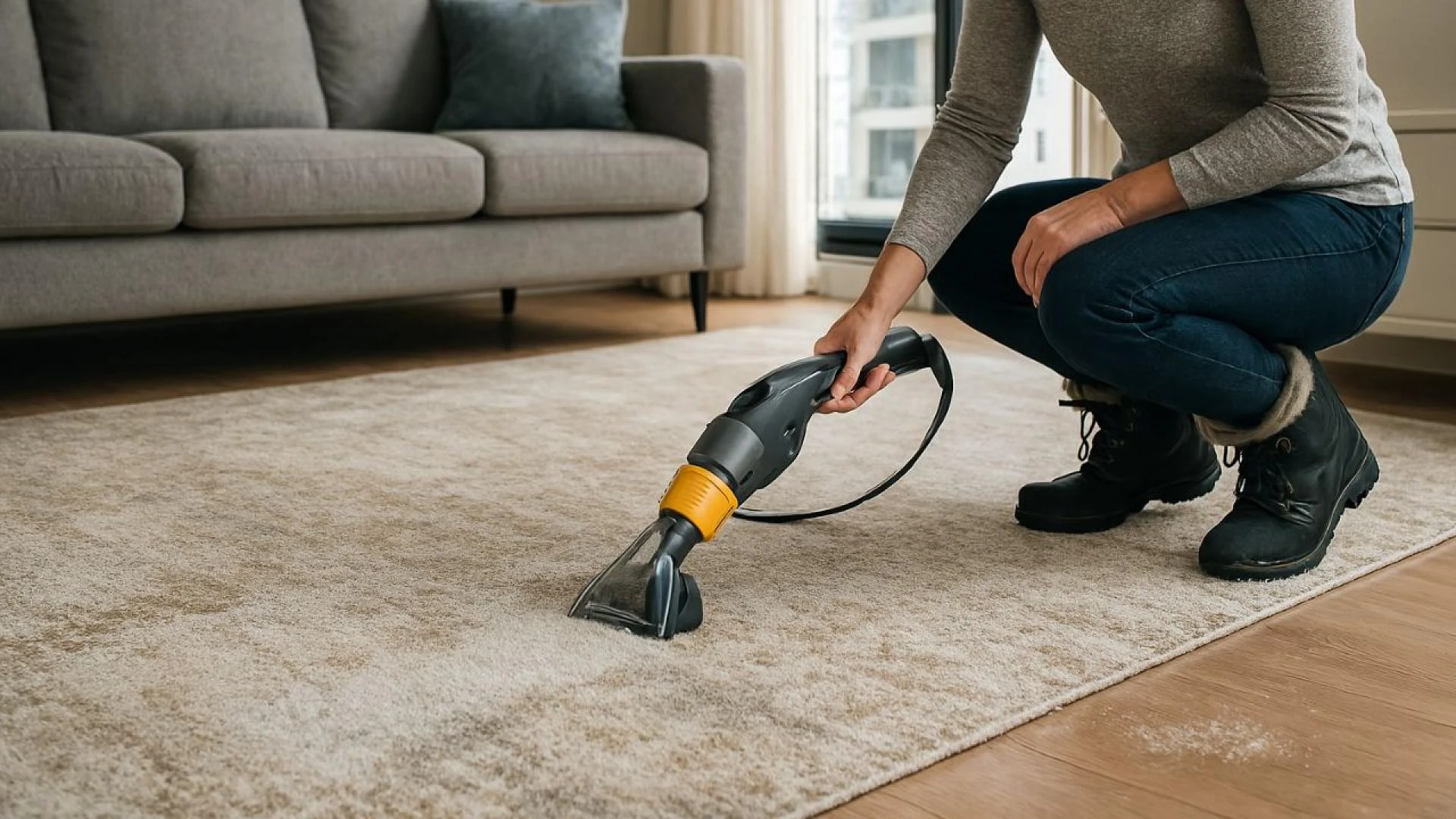
Not all rugs should ever be DIY cleaned
Silk, antique, Persian, Oriental, and wool rugs should not be fully washed at home. The Carpet and Rug Institute clearly states that specialty rugs require controlled cleaning conditions to prevent shrinkage and dye migration.
Drying is more important than washing
Many people focus on cleaning but ignore drying. Southern Living highlights that improper drying is the main reason rugs develop odors after DIY cleaning. Sunlight helps, but uneven drying can still trap moisture deep inside.
Rug backing matters
Latex or cotton backings can break down when soaked. This leads to curling edges and cracking. Once damaged, backing issues are expensive or impossible to fix.
DIY does not remove dust
Vacuuming alone cannot remove dry soil trapped deep inside rugs. Professional rug dusting machines remove pounds of grit that home vacuums leave behind. This fact is often ignored in DIY guides.
Common DIY Methods and Their Real Results
Vacuuming remains the safest DIY step. Experts from Consumer Reports recommend slow, repeated passes on both sides of the rug.
Spot cleaning can help, but only if done gently. Blotting is always safer than scrubbing. Testing solutions on hidden areas is essential, as advised by Better Homes & Gardens.
Shampooing or soaking rugs at home is where most damage happens. Even if a rug looks clean afterward, fiber weakening and color loss may appear months later.
When DIY Cleaning Makes Sense
DIY rug cleaning works best as regular maintenance, not deep cleaning. Light synthetic rugs, runners and entry mats can benefit from gentle washing if dried completely.
For quick spills, pet accidents or routine dust removal, DIY methods are useful when done carefully.
When DIY Cleaning Is a Bad Idea
Large rugs, valuable rugs or rugs with strong odors should not be cleaned at home. Pet urine often soaks into padding and backing. According to The Humane Society, urine odors require deep enzymatic treatment that surface cleaning cannot fix.
If your rug smells after cleaning, stays damp too long, or shows color changes, DIY methods have already gone too far.
Why Many Toronto Homeowners Choose Professional Help
At some point, DIY cleaning reaches its limit. Professional services use controlled water levels, proper pH-balanced solutions, and industrial drying systems. This is why many homeowners searching for cleaning area rugs near me eventually choose experienced specialists who can clean rugs safely without risking damage.

Professional rug cleaning also includes dust removal, odor treatment, stain protection and safe drying. These steps are difficult or impossible to replicate at home.
How Often Should Rugs Be Cleaned
According to The Carpet and Rug Institute, area rugs should be professionally cleaned every 12 to 18 months. Homes with pets, kids or high foot traffic may need cleaning every 6 to 12 months.
Vacuuming should happen weekly, especially during Toronto winters when salt and grit are tracked indoors.
The Bottom Line
DIY area rug cleaning is not useless, but it is limited. It works best for surface care and quick action. Deep cleaning, odor removal and fiber protection require expertise, proper equipment, and experience.
The biggest mistake homeowners make is assuming all rugs are the same. They are not. Materials, dyes and construction change everything.
Knowing when to stop and when to call professionals can save hundreds or even thousands of dollars in rug replacement costs. In the end, smart rug care is about balance not shortcuts.